REVIEW · SAO MIGUEL ISLAND
Azores: Whale Watching & Islet Boat Tour w/ Marine Biologist
Book on GetYourGuide →Operated by Azores Whale Watching TERRA AZUL · Bookable on GetYourGuide
A good whale trip is part science, part luck, part nerves. This one adds a marine biologist on board plus an unusually organized hunt from a high lookout, aimed at spotting whales and dolphins around São Miguel.
What I really like is the focus on safety and animal care while still giving you real time at sea. Second, the experience isn’t just spotting: you get a guided explanation of what you’re seeing, and the crew stays available for questions (I’ve seen names like Matteo, Claudia, Charlotte, and Stephanie pop up in the team that runs these trips).
One drawback to plan for: conditions drive everything. The ocean can be bumpy, and whales aren’t guaranteed in the moment, even with a sightings-first approach—so bring the right gear and keep expectations flexible.
In This Review
- Key things that make this tour worth your time
- Whale spotting from Vila Franca do Campo: why this area works
- From marina briefing to VHF-guided zodiac speed
- The marine biologist approach: what you learn while you watch
- What you can realistically expect to spot (and how it usually looks)
- The quick Vila Franca islet loop: short stop, real payoff
- Boat comfort, seating, and staying steady in the water
- Price and value: does $73 make sense for a 3-hour hunt?
- Best times and smart packing tips
- Who should book, and who should skip this one
- Should you book Terra Azul’s whale watching tour?
- FAQ
- How long is the Azores Whale Watching & Islet Boat Tour?
- Where is the meeting point?
- Is pickup available from Ponta Delgada?
- What languages are offered for the live guide?
- What’s included in the price?
- What should I bring or prepare before the tour?
- Is there a sightings guarantee?
- Who isn’t allowed to join the tour?
Key things that make this tour worth your time
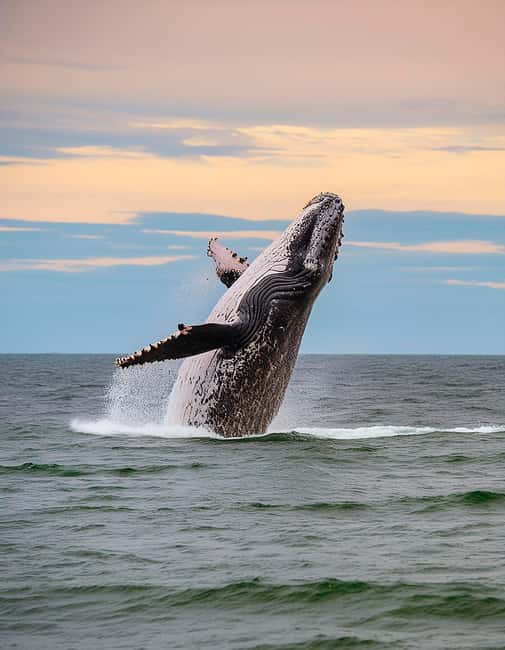
- High lookout + fast zodiac chase: directions via VHF radio help the crew position you quickly
- Marine biologist-style Q&A: you’re not stuck listening to a pre-recorded talk on a speakerphone
- Big species potential: the lookout is set up for up to 28 cetacean species
- Worth it even without whales: the Vila Franca islet loop adds volcanic views and wildlife watching
- Sightings-first policy: if no whale or dolphin is seen, your second tour is free
- Real outdoor prep: impermeable full suit and life vest come with the booking
Whale spotting from Vila Franca do Campo: why this area works
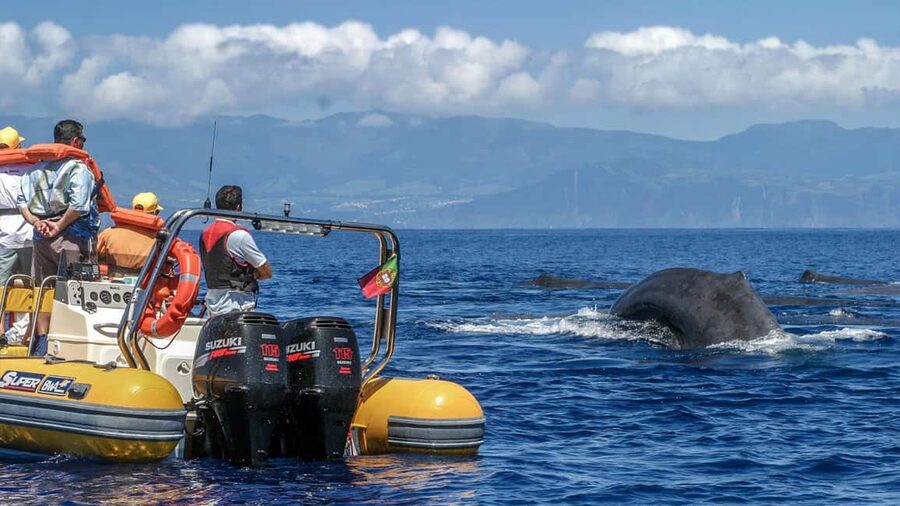
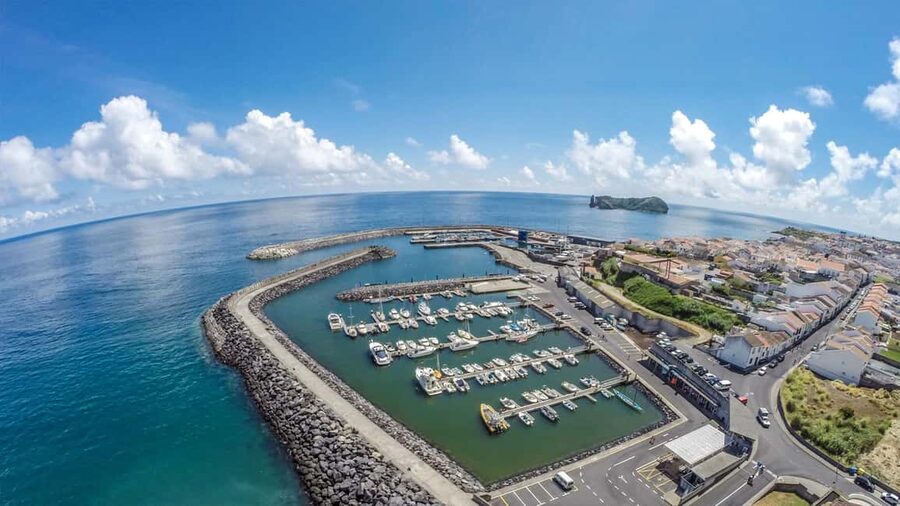
Vila Franca do Campo is a smart launching point because it sits close to strong marine routes around São Miguel. You get ocean views right away, plus the volcanic look of the coast and the nearby islet, so even the non-animal moments feel like part of the day, not dead time.
You also get a ride that’s built for finding life. Instead of one long slow cruise, the hunt is coordinated: an inland lookout scans for signs, then the boat adjusts its position. That matters because whales and dolphins don’t wait for your schedule.
You can also read our reviews of more tours and experiences in Sao Miguel Island.
From marina briefing to VHF-guided zodiac speed
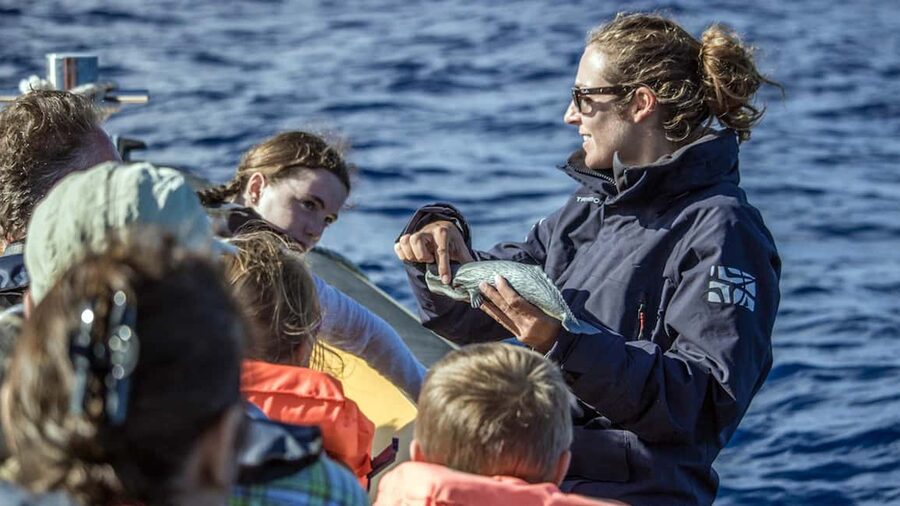
The tour starts with a short safety and wildlife briefing. You’ll hear about local cetacean species, plus their likely movements and behavior patterns—then you’re geared up and sent out.
At sea, the pace changes. The inland lookout locates animals, then gives directions to the crew using VHF radio, and your zodiac RIB heads out—often at higher speed at the start to reach the right zone. In practical terms, that means you spend less time guessing and more time watching.
Once the crew finds a group, you’re guided on how close to get and what to look for. Many sightings will be clear, but sometimes you only catch parts: the mist from a blow, a fin, a tail, or the edge of a pod moving through the water. Dolphins tend to be easier to see well from the boat; whales can be more distant depending on where they surface.
The marine biologist approach: what you learn while you watch
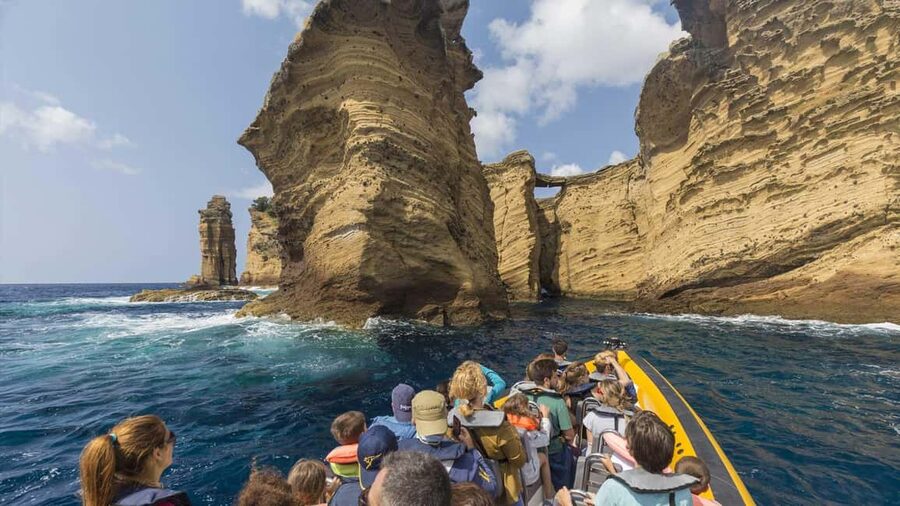
This is one of the better formats I’ve seen for whale tours because it’s not just facts dumped at you. The live guide and/or marine biologist explains what’s happening in plain language, and they’re there to answer questions while you’re actually observing animals.
The crew also collects field imagery and data as part of local research. That’s a big difference from a simple “spot and go” routine. It changes the tone of the tour from trophy hunting to understanding what these animals are doing and where they might be headed next.
From the team names that show up in guide accounts—Matteo, Claudia, Charlotte, Stephanie, Monisha, and Savi—you can also expect energy. More than one guide has focused on keeping the group excited and informed, making sure you can see the animals instead of only listening while staring at water.
What you can realistically expect to spot (and how it usually looks)
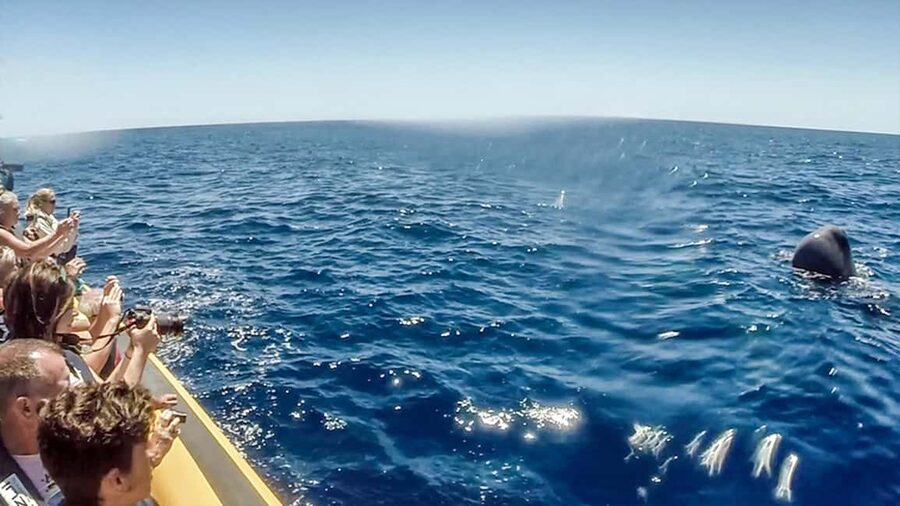
The promise here is broad: the lookout is set up to scan for up to 28 whale and dolphin species. The tour also highlights sperm whales as resident in the region alongside additional cetacean types, plus a rich mix of marine life around the area.
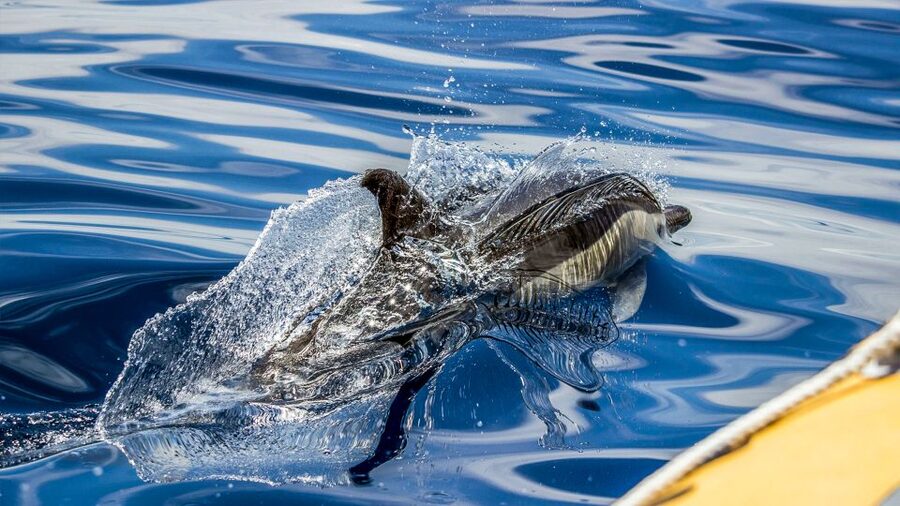
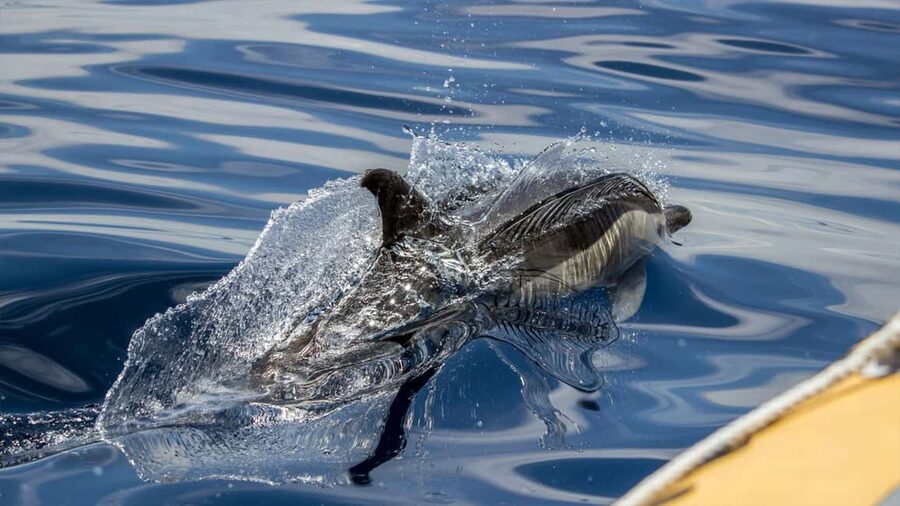
In real sightings, dolphin encounters often feel close and active. Multiple reports describe dolphins swimming near the boat, jumping, and moving in pods you can track visually. Even when you don’t get whales on a specific surface time, dolphins can keep the pace high and the viewing easy.
Whale sightings can be more variable. Some people spot sperm whales and even calves; others see a sei whale’s presence from a distance or catch only key moments like blow mist or a fin. One consistent takeaway is that patience matters—whales may stay underwater longer than dolphins, so your best “strategy” is staying ready with your camera and letting the crew position you.
You might also see other marine life. Sea turtle sightings show up in reports, and there are also mentions of seabirds working over feeding activity in the water. When the ecosystem is active, it often turns the boat ride into a full-on wildlife scene.
The quick Vila Franca islet loop: short stop, real payoff
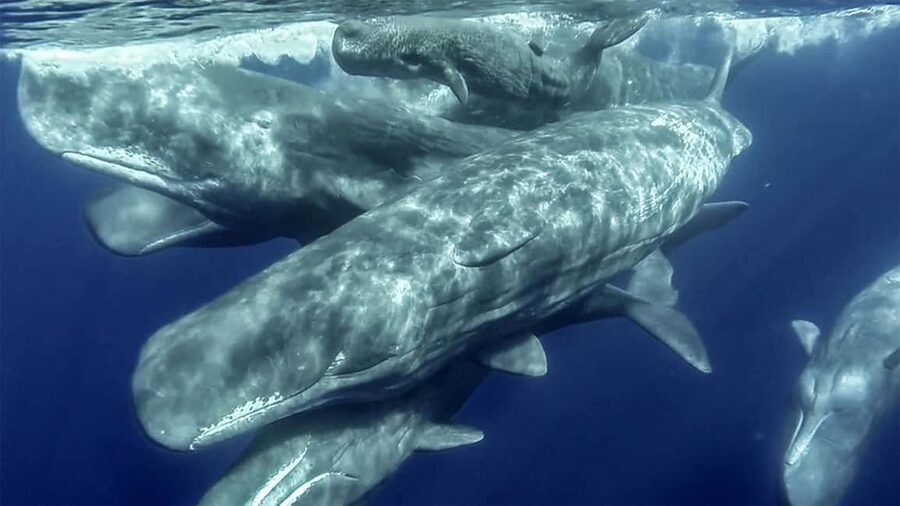
After the main whale watching time, you return for a look around Vila Franca do Campo’s islet. This part is shorter—about a 15-minute island photo stop plus a loop cruise—so don’t expect a long sightseeing day.
Still, it’s a smart addition. You’re able to view the volcanic islet from the water and look for marine life close to shore while the boat circles. If you’re only doing one guided activity on São Miguel, this loop helps the tour feel like more than a pure animal chase.
You also get a brief window back at the marina for free time and shopping. That’s useful if you want a snack, a drink, or a small souvenir before your next stop on the island.
Boat comfort, seating, and staying steady in the water
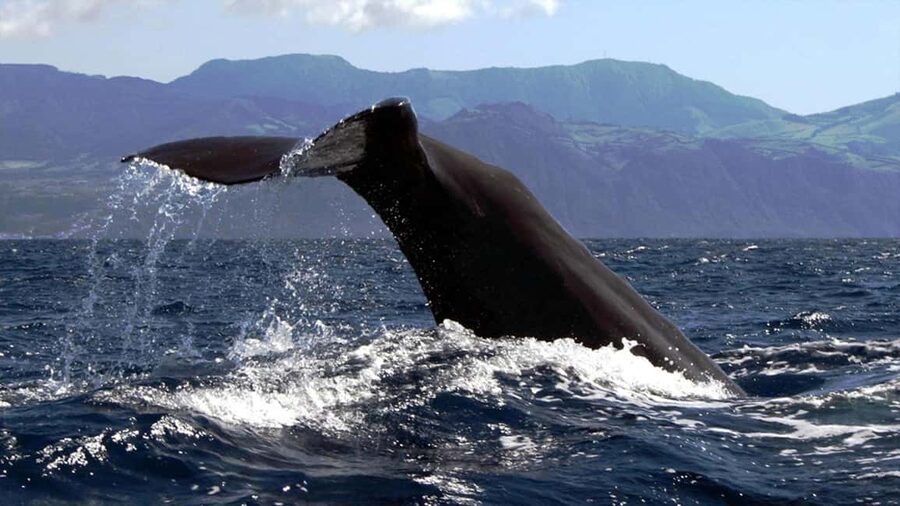
You’re on a zodiac RIB with a capacity designed for groups (reported as 12 to 28 people). That kind of boat can feel exciting because it’s quick and maneuverable, but it also means you should prepare for movement.
The tour provides an impermeable full suit and life vest. That’s a huge help because it reduces the “wet clothes panic” and lets you focus on watching rather than layering like it’s winter. You’ll still want warm clothing under the suit because sea air can cool you down fast.
One practical detail that gets praised: the crew helps manage seating and standing so you can see better. Several accounts mention a layout that works for different heights and positions, including guidance on who should stand and who should stay seated. That directly affects your viewing quality—so it’s not a small point.
If you’re prone to motion sickness, take it seriously. One report recommends sea sickness tablets in advance, noting that the ride can get bumpy.
Price and value: does $73 make sense for a 3-hour hunt?
At $73 per person for about three hours, the value comes from what’s included and how the experience is run. You’re paying for a live guide or marine biologist, an experienced skipper, the zodiac RIB ride, and key safety gear like the impermeable suit and life vest. The booking also includes admissions/fees and insurance.
The other value lever is the sightings guarantee with a free second tour if no whale or dolphin is seen. That matters because whale watching is inherently uncertain. You’re not just buying a ticket; you’re buying access to a repeat chance, should the ocean be stingy that day.
Also, the tour’s structure is designed to reduce wasted time: inland scanning, VHF coordination, and rapid repositioning. When hunts are efficient, you usually get more actual viewing minutes.
Best times and smart packing tips
The experience can be run at different times, and timing can shape your comfort. Some guides and riders specifically mention morning sunrise hours as a great time for the ride, which you should consider if your schedule allows.
For packing, follow the basics the crew stresses: eat light, bring your personal water supply, and come with sunscreen and chapstick. Bring warm clothing, even if the sun feels strong on land, and bring a camera—many people treat photography as the point.
Protect your gear. Salt spray is real, and the suit helps you stay warm, but your electronics still need care. A simple waterproof cover or dry bag makes a big difference.
Footwear and clothes matter too. One report advises bringing footwear/clothes you don’t mind getting wet, which is a fair bet on a fast zodiac ride.
Who should book, and who should skip this one
This tour is built around active time on the boat and careful observation at sea. That makes it a poor fit for some groups.
It’s not suitable for children below 4 years old, and unaccompanied minors aren’t allowed. It also isn’t for pregnant women, people with a weak back, people with delicate health conditions, or wheelchair users. If any of those categories apply, look for a different type of activity with calmer conditions.
If you can handle open water and you’re comfortable with uneven, sometimes bumpy motion, then you’ll likely enjoy the ride and the viewing time.
Should you book Terra Azul’s whale watching tour?
If you care about marine life but also want a well-run experience, I’d book it. The combination of live guidance, animal-focused observation, and a coordination system that gets you into the right areas fast is the kind of setup that turns a good whale day into a great one.
I also like the value logic: the gear is included, the price is reasonable for a live biologist-led outing, and the free second tour if no whale or dolphin is seen removes a lot of the anxiety that comes with wildlife watching.
Just don’t treat it like a guaranteed whale selfie. If the sea is rough or animals stay out of reach that day, you might still have a memorable time from the islet loop, the boat ride, and the marine education. If you can stay flexible and pack smart, this is one of the stronger bets for whale and dolphin watching on São Miguel.
FAQ
How long is the Azores Whale Watching & Islet Boat Tour?
The duration is 3 hours, including the boat cruise time for whale and dolphin watching and the short stop around Vila Franca do Campo islet.
Where is the meeting point?
The meeting point is Terra Azul base, Marina of Vila Franca do Campo, 4, 9680 São Miguel, Azores Islands.
Is pickup available from Ponta Delgada?
Pickup is optional. If you choose pickup, meet at the Carport of your hotel about 30 minutes before the scheduled tour time, and contact the operator to confirm the exact pickup time and location.
What languages are offered for the live guide?
The tour offers live guide support in Dutch, English, French, German, Italian, Portuguese, and Spanish. English is the official language, but other languages are not guaranteed.
What’s included in the price?
Included are a marine biologist or wildlife guide, an experienced skipper, zodiac RIB boat (12 to 28-person capacity), impermeable full suit and life vest, all admissions and fees, and insurance.
What should I bring or prepare before the tour?
Eat light and bring your personal water supply, sunscreen, and chapstick. Bring warm clothing, and bring a camera if you want photography. Light food is permitted, and you should protect personal equipment from the conditions.
Is there a sightings guarantee?
Yes. Sightings are guaranteed. If no whale or dolphin is sighted, your second tour is free.
Who isn’t allowed to join the tour?
Unaccompanied minors are not allowed. The tour is not for pregnant women, people with weak backs or delicate health conditions, and children below 4 years old. It also notes it’s not suitable for wheelchair users.