REVIEW · AKUREYRI
Big Whales & Puffins RIB boat tour from Húsavík
Book on Viator →Operated by Husavik Adventures · Bookable on Viator
Whales show up faster when you’re on a speedboat-sized mission. This Húsavík RIB tour gives you a quick run across Skjálfandi Bay, plus a chance at puffins on the right dates near Lundey. It’s built for close viewing, not slow cruising and waiting.
I especially love the small group feel, with seating for 12 passengers or fewer. I also like that the guide rides separately from the driver, so you get real attention when it’s time to spot, track, and ask questions.
The main drawback to plan for is the ride can be cold and wet. Even with gear provided, Iceland’s sea spray and wind are part of the experience, especially when conditions get rough.
In This Review
- Key things to know before you go
- Skjálfandi Bay from Húsavík: the wildlife reason this works
- The RIB ride: small boat views and a faster whale hunt
- What you get included (and what you still must bring)
- From Husavík Adventures to Skjálfandi Bay: what your time looks like
- What whales you might see in Skjálfandi Bay
- Lundey Puffin Island and the Tjörnes fossil layers
- Lundey (Puffin Island)
- Tjörnes peninsula
- When the sea turns rough: what to expect on the water
- Responsive crew, respectful distance, and why the engine sometimes shuts off
- Price and value: is $203.16 for 2 hours worth it?
- Logistics that can surprise you: meeting point and family comfort
- Getting to the meeting point
- Families on the boat
- Timing, weather, and last-minute changes
- Who this RIB tour suits best (and who might prefer something else)
- Should you book Big Whales & Puffins from Húsavík?
Key things to know before you go
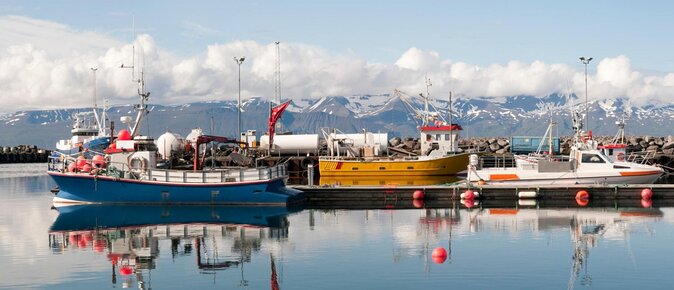
- Skjálfandi Bay is a whale “hot zone” with more than 10 species showing up year-round.
- RIB speed helps you cover ground fast, then position carefully when wildlife appears.
- Two-crew setup (captain plus guide) means safer driving and better spotting commentary.
- Puffins depend on season: Lundey is part of the tour around mid-April to mid-August.
- You’ll dress for cold water, and you’ll want gloves and a hat even in summer.
Skjálfandi Bay from Húsavík: the wildlife reason this works
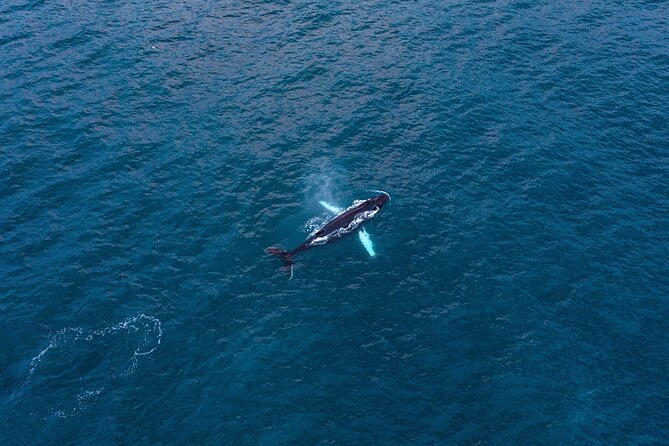
Húsavík is already known for whale watching, but Skjálfandi Bay is the real star. This is one of those places where whales and dolphins show up often enough that the crew can plan routes based on what’s been seen and what the sea is doing that day.
What you’re really paying for here is “time on water with intent.” The tour runs for about 2 hours, and the boat is designed to move quickly to improve your odds once sightings start happening. When you’re in the right zone, you can go from searching to watching in a hurry.
Also, the variety matters. The tour focuses on ocean life you may see around the area, including humpback whales and minke whales, plus species like white-beaked dolphins and porpoises. On good days, people report seeing several whales, sometimes very close.
The RIB ride: small boat views and a faster whale hunt
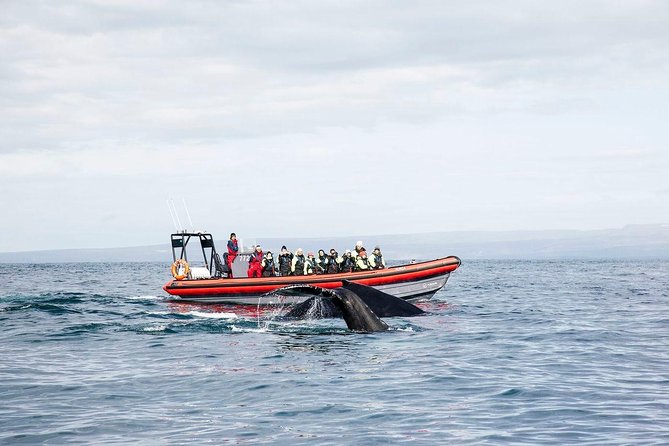
The biggest practical advantage is the boat size. With room for 12 passengers or fewer, it’s far easier to see than on larger high-deck ships where you end up boxed in by crowds. A smaller group also makes it simpler for the captain and guide to position people for viewing when whales surface.
Speed is the other factor. These are RIB boats, the kind that can zip out and make big miles in a short time. That matters because whale watching is partly search and timing. If whales are moving, you want a boat that can follow without wasting the whole tour idling.
One more thing that shows up in how people describe the experience: the crew keeps the hunt moving. Even when sightings don’t line up perfectly, you’re not stuck on a slow loop. You’re out there actively looking, then adjusting when something blows, breaches, or surfaces nearby.
What you get included (and what you still must bring)
This tour includes the essentials that keep Iceland survivable: warm water-resistant overalls and a life jacket. The life vest is compulsory by law in Iceland, so you’ll wear it, and it adds a layer of security when the sea gets bumpy.
You also get live commentary on board, plus a guide and driver/captain team. When rain shows up, you’ll be given a raincoat as needed. That combo of suits + rain gear is a real comfort upgrade, because your goal is to stay warm enough to enjoy the spotting, not just endure it.
What’s not included: gloves and hats. That’s not a minor detail. People repeatedly mention that you can get cold fast and that sea spray finds gaps. Pack gloves and a hat that can handle wind, and you’ll feel less like a soggy statue.
From Husavík Adventures to Skjálfandi Bay: what your time looks like
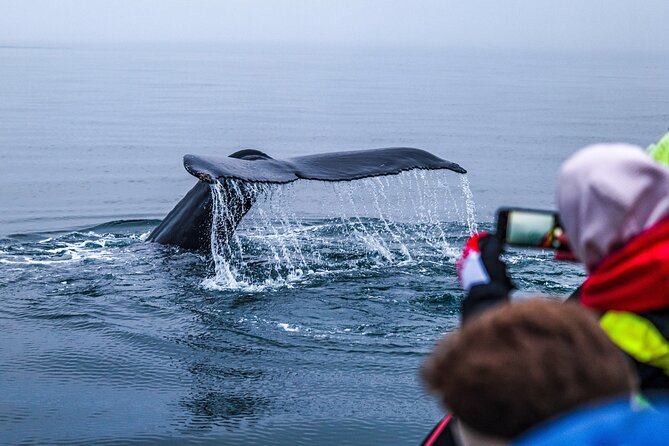
Your tour starts at Húsavík Adventures, Garðarsbraut, 640 Húsavík, and it ends back at the meeting point. There’s no hotel pickup included, so plan to get there under your own steam.
Once you set off, the crew sails out to Skjálfandi Bay. This is the “search-and-spot” stretch where the captain covers distance and the guide starts scanning the water. You’ll get commentary along the way, so you’re not just watching waves—you’re learning what you’re looking for and why it’s worth slowing down when the sea changes.
Then, when conditions allow, you shift from open water searching to focused wildlife time. That’s when the RIB’s maneuverability really pays off: the boat can adjust quickly to maintain respectful viewing distance without losing the sightline.
What whales you might see in Skjálfandi Bay
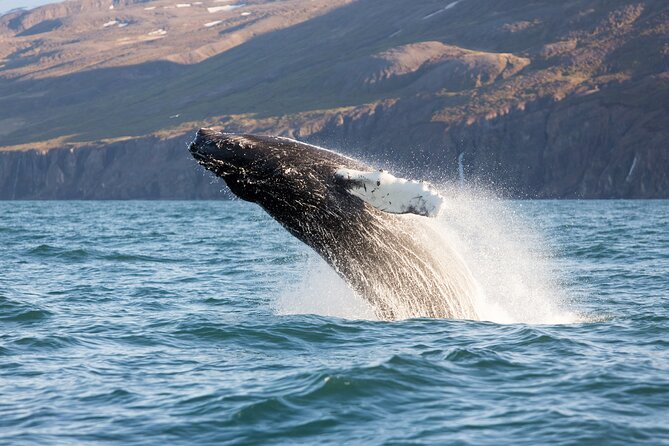
There’s no promise of a specific animal on any single outing—whale watching is nature, not a vending machine. Still, this tour targets an area known for frequent visits.
The species list you may encounter includes:
- Humpback whales
- Minke whales
- White-beaked dolphins
- Porpoises
On especially good days, people report more than one whale species in the same outing, and even rare sightings like Northern bottlenose whale. One clear pattern in the experience reports: when humpbacks are around, you can get repeated surface activity, sometimes with dramatic moments like breaching.
You’ll also notice how the crew handles “how close is too close.” A common theme is respectful positioning: slowing down when the whales approach, then letting the animals choose their path. It’s the difference between watching and interfering.
Lundey Puffin Island and the Tjörnes fossil layers
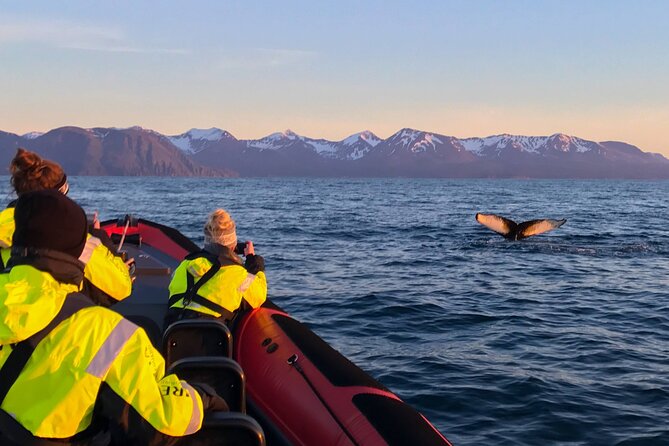
This is where the tour name earns its extra meaning—on the right dates.
Lundey (Puffin Island)
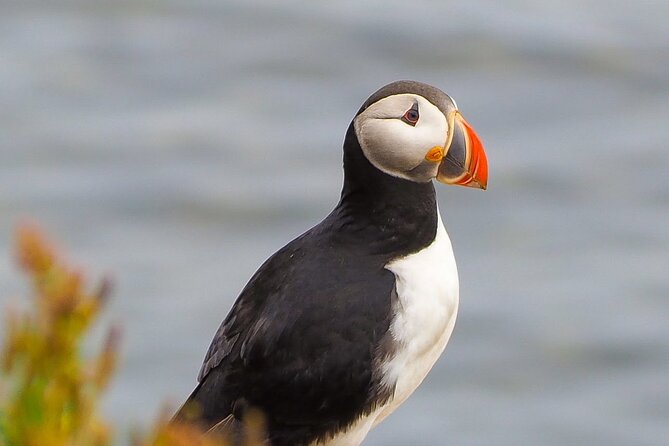
A stop includes Lundey, also called Puffin Island. Puffins are present on a seasonal window of about April 15 to August 20. During that time, you may see puffins flying around and diving near the island.
Outside that window, the puffin element disappears. The tour switches to big-whale-only emphasis, so don’t book expecting puffins year-round just because the tour name includes them.
Tjörnes peninsula
You also pass through the Tjörnes peninsula area, known for fossil layers, including an ancient layer around two million years old. Even if you’re here primarily for whales, it’s a nice reminder that you’re not just on a pretty coastline—you’re sailing past geology that’s older than most human stories.
When the sea turns rough: what to expect on the water
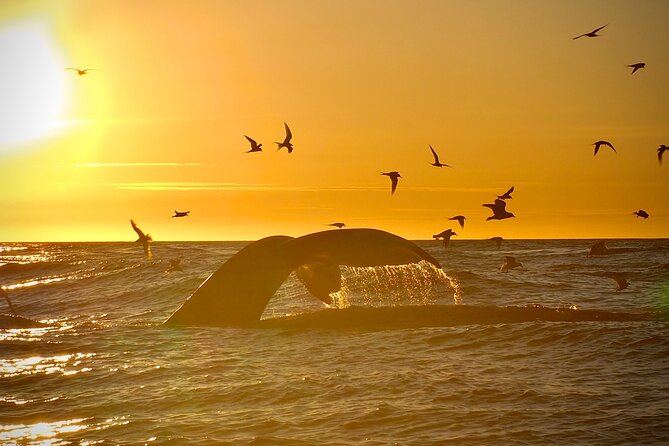
Cold and motion are part of the deal here. Even when everything goes well, the RIB ride can mean significant movement, especially as the boat accelerates or crosses choppier water. Expect sea spray. Plan on getting wet at least a little.
The good news is that the tour is built around that reality. The warm overalls are designed for exactly this kind of Iceland wind-and-water combo. Still, your personal comfort will depend on how you layer underneath.
A practical tip that keeps coming up: wear warm layers and don’t underestimate your gloves and hat. One person even noted that the cold air can sneak up under clothing. That’s the kind of small fix that makes the difference between enjoying the ride and rushing inside your suit like it’s a lifeboat.
Responsive crew, respectful distance, and why the engine sometimes shuts off
One of the best parts of this style of whale watching is how the crew treats approach distance as a behavior choice, not a thrill-seeking goal.
From what you’ll experience onboard, the approach works in phases:
- First, search efficiently to cover ground with minimal time traveling.
- Then approach from the side rather than head-on or from behind.
- If whales come into the close range, the captain may slow down further or shut off the propeller to let the animal set the pace.
It’s a small change that shows up big. When whales are calm enough to linger near the boat, your viewing can feel both exciting and oddly gentle. The engine-off moments, in particular, tend to create an atmosphere where you’re watching wildlife, not chasing it.
And yes, people do get close. Some reports mention spray from blowholes and whales appearing near the boat. That closeness is exactly why responsible handling matters so much.
Price and value: is $203.16 for 2 hours worth it?
At about $203.16 per person for roughly two hours, this isn’t a budget activity. But value here is more about what’s included and what you’re buying in practical terms.
You get:
- A small-group RIB format (better sightlines than larger ships)
- Warm overalls and mandatory life jacket
- A live guide who helps you identify what you’re seeing
- A captain focused on positioning and ride handling
- Puffin island stop on seasonal dates
Two hours sounds short, but it’s long enough for the hunt to make sense. Whale watching isn’t about packing in stops for Instagram—it’s about being on the water at the right moments, then staying flexible. The RIB style supports that.
If you’re doing this once in Iceland, it’s a strong pick because it stacks multiple chances into one outing: whales, dolphins/porpoises, and puffins when in season. If you want guarantees, you won’t find them in wildlife tours. But you will find a format designed to maximize your time when sightings are happening.
Logistics that can surprise you: meeting point and family comfort
Two practical issues are worth planning for.
Getting to the meeting point
The tour starts at Husavík Adventures in Húsavík. There’s no hotel pickup and no transportation to/from attractions included, so don’t assume you’ll be scooped up.
If you’re coming from Akureyri on a cruise day, the drive to Húsavík can be about one hour from the cruise port. Build that in, and double-check you know the exact address so you’re not gambling with time.
Families on the boat
Small groups help, but RIB boats still need safety and weight balance. In one case, a family reported being split across seating to keep safe and stable in changing conditions. If you’re traveling with kids, it’s smart to tell the crew at the start that you want to stay together if there’s any seating adjustment. Most crews will accommodate as best they can, as long as it’s safe.
Timing, weather, and last-minute changes
This tour requires good weather. When sea conditions get too rough, it may be changed or canceled for safety reasons, and you should expect that the decision can sometimes happen relatively close to departure.
If you’re visiting in a tight schedule, treat this as a “flex day” activity. Try not to stack it with something that would collapse if the boat doesn’t go out on time.
Also, pick your dates with the puffin season in mind. If you go outside about April 15 to August 20, you should expect big whales focus rather than Lundey puffins.
Who this RIB tour suits best (and who might prefer something else)
This experience is ideal if you:
- Want closer viewing than large-deck tours
- Enjoy fast, active wildlife searching
- Prefer smaller groups (up to 12)
- Plan to dress properly for cold water and spray
It’s also a solid choice for first-timers because the guide helps you understand what’s happening, not just what you’re hoping to see.
If you get motion sickness easily or you hate cold, bumpy rides, you may struggle here despite the gear. You might still enjoy it with the right layers and a sensible attitude, but this is not a lazy boat cruise.
Should you book Big Whales & Puffins from Húsavík?
Yes, if you want the best odds for close whale viewing in a small-group format and you’re willing to dress for wind and wet. The tour’s value comes from the combination of speedy RIB hunting, a dedicated guide, and included warming gear.
Book it especially confidently during puffin season (mid-April through late August) if Lundey and the birds are on your “must see” list. Outside that window, go in with the right expectation and treat it as a big-whale-focused day.
Quick checklist before you commit:
- You can handle a moving, cold ride
- You’ll bring gloves and a hat
- You know how you’ll get yourself to the Husavík meeting point
- You pick dates that match the puffin season if that matters to you
If you want one Iceland whale day that feels active, personal, and built around spotting, this is a strong choice.