REVIEW · ISTANBUL
Bosphorus Sightseeing Cruise Tour with Audio Guide
Book on Viator →Operated by SeaLand Trip Bosphorus Cruise · Bookable on Viator
Two hours, and Istanbul changes sides. This Bosphorus sightseeing cruise glides between Europe and Asia while you sip free Turkish tea and follow an 11-language audio guide.
The route packs in palace views, historic towers, and waterfront neighborhoods without you changing hotels or buses. One thing to plan for: the live onboard narration is limited, so you’ll get the best experience by using your phone audio with headphones.
I also like that it’s a simple way to get your bearings fast on the water. You’re buying time and views, not a deep classroom lecture.
In This Review
- Key things to know before you go
- Price and what you actually get for about $12
- Meeting point, timing, and the easiest way to board without stress
- The audio guide setup: great idea, but you must use it right
- The Bosphorus route: what you’ll see, why it’s worth it, and what to watch for
- From Galata Bridge to Galata Tower: a strong first-frame of the city
- Hagia Sophia and Topkapi Palace: big-name silhouettes from the water
- Galataport and the Cihangir-to-Bosphorus neighborhoods: modern waterfront with old texture
- Dolmabahçe Mosque and Dolmabahçe Palace: where East meets West in one coastline
- Beşiktaş Stadium, Çırağan Palace, and the university stretch: daily life beyond monuments
- Ortaköy, the Bosphorus Bridge, and the stretch of Kuruçeşme and Arnavutköy
- Rumeli Fortress and the bridges: the fortifications get serious on both sides
- Küçüksu Pavilion, Kandilli, Kuleli High School: calmer Asian-side waterfront energy
- Yalı waterfront mansions and the finish toward Beylerbeyi and Maiden’s Tower
- Comfort, crowding, and the “listen with your eyes” strategy
- So, should you book this Bosphorus cruise?
- FAQ
- How long is the Bosphorus sightseeing cruise?
- Do I get an audio guide on this tour?
- Do I need headphones for the audio guide?
- Is Turkish tea and Nescafé included?
- Is Wi‑Fi available on board?
- Where do I meet for the cruise?
- Can I cancel for a refund?
- Are service animals allowed?
Key things to know before you go
- Front seats help with sound: if you’re on the top deck, being closer to the front makes the audio easier to catch.
- Bring headphones and a charged phone: the audio guide runs through your browser and needs your own headphones.
- You’ll see landmarks more than you’ll stop: you mostly pass by the sights from the boat.
- Sunset cruises are a smart choice: you get daytime context and evening glow depending on the departure time.
- Lower deck audio can be tricky: some people found the onboard speaker better upstairs, and used the phone option downstairs instead.
Price and what you actually get for about $12
At around $12 per person for roughly 2 hours, this is a “value-first” cruise. You’re not paying for private guiding or museum entry tickets. What you are paying for is a smooth Bosphorus ride that gives you a big-picture look at Istanbul’s waterfront, palaces, and fortresses in one shot.
This kind of cruise is especially useful when you’re on a tight schedule. It can help you decide what to do next on land—like whether Topkapi or Dolmabahçe deserves your full attention later.
And yes, the included unlimited Turkish tea and Nescafé matters. It turns the cruise from just sightseeing into a small break. On a windy day, having something warm to hold is underrated.
You can also read our reviews of more tours and experiences in Istanbul.

Meeting point, timing, and the easiest way to board without stress
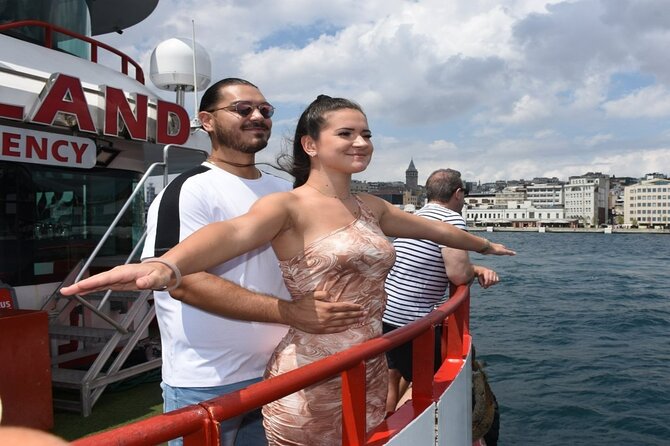
The tour starts at SeaLand Travel Agency (Eminönü), at Rüstem Paşa, Ragıp Gümüşpala Cd. No:8/2, 34116 Fatih/İstanbul. The cruise ends back at the same meeting point.
Two practical tips from how this runs in real life:
- Arrive a little early. This boat can get busy, and lining up can feel chaotic when lots of people surge at once.
- Pick your side with your photos in mind. For evening departures, one handy tip is to choose the left side if you care about how the sights line up on the way back.
Also, there’s Wi‑Fi on board and a restroom, which helps when you’re out on the water for the better part of two hours. (If the Wi‑Fi is weak while you’re cruising, you’re not stuck—your main tool is still your phone audio.)
The audio guide setup: great idea, but you must use it right
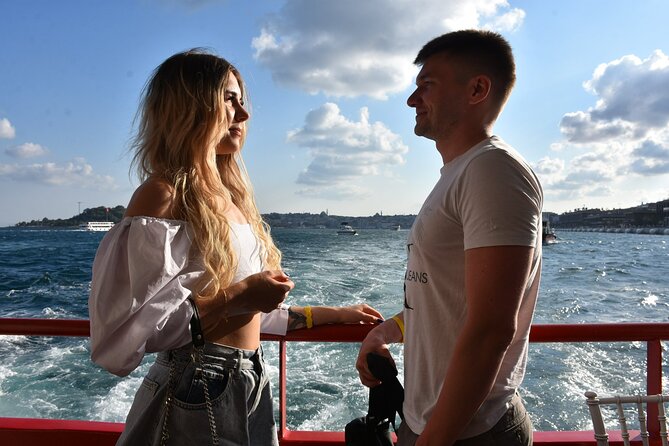
Here’s the core of this experience: the tour uses a multilingual audio guide on your smartphone. The onboard loudspeakers are mostly for general info and safety, not a full narration for each landmark.
Important practical details:
- No app download is required. You use your phone’s browser.
- You need a fully charged smartphone.
- You’ll want your own headphones for the clearest sound.
- Instructions are posted on the boat, and staff can help if you’re stuck.
- The audio guide uses GPS to match landmarks as you pass them, so it’s more useful than a random playlist.
What can go wrong:
- The onboard speaker sound can be muffled in wind or near engine noise, especially if you’re seated farther back.
- Some people found the phone audio worked best when they needed it most, particularly if onboard sound was hard to hear.
- In a few cases, the audio flow can feel miscoordinated, so don’t assume every landmark will feel perfectly timed.
My advice: charge your phone before you go, bring headphones you trust, and be ready to use the browser audio rather than relying on the loudspeaker.
The Bosphorus route: what you’ll see, why it’s worth it, and what to watch for
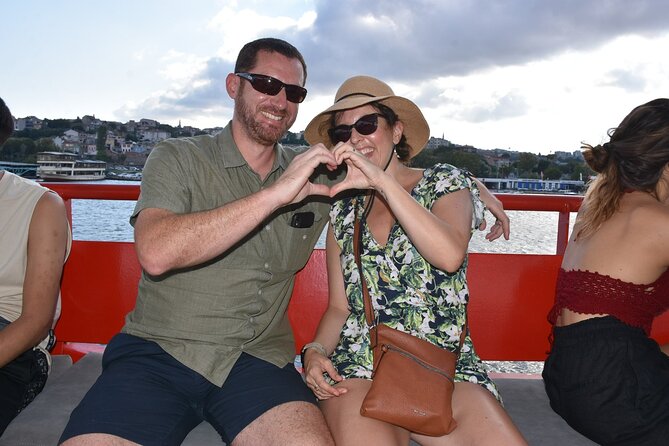
You’re basically doing a moving Istanbul panorama. You’ll start around the Golden Horn area, head along the European shoreline, cross views toward the Asian side, and finish near the entrance of the Bosphorus with Maiden’s Tower.
Below is a “follow the scenery” guide to the major named sights you’ll pass.
From Galata Bridge to Galata Tower: a strong first-frame of the city
You kick off with Galata Bridge, connecting Istanbul’s historic and modern districts over the Golden Horn. Built in the 19th century, the current structure dates to 1994. It’s famous for seafood restaurants underneath and fishermen above—exactly the kind of street-level detail you miss from most viewpoints.
Next up is Galata Tower (built 1348 by the Genoese, about 67 meters). It began as a watchtower and is associated with Hezarfen Ahmed Çelebi’s legendary flight. From the boat, it’s one of those “yep, that’s the postcard” moments—plus a good landmark to orient yourself.
Practical photo note: early in the cruise, your boat movement tends to feel smoother, so grab shots before everyone crowds onto the rail.
Hagia Sophia and Topkapi Palace: big-name silhouettes from the water
The cruise then sweeps you toward one of Istanbul’s most famous symbols: Hagia Sophia. Built in 537 as a Byzantine cathedral, it later became an Ottoman mosque, and is now a mosque again. From the Bosphorus, you’ll mainly see the scale—especially the massive dome and the visible style cues like the mosaics.
Then it’s Topkapi Palace, the Ottoman sultans’ residence for nearly 400 years. You’ll pass with the palace sitting high above the shore, with royal treasures, sacred relics, and courtyards described via the audio guide. It’s a good “overview view,” but not the kind of view that replaces visiting inside if you want the full story.
What to watch for: some of the most famous buildings are still best photographed from the side. Don’t expect perfectly head-on angles the whole time.
Galataport and the Cihangir-to-Bosphorus neighborhoods: modern waterfront with old texture
You glide past Galataport (Galata Cruise Port), a modern waterfront hub that opened in 2021. It includes an underground terminal and a mix of shops, restaurants, and museums. It’s a nice contrast: sleek port architecture against the historic shoreline.
Nearby, Cihangir Mosque sits in the Cihangir neighborhood. Built in the 16th century under Sultan Suleiman the Magnificent and named after his son Cihangir, it’s known for a calm atmosphere and Bosphorus views—though from the boat, you’ll mainly catch its silhouette.
You may also see Mimar Sinan University of Fine Arts (founded 1882 and named for Ottoman architect Mimar Sinan), and then the European shoreline continues toward the Dolmabahçe area.
Dolmabahçe Mosque and Dolmabahçe Palace: where East meets West in one coastline
Near Dolmabahçe Palace, you’ll spot Dolmabahçe Mosque, finished in 1855. Its design combines traditional Ottoman mosque architecture with Western influences, which is exactly what makes this stretch visually interesting from the water—you get a “hybrid style” feeling without needing to interpret every detail.
Then comes Dolmabahçe Palace itself. It served as the main administrative center of the Ottoman Empire from 1856 to 1922. You’ll see it along the Bosphorus, with its blend of architectural influences and its long role in state life.
From the cruise perspective, this is one of the most satisfying sections because it’s concentrated: palace views plus mosque views, all with the water right in front of you.
Beşiktaş Stadium, Çırağan Palace, and the university stretch: daily life beyond monuments
You’ll also pass Beşiktaş Stadium (Vodafone Park), home of Beşiktaş J.K. If you’re a football fan, it’s a quick “local identity” moment amid the big historic names.
Further along is Çırağan Palace, an Ottoman imperial palace in the 19th century. It sits right on the Bosphorus, and from the boat it’s easier to appreciate the waterfront positioning than if you were visiting on foot.
In the same broad corridor, you may also pass Galatasaray University (founded in 1481 as a school for the elite in the Ottoman Empire) and then continue down the shore toward neighborhoods like Ortaköy.
Ortaköy, the Bosphorus Bridge, and the stretch of Kuruçeşme and Arnavutköy
Ortaköy is known for cafés, art galleries, and views over the Bosphorus. From the cruise, it feels like a social shoreline—less about one single building and more about a whole patch of life.
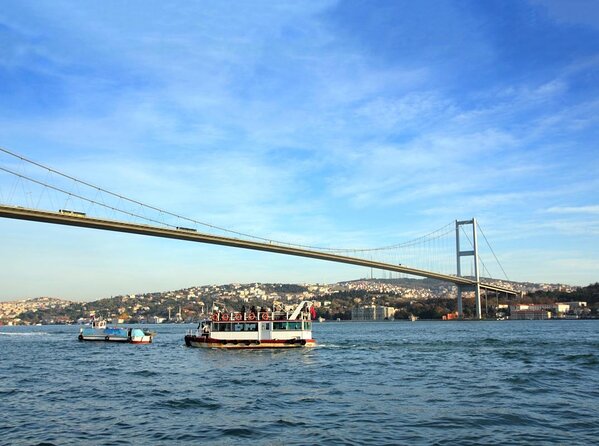
You’ll then cross in view of the Bosphorus Bridge, officially called the 15 July Martyrs Bridge, which connects Europe and Asia. It’s one of those landmarks that immediately makes you feel the scale of the city.
After that, you may see Galatasaray Island, a private island in the Sea of Marmara owned by Galatasaray University, used for educational and recreational purposes. Nearby are upscale Bosphorus-area neighborhoods such as Kuruçeşme, plus the quieter-feeling Arnavutköy, known for narrow streets and old wooden houses with traditional Ottoman architecture.
Photo and pacing tip: this mid-cruise part is where people settle into a rhythm. If you’re going for photos, treat the early and late sections as your best windows to avoid crowding at the rail.
Rumeli Fortress and the bridges: the fortifications get serious on both sides
As the route pushes deeper into the European side, you’ll pass Rumeli Fortress (Rumeli Hisarı), overlooking the Bosphorus. Fortresses change the whole mood of the cruise—they feel heavier, more strategic, less scenic.
Then you may see the Fatih Sultan Mehmet Bridge, also called the Second Bosphorus Bridge, connecting Europe and Asia.
On the Asian side later, you’ll also pass Anatolian Fortress (Anadoluhisarı), a counterpart overlooking the Bosphorus. When you see both fortresses in sequence, the geography feels more meaningful.
Küçüksu Pavilion, Kandilli, Kuleli High School: calmer Asian-side waterfront energy
On the Asian shore, Küçüksu Pavilion is one of the more charming names you’ll hear. Built in the 19th century by Sultan Abdulmecid I, it served as a summer retreat for the sultans. From the boat, it looks like a palace detail scaled for the shoreline, not a fortress scaled for defense.
You might also pass Kandilli, described as historic and peaceful on the Asian side along the Bosphorus, plus Kuleli Military High School, a historic military school overlooking the water.
This section is often where the cruise starts to feel less about “top attractions” and more about “how the Bosphorus neighborhoods live.”
Yalı waterfront mansions and the finish toward Beylerbeyi and Maiden’s Tower
You’ll see references to Istanbul Yalı, the historic waterfront mansions along the Bosphorus known for architecture and prime locations. Even when you can’t identify every building detail, the sheer shoreline design makes you understand why wealthy families built right at the edge of the water.
Then the Asian-side palace stretch continues with Beylerbeyi Palace, an Ottoman-era palace along the Bosphorus. After that, you may pass neighborhoods like Kuzguncuk and Üsküdar, both historic areas along the Bosphorus.
Finally, the cruise ends with Maiden’s Tower (Kız Kulesi). It’s a small historic tower on a tiny islet at the entrance of the Bosphorus. This is a great visual closer: you can’t miss it, and it’s the kind of landmark that feels symbolic even if you only see it briefly.
Comfort, crowding, and the “listen with your eyes” strategy
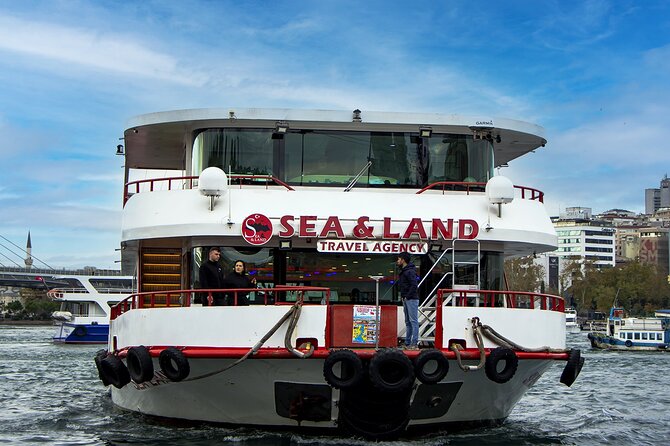
This cruise is not a private yacht. The boat has a two-level setup, and during busy hours it can feel crowded on the upper deck first.
What helps:
- Sit early if you want to be on the upper deck rail.
- If sound is hard to catch, switch to the phone GPS audio and use headphones.
- If you sit downstairs, don’t assume the loudspeaker will carry the audio well. The phone guide is the reliable backup.
Also, do a quick common-sense check for view quality. If windows look dirty, you’ll likely feel it in your photos. On a sunny day, smudges and streaks show up fast.
Restroom quality can be hit-or-miss on any boat, and you should expect basic rather than spa-level comfort.
So, should you book this Bosphorus cruise?
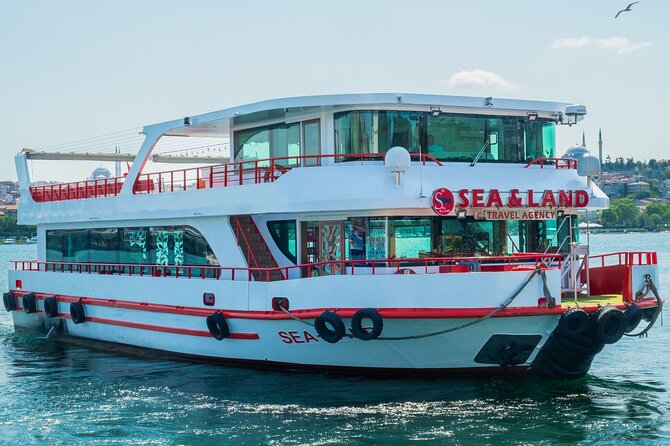
If your goal is seeing Istanbul’s big waterfront landmarks in about 2 hours at a fair price, I think this is a smart booking. It’s a good “orientation cruise,” especially if it’s your first day in town.
Book it if:
- You want a cheap, easy way to connect the European and Asian sides.
- You’re fine using the phone audio guide as your main narration.
- You care about views more than detailed museum-style commentary.
Skip it (or upgrade your expectations) if:
- You want a dedicated live guide talking constantly on a mic. This is mostly audio-on-your-phone.
- You hate crowds or plan to spend the entire trip standing at the rail.
- You’d rather take a more stop-and-go boat option than a “pass-by most landmarks” cruise.
Quick final call: bring headphones, charge your phone, and pick your seat early. Do that, and the Bosphorus ride becomes more than a ticket—it becomes a fast way to understand the city from the water.
FAQ
How long is the Bosphorus sightseeing cruise?
It runs about 2 hours.
Do I get an audio guide on this tour?
Yes. You get an audio tour guide in 11 languages, and it works through your smartphone in a browser (no app download needed).
Do I need headphones for the audio guide?
Yes. The audio guide experience depends on using your own headphones and a fully charged smartphone.
Is Turkish tea and Nescafé included?
Yes. Unlimited free Turkish tea and Nescafé are included.
Is Wi‑Fi available on board?
Yes. Wi‑Fi on board is included, though signal can vary while cruising.
Where do I meet for the cruise?
You meet at SeaLand Travel Agency (Eminönü), at Rüstem Paşa, Ragıp Gümüşpala Cd. No:8/2, 34116 Fatih/İstanbul, Türkiye, and the cruise ends back at the same meeting point.
Can I cancel for a refund?
Yes. You can cancel for a full refund up to 24 hours in advance. If you cancel within 24 hours, the amount paid is not refunded.
Are service animals allowed?
Yes. Service animals are allowed.