REVIEW · DURBAN
Durban: Durban: Whale and Dolphin Watching Boat Tour
Book on GetYourGuide →Operated by Isle of Capri Cruises Whale watching · Bookable on GetYourGuide
Durban’s whale season turns a boat ride into a story. What I like most is the chance to see humpback whales during their winter migration, then fill in the rest with dolphins and other sea life. The other big win is the human factor: a guide who explains what you’re seeing and keeps the boat positioned well without crowding the animals.
The main thing to consider is that sightings depend on conditions and timing, and your cruise route is weather-dependent. You also may not get the exact boat you expected, since departures can use different vessels when schedules or maintenance change.
Key highlights worth planning for
- Winter humpback timing: June to November is prime, with whales also passing Durban May to November
- Small group feel: an 11-passenger boat setup helps you get better viewing angles
- Guides who teach: you’ll get whale behavior context, plus tips for spotting action faster
- More than whales: dolphins are possible in season, and other marine life like turtles and sharks can show up
- Respectful distance: the crew aims for great views while following animal-friendly positioning
- Calm-day advantage: smoother water often means better spotting and even clearer whale sounds
In This Review
- Why Durban’s humpback season matters (May to November)
- From Wilson’s Wharf to open ocean: what 2 hours feels like
- How humpbacks and dolphins show up during the cruise
- The boat size and the guide make a real difference
- What to bring for comfort and better viewing
- Price and value: is $102 for 2 hours a smart buy?
- Who should book this tour (and who should skip it)
- Should you book the Durban whale and dolphin cruise?
- FAQ
- When do humpback whales pass Durban for this tour?
- How long is the whale and dolphin watching cruise?
- What wildlife can I expect besides humpback whales?
- Will I definitely see whales on every cruise?
- What boat will I ride on?
- Is food or drinks included?
- Where do I meet for the tour?
- Is the activity accessible and can I swim?
- Can I cancel if my plans change?
Why Durban’s humpback season matters (May to November)
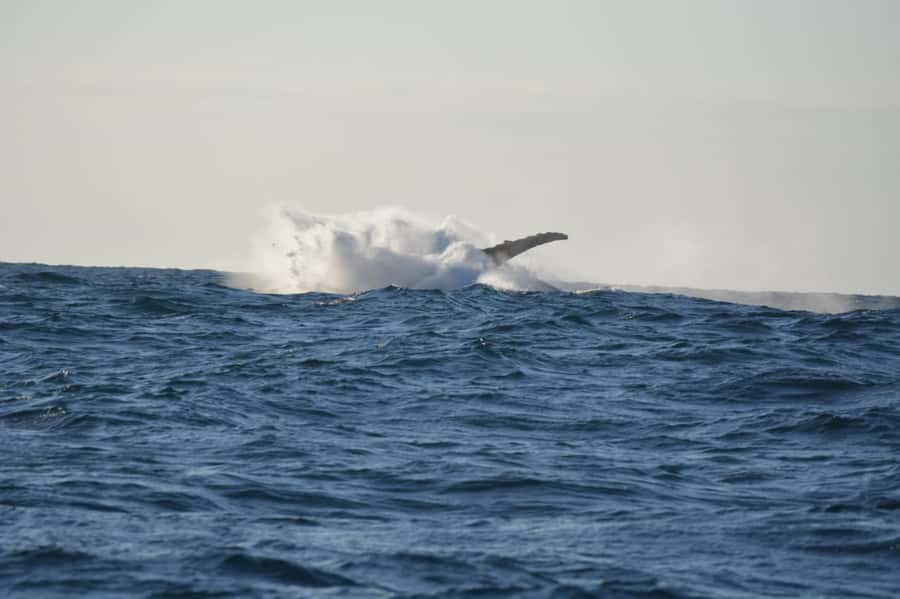
This tour is built around the migration of humpback whales through Durban waters. The big window is June through November, when whales travel from cooler southern feeding grounds toward warmer areas for mating and giving birth. If you’re flexible with your dates, this is the time to aim for.
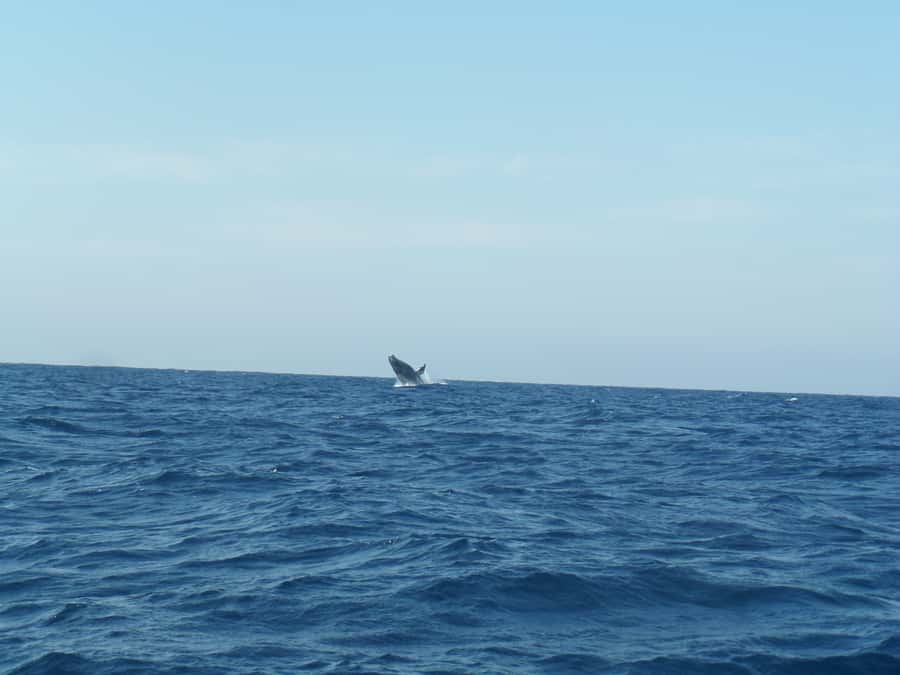
A helpful way to think about it: you’re not just trying to see whales. You’re trying to see them doing the behaviors that make humpback watching special—surface time, feeding-related movement, breaching, tail slaps, and the close-to-you curiosity that happens when they’re not just passing by at speed.
You’ll also get a realistic seasonal swap. In the summer months, whales migrate elsewhere, so the cruise shifts to dolphin watching and other local marine life. That matters because you don’t want to book expecting whales year-round. You’ll still be on the water. You just need the right months for the main event.
From Wilson’s Wharf to open ocean: what 2 hours feels like
The action starts at the Isle of Capri Cruises office on Wilson’s Wharf Marina, next to the Casa… Spur end of the complex. Plan to arrive early—your ticket needs to be presented at the office/kiosk 30 minutes before departure.
Once you’re aboard, the ride is set up so you can watch. You’ll head out into the deep blue of the Indian Ocean, navigating toward the Mozambican current, and you’ll sit in front-facing positions while the skipper and crew are behind you. That layout is practical. You’re not stuck twisting your neck for the whole trip.
The tour is 2 hours. That’s a sweet spot for ocean watching because it’s long enough to get farther out from shore when sightings are likely, yet short enough that you won’t feel drained if the sea is a bit choppy.
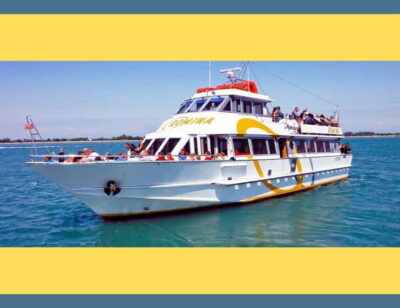
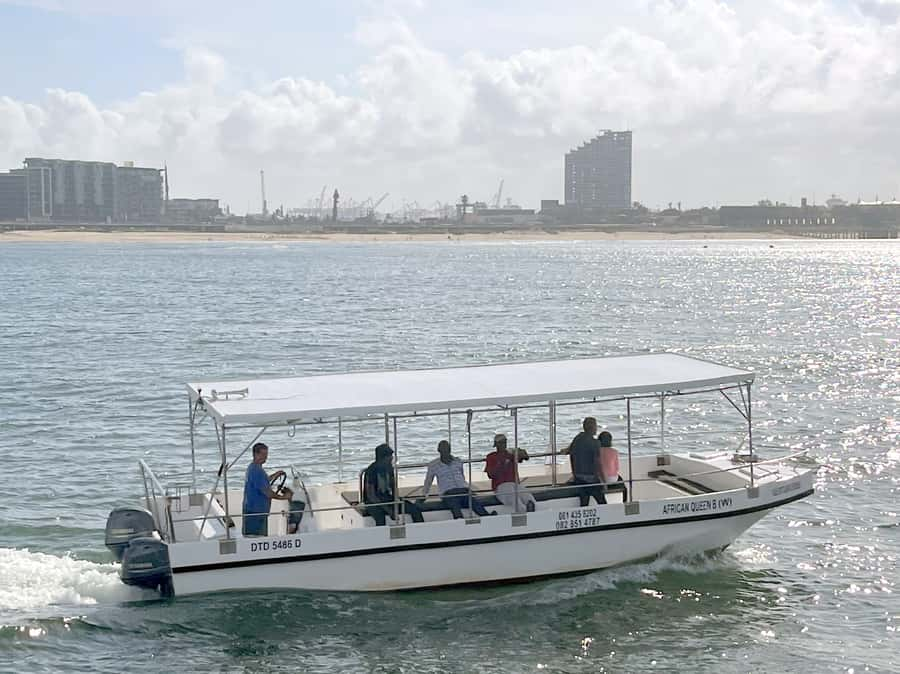
Also, keep in mind the departure setup: there are two boats that can leave at overlapping time slots. Your specific boat isn’t the whole story. The point is the wildlife time on the water.
How humpbacks and dolphins show up during the cruise
Your best odds depend on timing, sea conditions, and where the animals are moving. But the pattern is clear for Durban in winter.
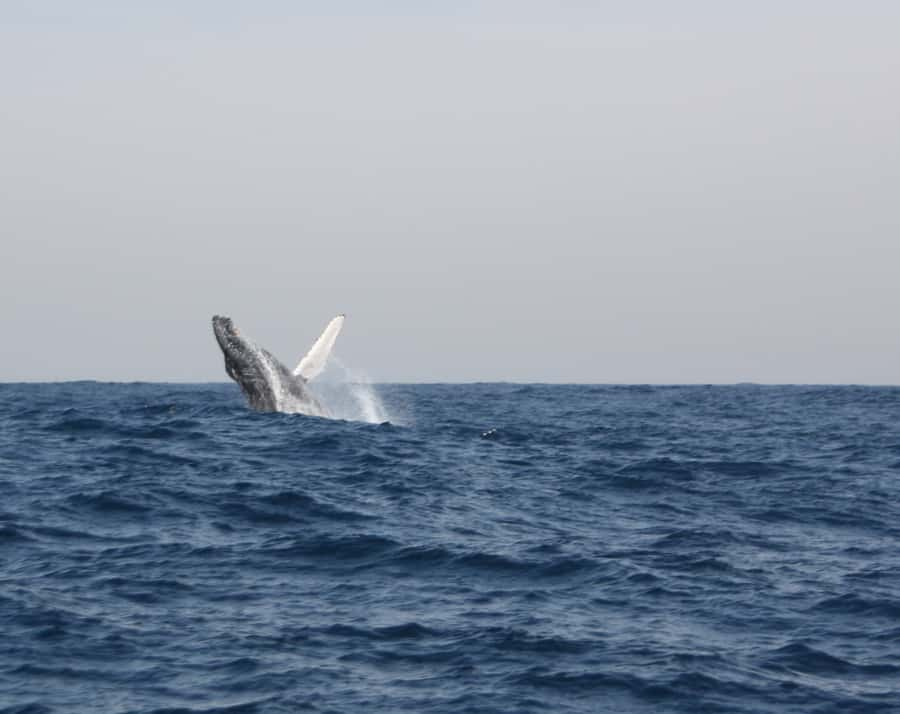
During the humpback season, you’re watching for surface moments—breaches, tail slaps, and the kind of slow cruising that lets you see shape and movement clearly. Humpbacks can be huge, around 15 meters (49 feet) and roughly 30 tons, so when they move into view it’s instantly noticeable.
If you’re lucky, you’ll see the more personal scenes—like a mother and calf together, calves playing or jumping, and pairs engaging in social behavior. One of the most memorable parts of the season is that the whales can hang around a while, giving the boat time to stay on the action rather than chasing constantly.
Dolphins are a major bonus. The tour is designed so you’re not waiting in silence if whales are slow to appear. Dolphins can be seen during the winter months, and they’re also part of the experience all year round.
Other sightings that can happen, depending on the day, include:
- Turtles sometimes surfacing to feed on surface delights
- Orcas in occasional encounters
- Manta rays and killer sharks at times
Even when the whales aren’t breaching constantly, the wildlife watching isn’t flat. Birds and fish show up too, and you’ll be learning what to look for as you go.
The boat size and the guide make a real difference
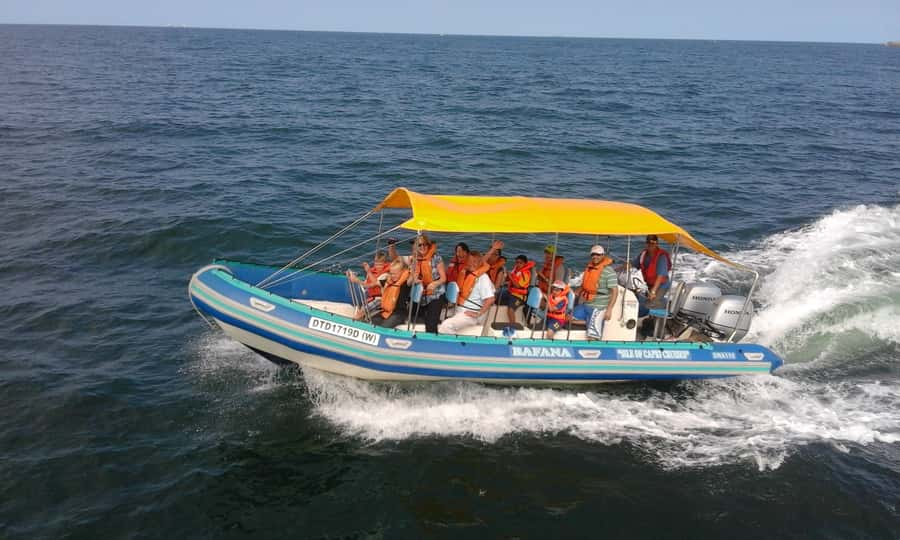
The cruise runs on an 11-passenger boat model, and the vessel is registered and permitted for whale watching in Durban (with operating experience since 2012). That matters for you because permits and local safety standards aren’t small details—they’re the difference between a responsible operator and a chaos-fueled out-and-back.
But the biggest praise you’ll see is about the guide. In the experience data I was working from, Skipper Bennie came up again and again for three reasons:
- He gets you out even when the passenger count is low, which can extend your time on the water.
- He’s upbeat and genuinely excited, which changes the vibe from passive watching to active spotting.
- He’s respectful with animal behavior—positioning for sight lines without pushing the animals.
One standout detail: on calmer days, the tour can be more sensory. There’s mention of hearing whale breathing when conditions are smooth. That’s the kind of payoff you can’t manufacture—it just happens when the sea cooperates.
Another practical pro move: the guides aim to keep you in good viewing positions. And in at least one case, the guide shared videos at the end. That’s useful if you’re trying to capture action but you’re also busy trying to keep your own framing steady.
What to bring for comfort and better viewing
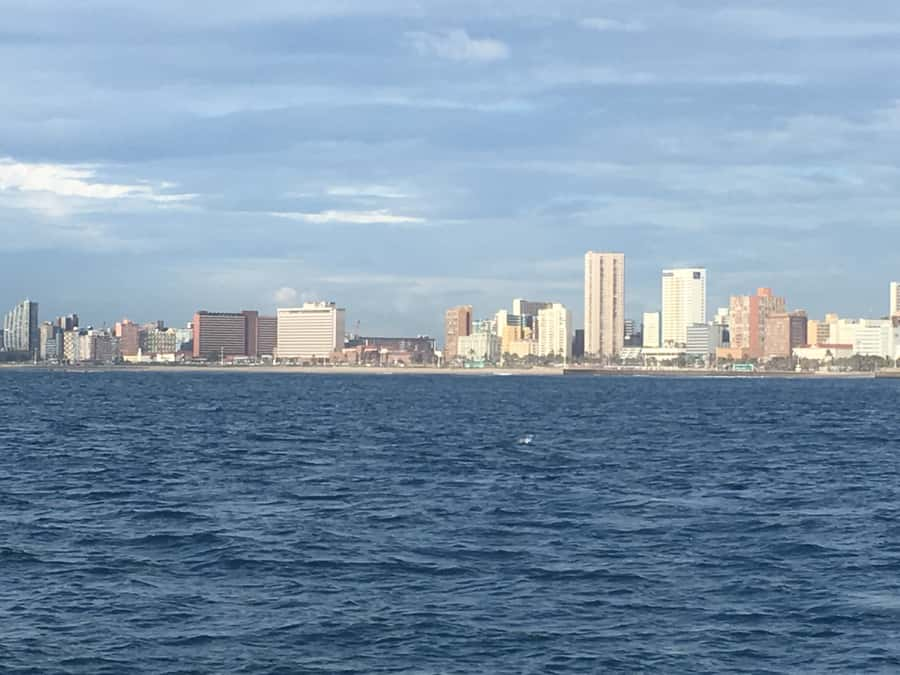
This is open-water time. You’ll want to dress like you’re going to be outside, moving, and possibly getting wind off the sea.
Bring:
- Hat (sun and glare off the water are real)
- Camera (and wipe-down cloth if you get sea mist)
- Sunscreen
- Water (food and drinks are not included)
- Comfortable clothes
- A scarf or extra layer for breeze
- Weather-appropriate outerwear
What not to bring (or do):
- Swimming isn’t allowed. You’re there to watch from the boat, not to enter the water.
- Don’t plan for a relaxed, flat, lounge-style cruise. The boat is moving, and the ocean is part of the experience.
If you can choose between days, go for calmer conditions. One of the clearest viewing tips from the experience data is that a windless day with small swells improves your odds—less bouncing makes it easier to spot, frame photos, and stay focused when a whale surfaces.
Price and value: is $102 for 2 hours a smart buy?
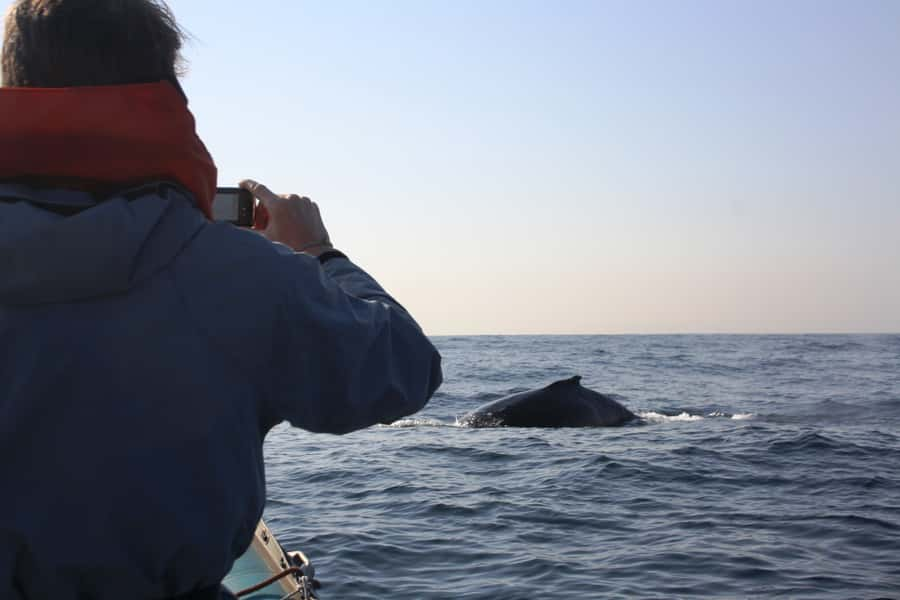
At $102 per person for a 2-hour whale and dolphin watching cruise, you’re paying for three things: (1) time on the water in a proper local operation, (2) interpretation from a guide, and (3) the chance to see winter humpbacks when they pass Durban.
Here’s how that value plays out in real terms:
- You’re not just buying a ticket. You’re buying access to a vessel and a route where sightings are realistically possible in season.
- The small-group setup (11 passengers) can mean fewer people competing for the best angles.
- The guide’s job is part education, part locating. If the sea is calm and the whales are around, you’ll likely get longer, richer encounters rather than quick glimpses.
Two cost-based considerations to keep it fair:
- Food and drinks are not included, so budget for water at the very least.
- Because sightings are not guaranteed and route adjustments happen with weather, you’re paying for the experience of searching responsibly, not a guaranteed whale count.
If your priority is an up-close humpback season moment, this price can feel very reasonable. If your dates fall outside May to November, temper expectations and treat the trip as a dolphin and sea-life cruise rather than a guaranteed whale hunt.
Who should book this tour (and who should skip it)
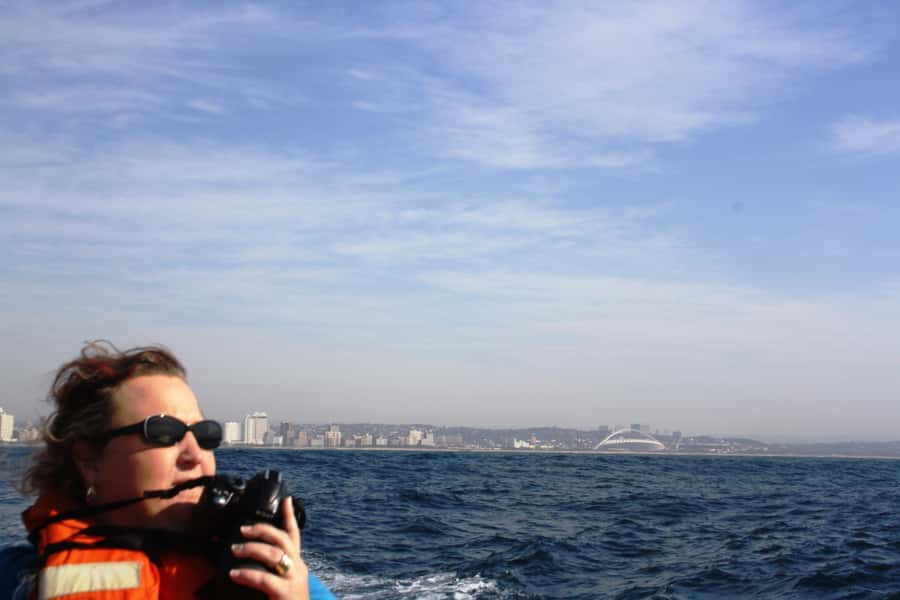
This cruise suits you best if:
- You’re visiting Durban during winter migration (June–November is the sweet spot)
- You want guided wildlife watching, not just sitting and hoping
- You’re comfortable on a boat for 2 hours and you can handle a bit of sea movement
- You care about animal-respectful viewing and want real explanations of behavior
You should think twice or choose another option if:
- You’re dealing with back problems (the boat experience isn’t described as suitable)
- You have mobility impairments or need wheelchair access (the activity is not wheelchair-friendly)
- You’re pregnant (it’s listed as not recommended)
- You’re traveling with very young children or toddlers (not recommended; parental responsibility applies)
- You’re expecting to swim with animals (not allowed)
Should you book the Durban whale and dolphin cruise?
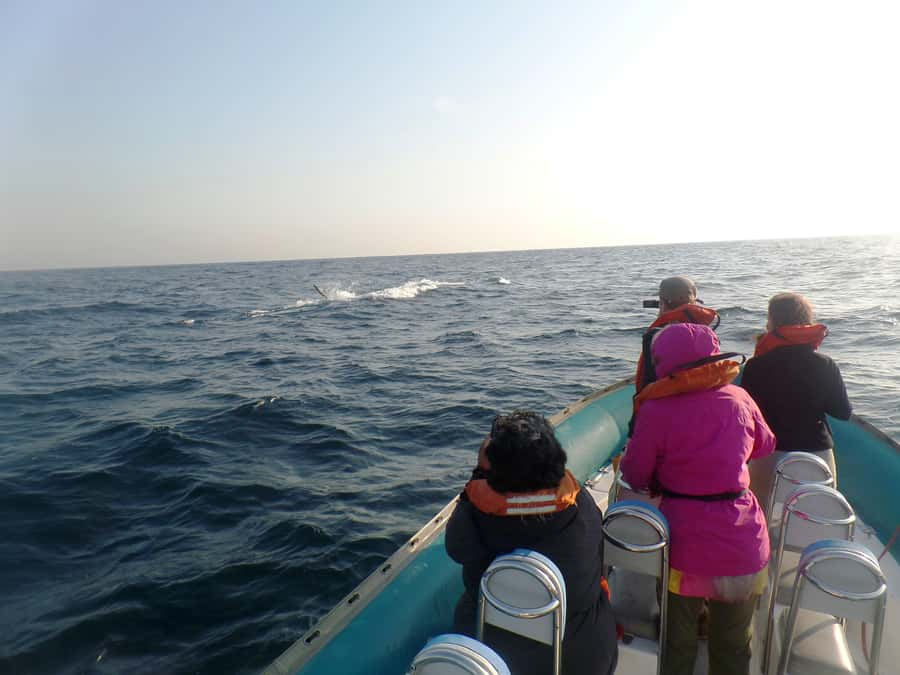
If your travel dates line up with May to November, and you want a guided, small-boat ocean experience focused on winter humpbacks, I’d book it. The best reason is simple: when the migration season hits, your odds jump, and the guide-led spotting turns the time into more than a random wildlife search.
My advice is to book with the right mindset. You’re choosing a responsible watching experience, not a guaranteed whale parade. Bring the layers, plan for weather shifts, and aim for a calmer day if you have the choice. If you do that, you’ll give yourself a strong shot at the full highlights—breaches, tail slaps, dolphins in the mix, and those moments where the animals seem to notice you watching them back.
FAQ
When do humpback whales pass Durban for this tour?
Whales pass Durban anytime from May to November each year. The most consistent winter whale season is June to November.
How long is the whale and dolphin watching cruise?
The tour lasts 2 hours.
What wildlife can I expect besides humpback whales?
You can look out for dolphins (seen in season and all year round), plus other local marine life such as birds and fish. Turtles can sometimes appear, and occasionally you may also encounter orcas, manta rays, and killer sharks.
Will I definitely see whales on every cruise?
Sightings depend on season and conditions, and whale and dolphin encounters are contingent on time of year and what’s happening in the area. The cruise route also depends on weather.
What boat will I ride on?
You won’t be guaranteed a specific boat. Cruises may use a selection of available vessels depending on weather, seasonal passenger numbers, and planned maintenance, but the cruise experience remains the same.
Is food or drinks included?
No. Food and drinks are not included.
Where do I meet for the tour?
Meet at the Isle of Capri Cruises office on Wilson’s Wharf Marina, next to the Casa… Spur end of the complex. Present your ticket at the office/kiosk 30 minutes before departure.
Is the activity accessible and can I swim?
It is not wheelchair-friendly, and it is not recommended for toddlers. Swimming isn’t permitted.
Can I cancel if my plans change?
Yes. There’s free cancellation up to 24 hours in advance for a full refund.