REVIEW · SARLAT LA CANEDA
From Sarlat: Beynac & Domme Tour & Dordogne Boat Ride
Book on GetYourGuide →Operated by Ophorus · Bookable on GetYourGuide
Castle views start fast here. This four-hour Sarlat outing strings together Beynac’s cliff-top fortress, Domme’s medieval bastide streets, and a calm Dordogne boat ride on a traditional gabarre-style craft. It’s a great way to get your bearings in the Perigord Noir without spending the day grinding narrow roads.
I especially like how the walking stops focus on the parts you’ll remember: Beynac’s dramatic setting above the river and Domme’s plan and fortifications. You also get a real change of pace on the water, where the guide’s narration helps the castles along the Dordogne make sense. One thing to plan for: the boat depends on water level and fog, and rain or cold can make the walking more demanding than it looks on a sunny brochure.
In This Review
- Key points at a glance
- Beynac, Domme, and the Dordogne: a tight circuit that makes sense
- From Place Pasteur in Sarlat: start the day without parking stress
- Beynac’s cliff-top castle walk: why the fortress looks impossible
- La Roque-Gageac gabarre cruise: the Dordogne views that connect everything
- Domme bastide in a trapezoid plan: medieval planning you can still read
- How the driver-guide storytelling works in practice
- Price and logistics: is $129 worth it for an afternoon?
- Weather, timing, and walking reality checks
- Who this tour fits best (and who should skip)
- Should you book the Sarlat Beynac Domme and Dordogne boat tour?
- FAQ
- Where does the tour start?
- How long is the tour?
- What’s included in the price?
- Is the boat ride guaranteed?
- How big is the group?
- What language is the tour offered in?
- What should I bring and wear?
- Is the tour wheelchair accessible?
- What if it’s raining?
- What’s the cancellation and refund rule?
Key points at a glance
- Small group capped at 8 means fewer people blocking your view and more time for questions
- English-speaking driver guide keeps the story clear during driving and at stops
- Gabarre ride at La Roque Gageac gives you castle views you can’t get from the road
- Beynac’s defenses include double walls and moats designed to protect the valley from attack
- Domme’s “Plus Beaux Villages” status comes with a strong medieval layout, not just pretty streets
- If the boat can’t run, the program swaps in a castle visit so the tour still feels complete
Beynac, Domme, and the Dordogne: a tight circuit that makes sense
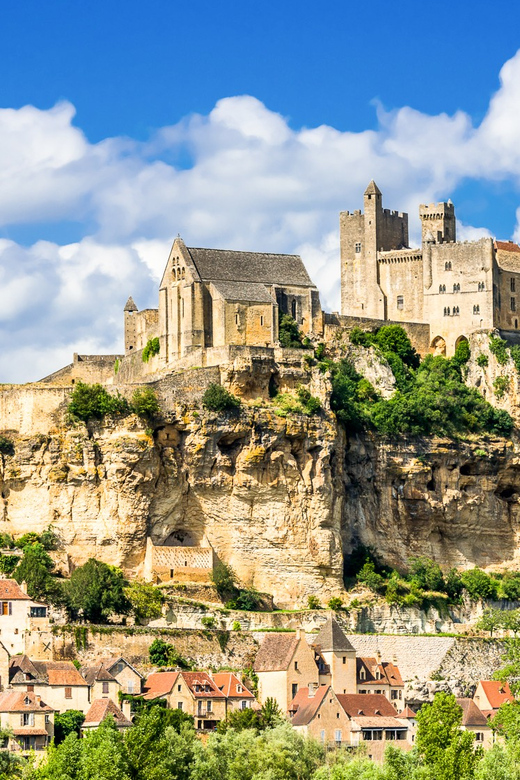
This tour is built for people who want the “big impressions” of the Dordogne quickly. You’re not stuck in one place for hours. Instead, you move between three connected viewpoints of the region—castle high above the river, fortified town planning, then the river itself where you understand why these sites mattered.
That structure is the value. In a single afternoon you see how the medieval barons controlled passage along the Dordogne, how towns like Domme were laid out for defense, and how the river framed daily life. And because the group is small, you don’t feel herded. I like that you get narration along the way, so you don’t need to be a medieval-scholar to follow what you’re looking at.
From Place Pasteur in Sarlat: start the day without parking stress
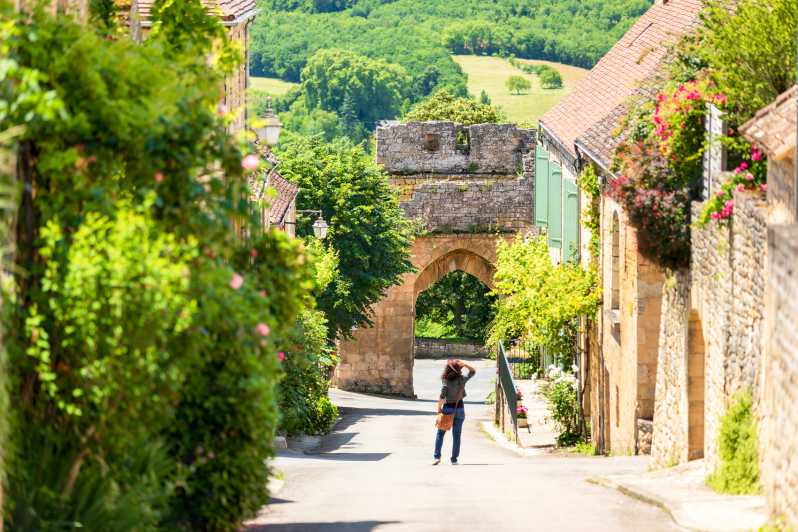
You meet at Place Pasteur bus stop in Sarlat-la-Canéda, then you’re off by van. The drive segments matter more than you might think. This is Dordogne—roads can be narrow and popular. Having a driver/guide handle getting you between viewpoints means you spend energy on the places, not on traffic.
Also, the guides seem to bring a steady rhythm to the day. For example, Lena is singled out for driving commentary that keeps you engaged, not just chauffeured. Benoit also gets praise for knowing the area well and adjusting when plans get messy—like when a boat ride was canceled unexpectedly for the group.
Beynac’s cliff-top castle walk: why the fortress looks impossible
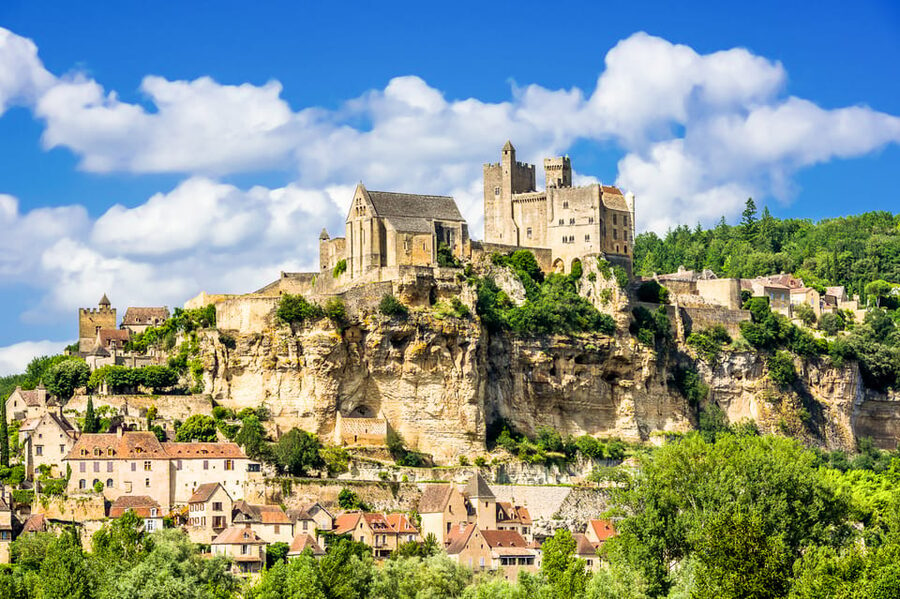
Your Beynac stop is a guided walking visit of about 45 minutes. Beynac is the kind of place where you immediately understand the medieval logic: the castle sits on top of a limestone cliff, dominating the north bank of the Dordogne. If you’ve ever wondered why castles chose dramatic sites, this one answers the question fast.
The story you’ll hear helps you see the architecture as defense, not decoration. The castle was built from the 12th century by the barons of Beynac, one of the four baronies of Périgord. The key idea is that the sheer cliff face already discourages assaults from one side. So the defensive work shifts to the plateau: double crenellated walls, double moats, and even a deepened natural ravine. There’s also a double barbican—basically layered “gatehouse” protection to control access.
What you’ll love here: the fortress feeling is real, even on a short walk. You’ll be looking down at the river and up at stone walls at the same time. That mix makes it easier to picture medieval movement—where people could travel, where they couldn’t, and why the Dordogne mattered.
A small practical note: you should wear comfortable shoes. The time is short, but the terrain around cliff-top villages can be uneven, and you don’t want to rush the details.
La Roque-Gageac gabarre cruise: the Dordogne views that connect everything
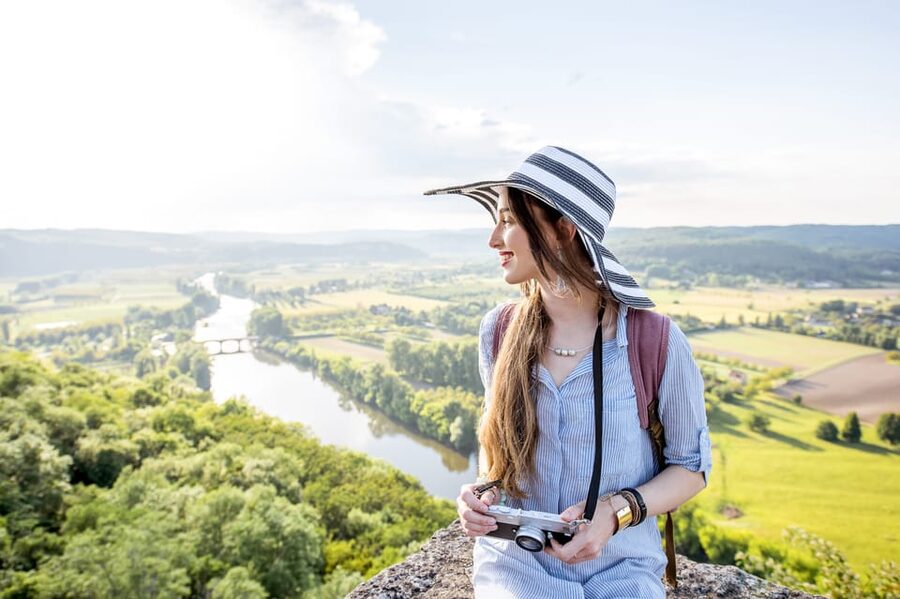
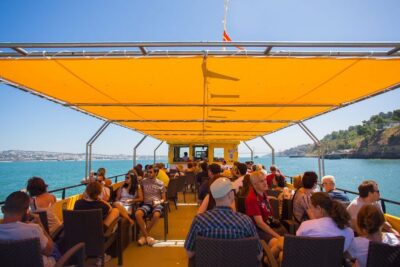
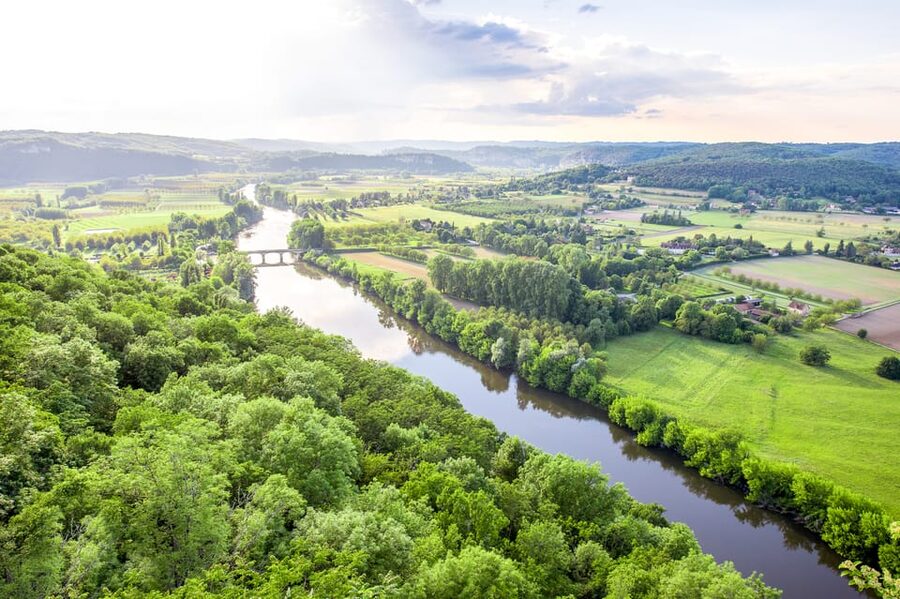
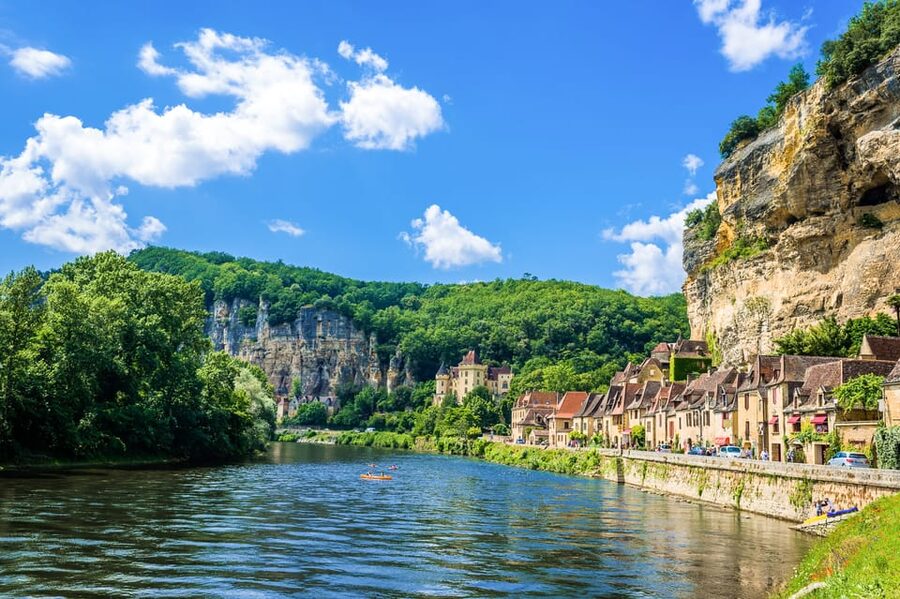
Next comes the river: La Roque-Gageac and a long-tail boat ride (listed as a gabarre-style experience). It runs about an hour, and this is where the tour really clicks. On land, castles sit above the river. From the water, you see the line of them—how they’re arranged along the Dordogne, and how the river was the highway.
The program also tells you how this works when conditions change. The boat ride is subject to weather conditions, and in case of high or low water or fog, the ride is replaced by a visit of a castle. That’s a big plus for planning, because you don’t end up with nothing if the water isn’t cooperating.
In real life, rainy days can happen. One review notes intermittent rain during the Dordogne boat ride, but the commentary stayed strong. Another mentions headphones not working on the boat, yet the views still carried the experience. So if you’re the type who relies on audio, bring a flexible attitude; the ride itself is the main event.
Why this part is worth it: you get an easy, low-effort way to “read” the river. The guide’s narration on the boat helps you identify what you’re seeing without guessing. And it’s a rare moment in a castle-heavy day where you can simply look.
Domme bastide in a trapezoid plan: medieval planning you can still read
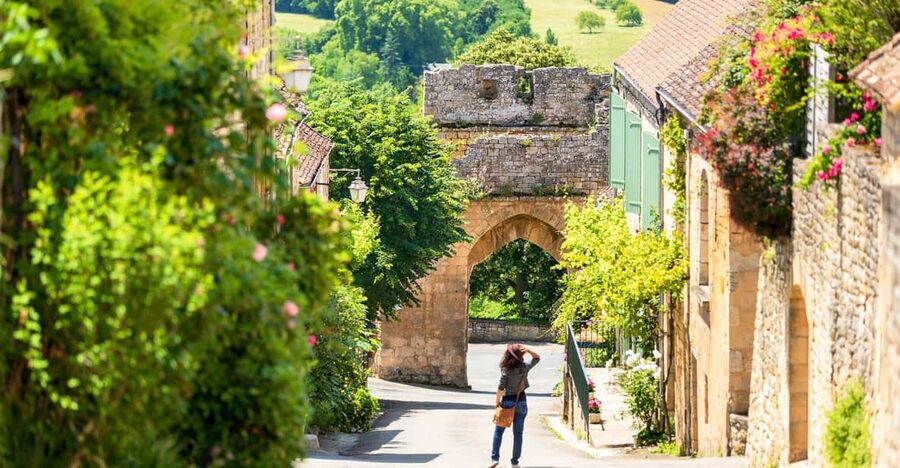
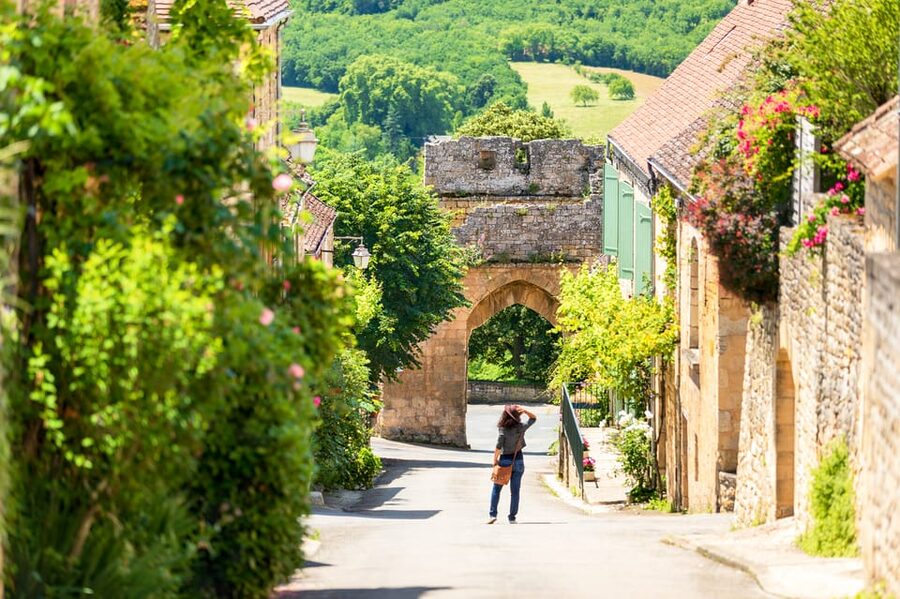
After the river, you head to Domme for a guided tour of about 40 minutes. Domme is classified as one of the Plus Beaux Villages de France, but it’s not just a pretty label. It’s a bastide—a fortified medieval town—adapted to the terrain.
One detail that stands out in the way the guide frames Domme: it has a trapezoid city plan, not the rectangular layout you often see with bastides. That tells you something important about how medieval planners dealt with the real world—curves, slopes, and defensive needs trumped perfect geometry.
You’ll also hear historical anchors that make the place feel connected to broader European events. In 1307, Knight Templars were imprisoned in Domme. During the Hundred Years’ War, Domme was coveted by the English, first taking the town in 1347. Control shifted repeatedly until 1437, when it finally returned to French rule.
What to do with your time: Domme stops best when you let yourself wander for a few minutes. Some guides leave time to explore on your own, and that makes sense here: the streets, viewpoints, and fortification feel “designed for walking.”
How the driver-guide storytelling works in practice
This isn’t a silent van tour. The driver-guide role matters, and the reviews show a pattern: guides keep the historical threads moving while you travel, then tie the story to what you see when you step out.
Lena, in particular, gets praised for narrative drive-time history about each stop and for making the group feel comfortable. Benoit earns standout mentions for both humor and adaptability. One review describes a situation where the boat company canceled unexpectedly and Benoit improvised beautifully while accommodating a companion with mobility issues. That’s not something you can plan for, but it’s exactly why having a strong guide can change the day.
Even when audio tools fail (like on-boat headphones), good narration and good views tend to carry the experience. And because the group is small—limited to 8—you get a better chance to ask questions and get answers that fit your interests.
Price and logistics: is $129 worth it for an afternoon?
At $129 per person for a 4-hour, small-group circuit, value comes from the blend of experiences: guided walking in two major villages plus a river cruise, all with transportation handled.
Here’s what you’re paying for beyond the “sites”:
- Convenience: you don’t have to organize separate tickets and timing for Beynac, Domme, and the river stop
- Routing and parking stress removed: reviews mention how driving around winding roads can be stressful, and guides handle that with ease
- Guided interpretation: the stops are short, so the guide’s context is what turns quick looks into real understanding
- Small-group attention: with a cap at 8, you’re less likely to feel lost in a crowd
If your goal is a slow day with long museum-style visits, this might feel like a sampler. But if you want a smart overview with memorable viewpoints—this is priced like an overview that tries to cover the essentials without wasting hours.
Weather, timing, and walking reality checks
The tour runs rain or shine, so you’re dressing for outdoor walking. Even on “easy” village terrain, wet stone and uneven ground can slow you down. The best advice is simple: wear shoes you can move in comfortably.
Also watch the water-dependent part. The boat is subject to conditions, and fog or water levels can trigger the castle replacement. That’s not a failure. It’s the tour operator keeping your afternoon intact with a substitute plan.
Finally, the day has a firm rhythm: van transfers, then guided walks, then a set-duration cruise, then the return to Sarlat. If you want extra time in one specific place, you may wish this were longer. One review calls the stops “tasters” and suggests a full-day version would be better. Keep that in mind if you’re a slow explorer.
Who this tour fits best (and who should skip)
This tour is a good match if you:
- want two medieval villages plus a Dordogne cruise in one afternoon
- prefer a small group over big-bus crowds
- like historical storytelling tied directly to what you’re seeing
- want help with navigating and parking between viewpoints
It’s not suitable for wheelchair users, based on the tour’s accessibility limits and the walking involved.
If you’re traveling with kids, note that you’ll need to specify a child’s age so a car seat can be provided if needed. Also, pets aren’t allowed.
Should you book the Sarlat Beynac Domme and Dordogne boat tour?
Yes, if you want a high-efficiency Dordogne afternoon that covers the headline scenes—Beynac’s cliff fortress, Domme’s fortified bastide layout, and a Dordogne river ride that shows you the castles from the water.
Book it especially if you value an English driver-guide who connects the dots while you move. The small-group size, plus the fact that the guide can improvise when the boat changes, adds confidence.
Skip it if you want lots of free time in just one village, or if walking comfort is a real concern. In that case, you might prefer a slower, single-site plan.
FAQ
Where does the tour start?
The meeting point is Place Pasteur bus stop in Sarlat-la-Canéda.
How long is the tour?
The experience runs about 4 hours total.
What’s included in the price?
You get the Beynac walking tour, Domme walking tour, the Dordogne boat ride when it runs, and an English driver/guide. Food and drink are not included.
Is the boat ride guaranteed?
The boat ride is subject to weather conditions. If there is high or low water or fog, it will be replaced by a castle visit.
How big is the group?
It’s a small group limited to 8 participants.
What language is the tour offered in?
The tour is offered in English only.
What should I bring and wear?
Bring a passport or ID card, and wear comfortable shoes for walking.
Is the tour wheelchair accessible?
No. It is not suitable for wheelchair users.
What if it’s raining?
It operates rain or shine.
What’s the cancellation and refund rule?
You can cancel up to 24 hours in advance for a full refund. It also offers free cancellation up to that point.