REVIEW · SOUTH OF FRANCE
Marseille: Half-Day Boat Tour to the Calanques National Park
Book on GetYourGuide →Operated by ECO-CALANQUES · Bookable on GetYourGuide
Marseille looks better from water. This half-day hybrid electric boat tour through the Calanques is all about quiet cruising, close-up scenery, and time to swim and snorkel, with a maximum of 12 people. One catch: the exact route and swimming breaks can shift with weather, and the meeting spot around the Old Port can take a minute to find.
I like that the boats are built for an intimate experience. You stay comfortable, the group stays small, and the captain can get you safely to the best coves. A big part of the appeal is that the motors are designed to run silently near the rock formations, so you actually hear sea life and feel like the Calanques are your own.
You’ll do this in either the morning (8:30am–12:30) or the afternoon (1pm–5pm). Plan to bring a swimsuit, towel, sunscreen, and something that helps you catch photos fast—because you’ll want them.
In This Review
- Key points before you go
- Quiet Calanques cruising on a hybrid electric boat
- Getting to the boat: Old Port meeting point by Mucem
- Route snapshot: from Château d’If to the Riou archipelago
- Calanques National Park: the swimming and snorkeling portion that matters
- Frioul and Riou: why the quick photo stops are worth it
- Small group comfort: why you’ll notice the difference
- Price and value: what $100 buys in a half-day
- What to pack so you’re not stuck mid-tour
- Should you book this Marseille Calanques boat tour?
- FAQ
- Where is the meeting point for the Marseille Calanques boat tour?
- How long is the tour?
- What’s the group size?
- Do I need to bring snorkeling gear?
- Is there pickup and drop-off from my hotel?
- What happens if the weather is not good?
- What should I bring with me?
Key points before you go
- Quiet hybrid electric cruising near protected Calanques for a calmer ride
- Small group size (max 12), so you get real help when gear or questions come up
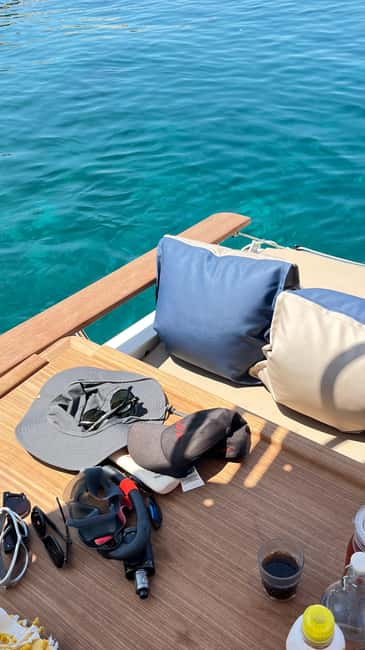
- Swimming and snorkeling built in, with masks and snorkels available
- Multiple coastal stops around Château d’If, Frioul, and the Riou archipelago
- Route depends on weather, including whether you get one or two swimming anchorages
Quiet Calanques cruising on a hybrid electric boat
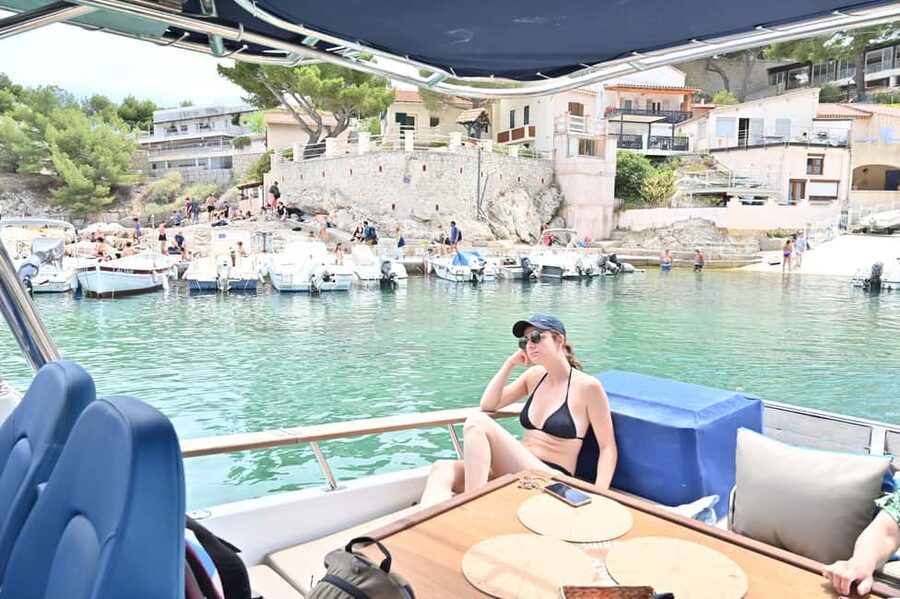
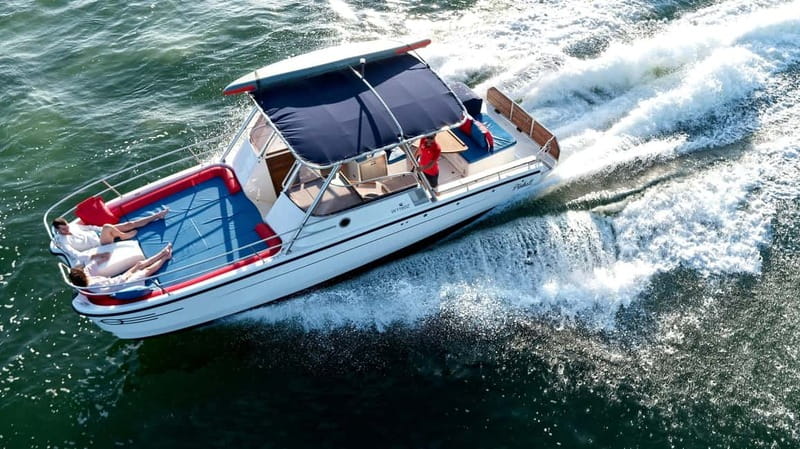
If your goal is the Calanques without the noise and chaos, this is the right style of tour. The boats use a hybrid electric setup, and the main payoff is how quietly they move when you’re close to the rock formations. That matters in the Calanques National Park, where the whole point is to enjoy the place while keeping disruption low.
The ride also feels more personal. With a small group—no more than 12—you’re not stuck watching a lecture while everyone else mills around. You get space to move, time to ask practical questions, and a good chance to hear the captain explain what you’re seeing from the sea.
And yes, there’s water time. The plan includes a first swimming stop in a picturesque cove, plus snorkeling gear on board. Later, you’ll have another longer swimming/snorkeling window at the Calanques area and, depending on the day, another stop around the Riou archipelago. That blend—scenic cruising plus actual time in the water—is what makes this tour feel like more than just a scenic loop.
Getting to the boat: Old Port meeting point by Mucem
You meet at Bateau Marseille Calanques at the corner of the Mucem area, just after the Fort Saint-Jean bridge. The exact pin is here: https://maps.app.goo.gl/ZLbs2nXMXBEcz6tQ7 (43.296306, 5.360824).
A few practical notes that will save you stress:
- Arrive early enough to orient yourself along the Old Port. One person had trouble finding the updated location, even though the tour still ran smoothly.
- The crew welcomes you aboard, so once you spot the right dock, it’s simple.
- There’s no pickup or drop-off from your hotel. You’re walking yourself to the Old Port area, then the boat handles the rest.
If you’re coming by foot from the Mucem side, give yourself extra time in busy traffic areas. Once you’re there, everything is straightforward: you check the boarding location and step aboard.
Route snapshot: from Château d’If to the Riou archipelago
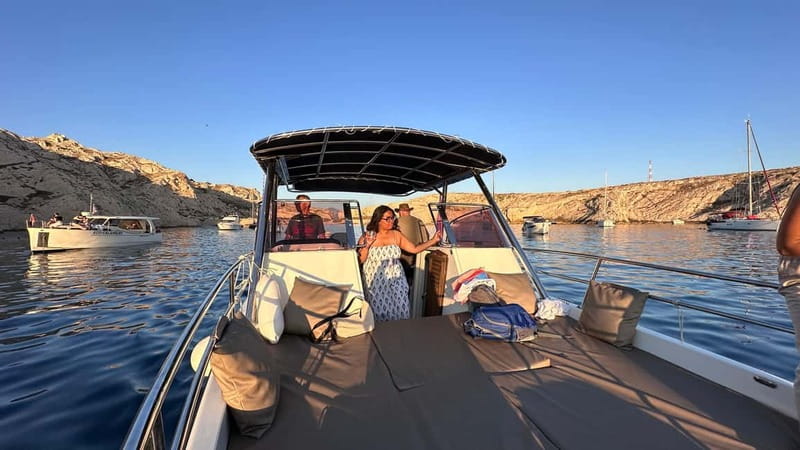
This is a half-day itinerary, but it’s packed with stops that each give a different angle on Marseille’s coastline. Think of it as a sea-level photo walk—only faster and with swimming breaks.
Here’s how your time typically flows:
- Speedboat ride (about 45 minutes) to reach the first major viewpoint region.
- Château d’If stop for a break and a photo moment, plus a bit of sightseeing by boat (about 5 minutes).
- This is your classic Marseille landmark moment, seen from the water instead of from shore.
- Frioul archipelago for a short photo stop and boat cruise (about 10 minutes).
- You’ll get that “islands just offshore” feeling, with views that look totally different than the city skyline.
- Les Goudes for a quick photo stop (about 5 minutes).
- This is more about coastline texture than standing still on a single point.
- Île Maïre for another brief stop (about 5 minutes).
- It’s short, but it keeps the tour moving and your view changing.
- Calanques National Park for the biggest time allotment for swimming and snorkeling (about 45 minutes).
- This is the heart of the experience: the protected rock formations, the cove feel, and the water time.
- Speedboat transfers (including one shorter segment and one longer cruising stretch).
- L’Archipel de Riou for a photo stop, then free time plus swimming/snorkeling (about 40 minutes).
- This adds a second underwater-and-coastline chapter before you head back.
Even when the exact order shifts with weather, the tour keeps the same spirit: you start from the Old Port, work your way past recognizable coastal highlights, and finish with more open-water views around Riou.
Calanques National Park: the swimming and snorkeling portion that matters
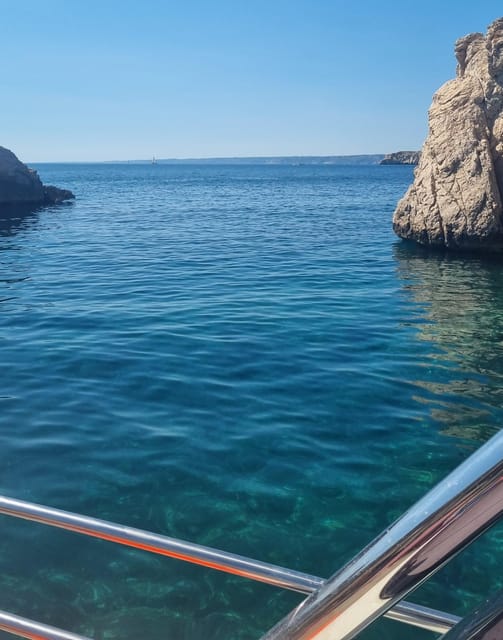
The Calanques stop isn’t just a quick “look at the rocks.” You get real water time. The plan includes a swimming and snorkeling break (about 45 minutes), with masks and snorkels available on board.
That helps in two ways:
- You don’t have to pack gear for one outing.
- You get enough time to actually use it, rather than rushing through a single shallow try.
When I think about which stop is the payoff, it’s this one. The protected coves and rocky edges look dramatic from sea level, but the real advantage is how the water time connects you to the place. You go from sightseeing to being part of it—safely, with the captain guiding the schedule.
One more practical point from real-world experience: if you’re traveling with kids or need extra attention during the swim, the guides have shown they can adapt. On at least one day, a captain helped manage a one-year-old while the adults swam. That doesn’t mean every situation will be identical, but it does suggest a calm, safety-focused approach.
Frioul and Riou: why the quick photo stops are worth it
The itinerary includes short photo moments at places like Frioul and Riou, and those can feel skippable on paper. Don’t skip them. These breaks are quick, yes, but they do two important things:
- They give you variety fast. You’re not stuck watching one stretch of coastline for hours.
- They set up the bigger swimming stops with a sense of where you are.
Frioul is your “islands near Marseille” view—good for wide shots and skyline-free angles. Riou adds another layer. After the Calanques National Park stop, the Riou archipelago gives you a second chance to swim and snorkel (about 40 minutes), plus free time to hang around the boat’s anchored area.
If your priority is water time, you still get it. If your priority is photography, you get enough different angles to make the half-day feel like more than one cove repeated twice.
Small group comfort: why you’ll notice the difference
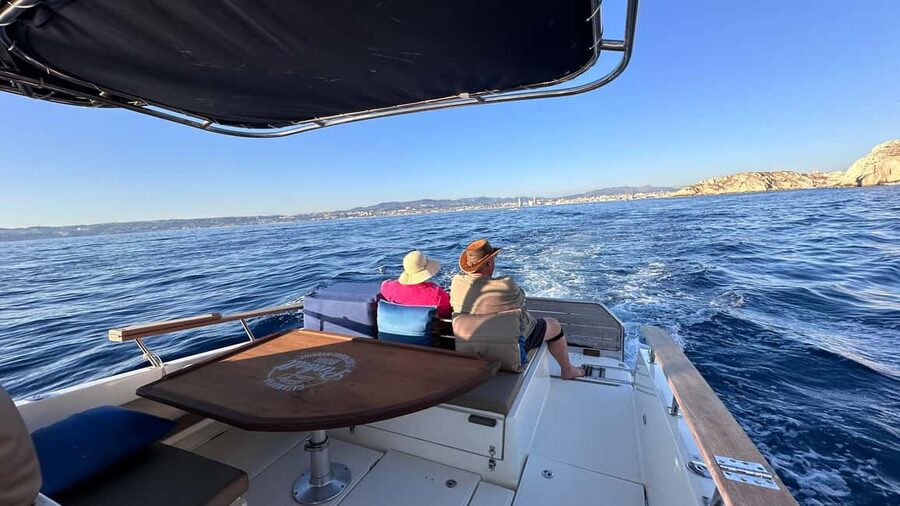
A maximum of 12 people is a meaningful detail here. On a big boat, you can end up watching and waiting. On a small one, you move together, the crew can manage safety more calmly, and the whole experience stays flexible around the water conditions.
This is where the guide quality shows. Captains and guides like Delia and Hugo have been described as friendly and focused on making the experience memorable, including helpful guidance around swimming and snorkeling. There’s also a safety-forward vibe mentioned in the experience style: you get the chance to enjoy the water without feeling like you’re on your own.
Comfort also comes from the boat itself. The ride is fast enough to cover ground, but smooth enough that it doesn’t feel like an endurance test. One person noted the boat was fast and smooth, and another mentioned a change to a bigger boat for comfort on a less-than-perfect weather day. That’s exactly the kind of practical adjustment that can keep your half-day from feeling like a compromise.
Price and value: what $100 buys in a half-day
At about $100 per person for around 4 hours, you’re paying for three main things: a small-group format, access to multiple coastal zones, and time built around snorkeling rather than only sightseeing.
Here’s the value breakdown in plain terms:
- You get hybrid electric cruising (quiet near the coves).
- You get a tight group (up to 12 people), which makes the experience more personal.
- You get swimming and snorkeling time at the Calanques National Park area and then again around Riou.
- You also get a glass of lemonade included.
Two practical notes on value:
- There’s no pickup/drop-off, so factor in your transport cost and time to reach the Old Port meeting spot.
- Because the itinerary depends on weather conditions, you should consider this a “flexible half-day” rather than a rigid checklist. The general experience stays the same, but the exact swimming opportunities can vary.
If your day is already full, this tour is a focused way to see Marseille’s coastline from the sea and still get in the water.
What to pack so you’re not stuck mid-tour
This one is simple. Pack like you’re going swimming, not like you’re going to a museum.
Bring:
- Swimsuit
- Hat or cap
- Sunscreen
- Bath towel
- Anything that helps you take good photos (you’ll want it)
And good mood helps. Seriously. You’ll spend time outdoors, and the water stops are the moments you’ll remember most.
If you forgot snorkel gear, you’re covered. Masks and snorkels are available. If you’re sensitive to sun, sunscreen and a hat/cap become essential for the cruising and deck time.
Should you book this Marseille Calanques boat tour?
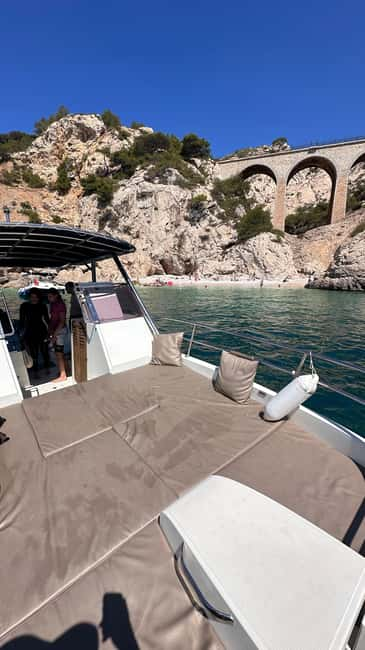
Book it if you want a half-day that mixes three things well: sea views, small-group comfort, and real time to swim and snorkel. It’s a strong choice if you’re short on time and want to see more than one coastline zone without dealing with transfers between multiple viewpoints.
Skip it or adjust expectations if:
- You need a perfectly fixed schedule. Weather can change the exact program and swimming anchorages.
- You’re not able to reach the Old Port on your own. There’s no pickup.
If you fall into the “I want to get out on the water and actually use my time” camp, this tour is a very practical way to do the Calanques in a single morning or afternoon.
FAQ
Where is the meeting point for the Marseille Calanques boat tour?
You meet at Bateau Marseille Calanques at the corner of the Mucem museum area, just after the Fort Saint-Jean bridge. The provided map pin is 43.296306, 5.360824.
How long is the tour?
The duration is about 4 hours (270 minutes). You can choose a morning departure (8:30am–12:30) or an afternoon departure (1pm–5pm).
What’s the group size?
The boats run with a small group atmosphere, with a maximum of 12 people.
Do I need to bring snorkeling gear?
No. Masks and snorkels are available for the swimming and snorkeling stops.
Is there pickup and drop-off from my hotel?
No pickup or drop-off is included. You’ll need to get to the Old Port meeting point yourself.
What happens if the weather is not good?
The program depends on weather conditions, and swimming/anchorage breaks may vary based on what the conditions allow.
What should I bring with me?
Bring a swimsuit, hat or cap, sunscreen, and a bath towel. Also bring what you need to take photos (and, yes, a good mood helps).