REVIEW · SOUTH PADRE ISLAND
Port Brownsville Half-Day Boat Tour
Book on Viator →Operated by Isla Tours · Bookable on Viator
Texas water, big ships, real stories.
This half-day boat tour ties together Laguna Madre’s unusual hypersaline world, the shrimping economy, and the working (and changing) port life around Brownsville—plus a look toward Starbase at SpaceX. The captain and crew keep the narration flowing in English, and they’re right there to answer questions as you go.
Two things I really like: you get food onboard without hunting for it first (coffee, donuts, and later shrimp cups), and the storytelling isn’t just facts—it connects the coast, the boats, and the industry that built this region. The one thing to consider is weather: open deck time plus Gulf wind can mean chill, spray, and a less comfy ride unless you dress for it.
In This Review
- Key Highlights You’ll Feel On This Boat Tour
- Setting Off From South Padre Island: What to Expect Before You Cast Off
- Onboard Comfort, Seating Reality, and the Wind Factor
- Laguna Madre Bay: Hypersaline Water and Protected Coastal Life
- Shrimp Basin in Brownsville/Port Isabel: Where the Seafood Economy Starts
- Keppel AmFELS and the Port of Brownsville: Big Industry, Up Close
- Starbase Views: The Equator Advantage for Rocket Launches
- Dolphins, Birds, and the Moment the Trip Changes Mood
- Food and Drinks: Coffee, Donuts, and Shrimp Cups Without the Hassle
- Value Check: Is $43.30 Worth It?
- Who Should Book This Port Brownsville Boat Tour
- Should You Book the Port Brownsville Half-Day Boat Tour?
- FAQ
- How long is the Port Brownsville half-day boat tour?
- How much does the tour cost?
- Where does the tour start?
- What time does the tour depart?
- What food and drinks are included?
- Can I bring my own food or drinks?
- Is there a bathroom onboard?
- Is the tour offered in English?
- What happens if weather isn’t good?
- How many people are on the boat?
Key Highlights You’ll Feel On This Boat Tour
- Live onboard narration connecting Laguna Madre, shrimping, the ship channel, and Starbase logic
- Free coffee, donuts, and shrimp cups so you’re not spending your day chasing snacks
- A working-port perspective on decommissioning and shipping activity, not just scenery
- Dolphins as a common bonus (and the boat tracks right through their wake)
- Bathrooms onboard plus covered areas to take the edge off the wind
- Limited group size (max 60) compared with many day tours
Setting Off From South Padre Island: What to Expect Before You Cast Off
The tour starts at 9:00am at 33256 State Park Rd 100, South Padre Island, TX 78597, and you’re back at the same meeting point when it’s done. This matters because it’s one of those easy half-days where you don’t lose your whole day to shuttles, transfers, or complicated logistics.
The boat experience is built for moving around. Reviews highlight an onboard setup with open deck areas for views, plus a small mostly enclosed space low on the boat and bathrooms onboard. There are also covered areas for sun and wind protection. Still, you should assume you’ll spend plenty of time outdoors, so think “layered and wind-ready,” not “T-shirt and sunglasses.”
A key plus: the captain and crew are actively involved, not stuck behind the scenes. You’ll hear history and industry stories throughout the ride, and you can ask questions directly. That turns this from a sit-and-cope cruise into something closer to a moving classroom with great views.
Onboard Comfort, Seating Reality, and the Wind Factor
Here’s the truth: boats on the Gulf don’t care about your plans. Even when it’s sunny when you leave, it can cool down fast out on the water. One thing I’d plan for is cold and wind—especially if you’re the type who gets chilly easily.
What helps:
- Bring a jacket even in warmer months.
- If it’s breezy, expect at least some spray. One rider noted getting wet when the wind kicked up.
- Wear or bring something you don’t mind getting a little salty.
Seating can also be a balancing act. Some boats feel tight when everyone tries to find the best angle at the same time, and you may end up with limited choice depending on where you stand or sit. A practical tip: once you board, pick a viewing spot early and keep an eye on your line of sight—because if people cluster in front, you’ll lose your best angles fast.
Laguna Madre Bay: Hypersaline Water and Protected Coastal Life
One of the first areas you’ll learn about is Laguna Madre Bay, sitting between the South Texas coast and Padre Island (between Corpus Christi and South Padre Island). What makes this place special is the salinity: it’s hypersaline, meaning the water is saltier than typical seawater.
Why should you care? Hypersaline environments change what can live there and how the ecosystem functions. Laguna Madre is described as having one of the most unspoiled and protected eco systems in Texas and the U.S. On this tour, that turns into something you can actually feel: instead of a generic coastal view, you get a sense that you’re floating through a system with rules—salt levels, protected habitats, and wildlife patterns.
What you might see here is the “coastal wildlife rhythm” that becomes more obvious as you go: birds and sea life often show up along the shoreline and in the water around the boat’s path. If you’re into bird spotting, keep your eyes open—pelicans are specifically called out as a bonus in real experiences.
Potential drawback: hypersaline doesn’t mean nonstop wildlife on every second of the trip. You might find the story part is what keeps this stop engaging, especially if conditions are windy or if visibility is reduced.
Shrimp Basin in Brownsville/Port Isabel: Where the Seafood Economy Starts
Next, the tour focuses on the Brownsville/Port Isabel Shrimp Basin, described as one of the largest fleets of shrimp boats in Texas, with the area established in 1953. If you’ve ever wondered where local shrimp really comes from—this is where the tour makes that connection.
This stop works best when you listen for the link between the boats you see and the industry behind them. You’re not just hearing about shrimp as a menu item. You’re learning how the business is organized, how long it has been operating in the area, and why the shrimp basin has the scale it does.
There’s also a real emotional angle here. Some riders shared that seeing parts of the maritime world shift—like decommissioned ships being scrapped and older shrimp boats changing hands—can feel a little bittersweet. That’s not a problem with the tour; it’s part of the place. The channel and port don’t freeze in time, and the narration helps you understand what that change means.
Keppel AmFELS and the Port of Brownsville: Big Industry, Up Close
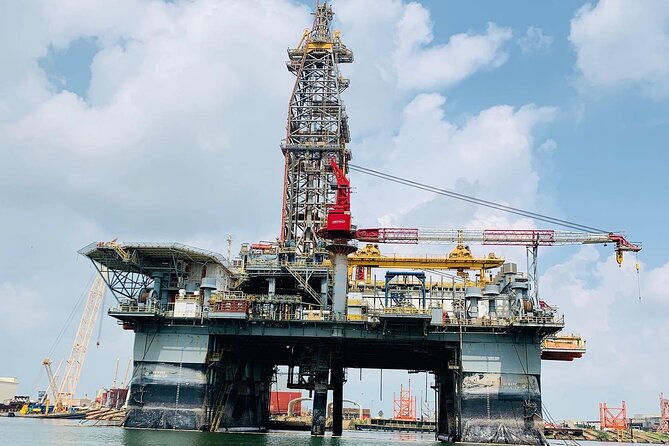
The tour keeps escalating in scale. You’ll learn about Keppel AmFELS, established in 1990, involved in construction, refurbishment, conversion, and life extension and repair of mobile drilling rigs and platforms. This is the type of industrial story that’s hard to understand from land—but from the water, it becomes tangible.
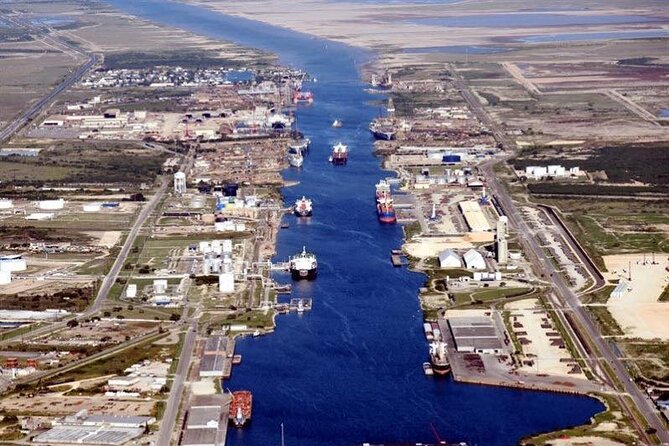
Then it shifts to the Port of Brownsville, described as the only deep-water port located on the U.S.-Mexico border. The details matter: the port covers about 40,000 acres, has 17 miles of waterfront, and connects through routes to international bridge crossings and rail connections. That’s how you understand why this port plays such a specific role—this isn’t just a pretty harbor.
What makes this section worth your time is that it’s not only about ships moving in and out. It’s about the work around shipping: dismantling, refurbishing, and the constant reshaping of maritime assets. Riders describe this as seeing behind the ropes—watching what’s happening to large vessels and learning the meaning of the channel activity in plain language.
Small consideration: if you’re only there for dolphins and photos, the industry portion can feel more grounded and less “cute.” But if you like real-world context, this is where the tour becomes memorable.
Starbase Views: The Equator Advantage for Rocket Launches
You’ll also get a look toward the SpaceX Launch Facility (Starbase). The tour includes an explanation of why this location was chosen: proximity to the equator helps because Earth’s rotational speed is higher there. The practical result? Rockets can use less propellant to reach orbit.
That’s a smart way to teach rocket geography without turning it into a textbook. It also helps you connect a distant landmark to something you already experienced on the boat: you’re on the coast, looking toward why this specific coastline makes sense for aerospace operations.
A practical note: don’t expect this to feel like an up-close rocket viewing experience. This is a coastal boat tour focused on the port and surrounding areas, so think “learn and see from a distance” rather than “watch a launch.”
Dolphins, Birds, and the Moment the Trip Changes Mood
One of the biggest “watch for it” bonuses on this ride is marine wildlife—especially dolphins. Multiple experiences mention dolphins leaping, swimming alongside, and appearing in the wake. One rider even pointed out a mother dolphin with her baby, which is the kind of sight that makes the whole trip feel like it exceeded the plan.
There are also mentions of pelicans, which fits the general coastal setting and the way birds often ride the edges of active water.
How to make this section better for yourself:
- If wildlife activity is happening, the view is usually best close to the front or open deck sections.
- Keep your jacket handy so you can stay out during the best moments.
- If you’re taking photos, remember the wind: camera straps and lens covers matter.
Food and Drinks: Coffee, Donuts, and Shrimp Cups Without the Hassle
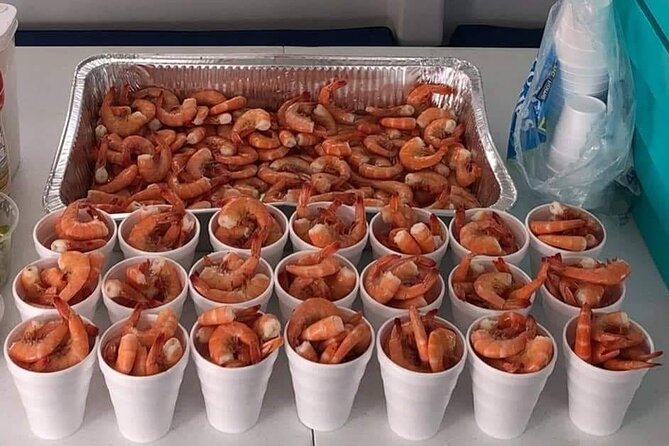
This is where the tour earns easy points. You get a free selection of coffee and donuts early, and later you’ll have shrimp in cups with sauce. Several riders also mentioned water being available if you forget to bring anything.
What I like about this setup is the timing. You’re eating during the ride, so you don’t turn your half-day into a snack hunt. And shrimp cups feel like a natural match for a tour that’s teaching shrimp basin history and local industry.
Because cooler food is allowed, you can also tailor the meal to your needs. The rule is clear: no glass containers, but you’re welcome to bring a cooler with your own food and drinks. If you’re traveling with picky eaters, this is a practical safety net.
Value Check: Is $43.30 Worth It?
At $43.30 per person, you’re paying for more than a boat ride. You’re paying for:
- A guided, English narration that connects several big local themes (ecosystems, shrimping, port industry, and Starbase logic)
- Access to areas you can’t really “self-tour” from land
- Onboard extras (coffee, donuts, and shrimp cups)
- A captain and crew available for questions, not just a pre-recorded audio track
For many travelers, the best value angle is the mix: history and industry storytelling plus the chance of dolphins. That combo is harder to find in a short, one-morning-or-afternoon experience.
One consideration for value: if you strongly prefer quiet nature-only sightseeing, this tour is more about working ports and industry visibility. It’s still outdoors and scenic, but the main focus is how the region functions.
Who Should Book This Port Brownsville Boat Tour
This tour is a great fit if you:
- Want a half-day activity that teaches you what you’re looking at
- Like watching real working areas—ports, channels, and boats—not just scenic shorelines
- Don’t mind wind and want to dress for it in exchange for big viewpoints
- Care about local industries (shrimping, ship channel operations) and how they’ve evolved over time
It’s probably not ideal if you:
- Get motion-sick easily (you’d need your own judgment, since conditions aren’t described)
- Hate cold wind on open decks and don’t like bringing layers
- Only want a wildlife tour with minimal talking
Should You Book the Port Brownsville Half-Day Boat Tour?
If you want a short, well-fed boat outing that teaches you why this corner of Texas matters, I’d book it. The combination of port history and shrimp basin context, hands-on narration from the captain and crew, and the chance to spot dolphins makes it feel like more than just sightseeing.
My decision rule is simple:
- If you’re excited to learn what you’re seeing, pack a jacket and go.
- If you’re only chasing warm, quiet nature vibes, you might prefer a different style of cruise.
If you’re flexible with the weather and you’re ready for wind-ready comfort, this is a strong value at $43.30.
FAQ
How long is the Port Brownsville half-day boat tour?
It runs about 5 hours.
How much does the tour cost?
The price is $43.30 per person.
Where does the tour start?
You meet at 33256 State Park Rd 100, South Padre Island, TX 78597, USA.
What time does the tour depart?
The start time is 9:00am.
What food and drinks are included?
There’s a free selection of coffee and donuts, and later shrimp cups with sauce.
Can I bring my own food or drinks?
Yes. You’re welcome to bring a cooler with your own food and drinks, but no glass containers.
Is there a bathroom onboard?
Yes, bathrooms are available onboard.
Is the tour offered in English?
Yes, the tour is offered in English.
What happens if weather isn’t good?
The experience requires good weather. If it’s canceled due to poor weather, you’ll be offered a different date or a full refund.
How many people are on the boat?
The tour/activity has a maximum of 60 travelers.