REVIEW · TBILISI
Tbilisi:Evening Walking & Talking Tour with Wine & Boat Ride
Book on Viator →Operated by Budget Friendly Tours FZE LLC · Bookable on Viator
A magical city glow starts at Rose Revolution Square. This evening walking and talking tour strings together Tbilisi’s biggest landmarks and a few quieter corners, so you finish with a map in your head and ideas for the rest of your stay. I love the value at $10, and I also like how the stops are built around real city character, from the Angel Clock to Shardeni Street.
One thing to consider: it’s a walking tour, and the old-town sections can mean stairs and uneven spots, especially if you’re visiting on a night when the alleys feel darker.
In This Review
- Key Things You Should Know Before You Go
- When You Meet, How Long It Takes, and What Your Evening Looks Like
- Rose Revolution Square and Rustaveli Avenue: The Quick Way to Get Oriented
- Liberty Square and the Angel Clock: Tbilisi’s Story in Symbols
- The Bridge of Peace and Rike Park: Night Lights, River Air, and Easy Walking
- Metekhi and the Monument of Vakhtang: Old Faith and Old Power
- Abanotubani Baths and Chreli Abano: Sulfur Steam Without Any Tickets
- Leghvtakhevi Waterfall to Narikala Fortress: A Short Walk That Feels Like a Big Win
- Kartlis Deda and the Old Town Finish: The City Symbol and the Narrow Streets
- The Wine and Boat Ride Part: Why This Tour Feels Different After Dark
- Price and Logistics: Why $10 Can Actually Make Sense
- Who Should Book This Evening Walk (and Who Might Skip It)
- Should You Book This Tbilisi Evening Walking Tour?
- FAQ
- What is the meeting point for the tour?
- What time does the evening tour start?
- How long is the tour?
- Is the tour in English?
- Does the tour include wine?
- Are any of the listed stops paid-entry attractions?
- Is hotel pickup included?
- How big is the group?
- What if the weather is bad?
Key Things You Should Know Before You Go
- $10 price with guide service in English for an evening’s worth of major sights
- Free entry at every listed stop, so your money goes to experiences, not tickets
- Covers both “new” and “old” Tbilisi, from Rustaveli Avenue to Abanotubani baths
- Wine tasting is an option, and the tour is designed to end with a fun extra by water
- Many guides are repeat standouts, with names like Freddie, Toko, Nino, and Tanu showing up often
- Meet right by Rose Revolution Square (near Radisson), which makes starting easy
When You Meet, How Long It Takes, and What Your Evening Looks Like
This tour runs about 3 hours and is designed for an evening start. You’ll meet at 6:00pm (or 7:00am if you booked the daytime version), at Rose Revolution Square, specifically in front of Radisson.
The loop is intense in a good way: you’ll hit major squares, a river bridge, viewpoints, then wind down through Old Town and end back at Rose Revolution Square. With a maximum group size of up to 50 people, you’re not stuck with a huge crowd, and you still get group interaction (including group photo moments that guides tend to plan).
Because it’s outdoors and the route includes historic lanes, wear shoes you’re comfortable in for night walking. Even with frequent short stops, your feet will notice the pace.
You can also read our reviews of more tours and experiences in Tbilisi.

Rose Revolution Square and Rustaveli Avenue: The Quick Way to Get Oriented
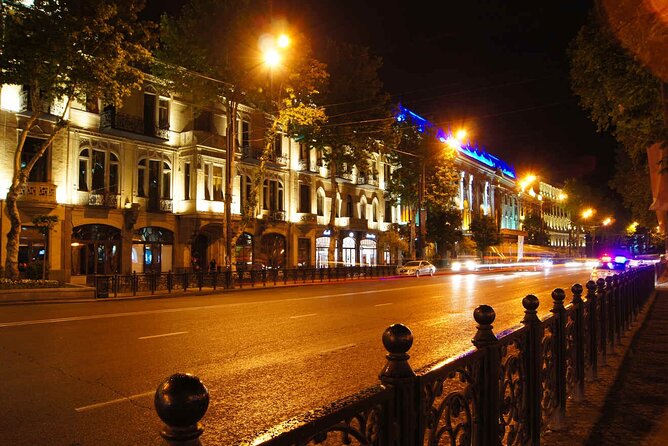
You start at Rose Revolution Square, a clean, central point that’s easy to find. The short orientation here matters more than it sounds, because it gives you reference points for the rest of the city’s layout.
From there you move to Rustaveli Avenue, the main “big-city” boulevard of Tbilisi. You’ll stroll past major buildings, plus the usual mix of hotels, restaurants, cafes, and souvenir shops. This is the part of the tour that helps you spot where you’ll want to wander later on your own.
If you’re in Tbilisi for only a few days, this stretch is practical: it connects the dots between where things are, and what kind of vibe each area has. It also frames what comes next, since you’ll soon be switching from broad avenues to old streets and river views.
Liberty Square and the Angel Clock: Tbilisi’s Story in Symbols

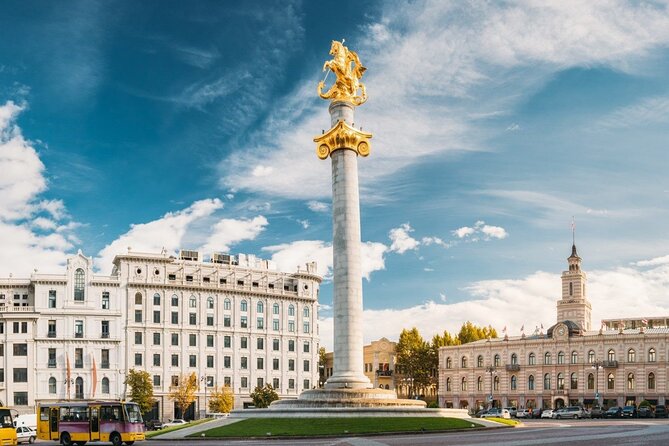
Next is Liberty (Freedom) Square, the heart of Georgia’s capital. It’s a quick stop, but it gives you the “center of gravity” for the city, which makes the later viewpoints and river landmarks feel more connected.
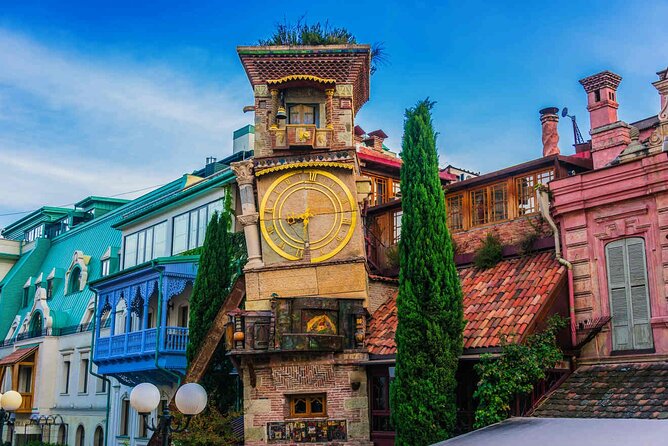
Then you’ll reach the Rezo Gabriadze Marionette Theater area and the famous Angel Clock Tower. The detail here is what makes the stop memorable: the tower’s angel appears with a hammer to ring the bell every hour, and there are show times at 12:00 and 19:00 (with a performance called The Circle of Life). Even if you don’t catch the show, the tower’s tilework and design are the kind of city identity you’d never guess from a daytime view.
This is also where a good guide really helps. People on the tour often mention how guides like Nino and Freddie added stories and humor that made the symbols make sense, not just look pretty.
The Bridge of Peace and Rike Park: Night Lights, River Air, and Easy Walking
The tour’s river moment starts with the Bridge of Peace, the glass-and-steel pedestrian bridge over the Mtkvari River. It’s bow-shaped, originally assembled from components brought from Italy, and has over 10,000 LED bulbs that light up daily for about 90 minutes before sunset.
Even if you’ve seen photos, this is one of those spots that lands differently at night. You get the lighting effect plus real city motion: people drifting across, the river below, and the sense that the city planners wanted a showpiece that still feels walkable.
Right after, you’ll head to Rike Park on the left bank. It’s Tbilisi’s newer recreational area, and the stop is short but useful because you get a sense of where locals actually hang out. The park includes features like singing and dancing fountains, climbing walls, family-friendly play zones, and quiet corners—handy info when you’re trying to plan a low-effort evening later.
Metekhi and the Monument of Vakhtang: Old Faith and Old Power
Before you go fully into Old Town, you’ll pass the Monument of King Vakhtang Gorgasali. The statue and its context are about the story of Vakhtang I of Iberia (Kartli)—a ruler tied to legends about reorganizing the Georgian Orthodox Church and founding modern Tbilisi.
Then the tour turns to Metekhi Cathedral, set on a cliff plateau above the river. This stop is about symbolism and continuity: the site is linked to earlier church traditions tied to Vakhtang Gorgasali and later saint stories connected with Shushanik.
The cathedral stop is 20 minutes, which is just enough time to take in the setting and understand why it’s placed here. You’re not meant to “tour a museum.” You’re meant to notice the location and let it explain the city’s geography.
Abanotubani Baths and Chreli Abano: Sulfur Steam Without Any Tickets
Now you get into the part of Tbilisi that feels like a living tradition: Abanotubani, the bathhouse district in Old Town. You’ll walk through the bath streets (with sulfurous hot springs as the core idea), and you’ll likely see public bathhouses lined up in a way that’s instantly recognizable.
From there, the tour stops at Chreli Abano, a sulfur bath site that tourists and Georgians alike treat as a fun stop. The building’s shape is mosque-like, which adds to the visual intrigue when you’re moving around at night.
These stops are included without entry tickets, which is a huge practical win. It means you can experience the vibe and decide on your own level of participation without committing to extra costs right away.
Leghvtakhevi Waterfall to Narikala Fortress: A Short Walk That Feels Like a Big Win
Next you’ll reach Leghvtakhevi Waterfall, popular with locals and foreigners as a place to cool off when it’s hot. The stop is brief, but it adds contrast: after baths and alleys, you see water in a different form, tucked near the river area.
Then comes Narikala Fortress, Tbilisi’s most recognizable landmark. The fortress is one of those “you’ll walk to it anyway” places, and the tour’s timing matters because it gives you the chance to experience it with the city lit up around it. Even though parts of the walls aren’t in great shape, the viewpoint tells the whole story: Narikala overlooks the Mtkvari River, and the height makes you feel the city’s scale.
This is the segment where you’ll appreciate having a guide. The route through the hills and stairways can be easier when you’re not trying to guess what’s “the best angle” on your own.
Kartlis Deda and the Old Town Finish: The City Symbol and the Narrow Streets
After Narikala, the tour takes you to Kartlis Deda (Mother of a Georgian), perched on Sololaki hill. The statue is a city symbol and is tied to Tbilisi’s 1500th anniversary celebrations. What you’ll notice fast is the contrast in the message: one hand holds a bowl of wine to greet friends, the other holds a sword for enemies.
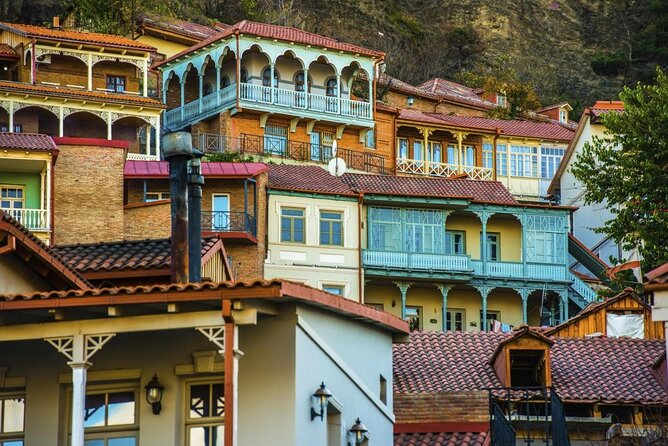
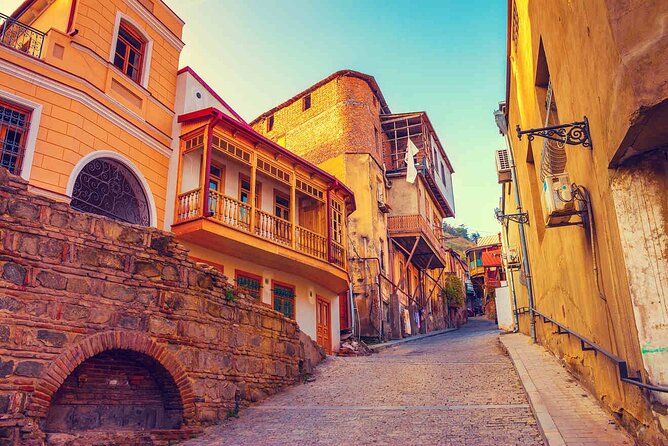
Then you’ll spend time in Old Town Tbilisi, with narrow streets and wooden balconies. This is one of the most enjoyable parts of the whole route because it’s where the city’s everyday textures show up—tight lanes, old facades, and a feeling of place that doesn’t look “staged.”
Finally, you’ll end at Jan Shardeni Street, one of Tbilisi’s most popular pedestrian streets. It’s known for its charm and is a strong place to linger after the formal portion ends. The tour closes back at Rose Revolution Square, so you don’t have to worry about a complicated drop-off.
The Wine and Boat Ride Part: Why This Tour Feels Different After Dark
The evening version of this tour is built around a simple idea: sightseeing is better when you add one local-flavored break. That’s where the wine tasting comes in. The wine tasting is included if you select the option during booking.
Many people describe this as a highlight because it’s not just a quick sip. It tends to feel like a real pause where you get context and taste Georgian wines in a setting that matches the stories you’ve been hearing while walking.
The tour is also described as including a boat ride component. While the exact plan isn’t spelled out in the stop list you see before you go, the idea is consistent: you get a different perspective on the city from the water. One practical note from real-world experience: if weather turns rough, schedules can shift and you may get options for rescheduling rather than losing the whole paid experience.
So if you’re booking this hoping for the boat ride as the main event, bring a flexible mindset. Good weather matters here, and you’ll be happier if you see the walking portion as valuable on its own too.
Price and Logistics: Why $10 Can Actually Make Sense
At $10 per person, this tour is priced like an introduction, not a premium guided day. And that’s exactly what makes it attractive: you get an English guide service, a route packed with major landmarks, plus wine tasting if you chose it, and a boat ride element tied to the evening theme.
Every listed stop is ticket-free, which is rare. That means your money buys time with a guide and a route design, not extra admissions.
Group size also supports the value. A maximum of 50 people is large enough to keep it lively but not so massive that you feel like a number. The guided style matters too—many guides on this route (like Freddie, Toko, Tanu, and others) get praised for friendliness, humor, and keeping everyone together.
The only real trade-off is the walking itself. Even with short stops, you cover a lot of ground over three hours, and some alleys can feel darker in the old city.
Who Should Book This Evening Walk (and Who Might Skip It)
This is a strong fit if you want:
- A fast, guided orientation to Tbilisi’s main sights
- A route that mixes new landmarks and Old Town textures
- English commentary and a chance to ask questions as you go
- A budget-friendly evening plan, with wine tasting optional
It may be less ideal if you:
- Have trouble with stairs and uneven surfaces
- Want a slow, sit-down style tour
- Are scheduling tight plans and can’t flex if weather affects outdoor components
If you’re the type who likes to walk, look up, and connect history to street corners, you’ll probably enjoy this one a lot.
Should You Book This Tbilisi Evening Walking Tour?
Yes, if you want a smart first evening in Tbilisi. For $10, you get a packed route, free access to the sights on the itinerary, and the kind of guidance that helps you understand what you’re seeing instead of just collecting photos.
Book it especially if you’ll use the tour as a planning tool. After walking past places like the Angel Clock Tower, Bridge of Peace LEDs, Abanotubani baths, and Narikala, you’ll have a clear idea of what you want to revisit—and where.
Just go in expecting walking and hills. If you’re good with that, this is one of the best “get oriented fast” deals in town.
FAQ
What is the meeting point for the tour?
The tour starts at Rose Revolution Square in Tbilisi, specifically in front of the Radisson hotel. The activity ends back at the meeting point.
What time does the evening tour start?
The evening start time is 6:00pm. The meeting may also be 7:00am depending on the booking time.
How long is the tour?
The duration is approximately 3 hours.
Is the tour in English?
Yes. The guide service is offered in English.
Does the tour include wine?
Wine tasting is included only if you select the wine tasting option during booking.
Are any of the listed stops paid-entry attractions?
For the stops listed on the itinerary, admission tickets are marked as free at each location.
Is hotel pickup included?
No. Hotel pickup and drop-off are not included.
How big is the group?
The tour has a maximum of 50 travelers.
What if the weather is bad?
The experience requires good weather. If it’s canceled due to poor weather, you’ll be offered a different date or a full refund.