REVIEW · TRIER
Trier, Mosel: Wine tour with a boat ride
Book on GetYourGuide →Operated by Reiseservice Siweris GmbH · Bookable on GetYourGuide
Trier and the Moselle are a strong match: put them together and you get a 4.5-hour mix of Moselle scenery and wine tasting that feels built for curious adults. I like that the tour gives you both water-time and land-time, instead of treating Trier like a stopover. I also like the hands-on winery part: a cellar tour plus a guided tasting of four wines. The main drawback to plan for is pacing and guidance—there can be long stretches where the boat feels more like sightseeing than commentary, and instructions for transfers may be light.
This is also one of those tours that works best when you show up ready to enjoy the flow. You’ll start at the Kaiser Wilhelm Bridge by the 1st yellow jetty, then spend about an hour on the Moselle. After that, you’ll ride to a winemaker in the Trier vineyards by vintage bus, tour the cellar, taste wines, and finish with tarte flambée.
One more consideration: it’s not aimed at families. It isn’t suitable for wheelchair users, and the age limit is children under 18. Also, the experience runs mostly in German—English speakers may be accommodated, but don’t expect a fully English tour.
In This Review
- Key highlights you can count on
- Moselle views from the Kaiser Wilhelm Bridge and beyond
- The switch from boat to vineyards on a vintage bus
- Inside the Trier vineyards: what the winery stop is really for
- Four wines and a relaxed tasting that teaches your palate
- Dinner: tarte flambée as the day’s payoff
- Price and time: is $112 good value for 4.5 hours?
- Who should book this Mosel Trier wine + boat combo
- Should you book it?
- FAQ
- Where does the tour meet?
- How long is the wine tour?
- What transportation is included?
- What is included with the winery visit?
- What dinner is included?
- How much wine is tasted?
- Are children allowed?
- Is it wheelchair accessible?
- What language should I expect?
- Can I get a refund if my plans change?
Key highlights you can count on
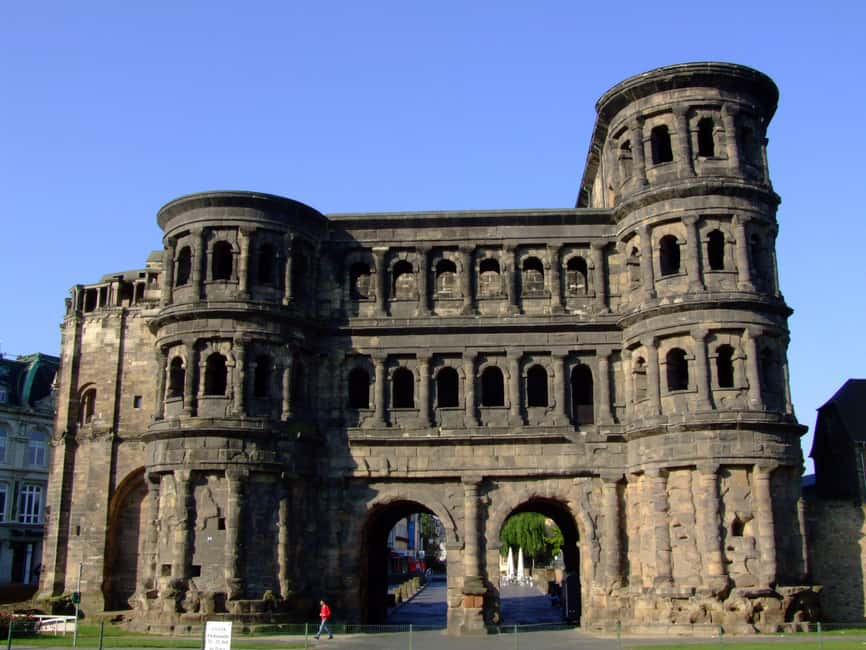
- Moselle boat ride through Trier, starting at the Kaiser Wilhelm Bridge (1st yellow jetty)
- Round trip by vintage bus to the winemaker in the Trier vineyards
- Guided wine cellar tour where you learn how the wines are made and stored
- Tasting of four wines, enough variety to find what fits your taste
- Tarte flambée dinner at the end, paired with the day’s wine theme
Moselle views from the Kaiser Wilhelm Bridge and beyond
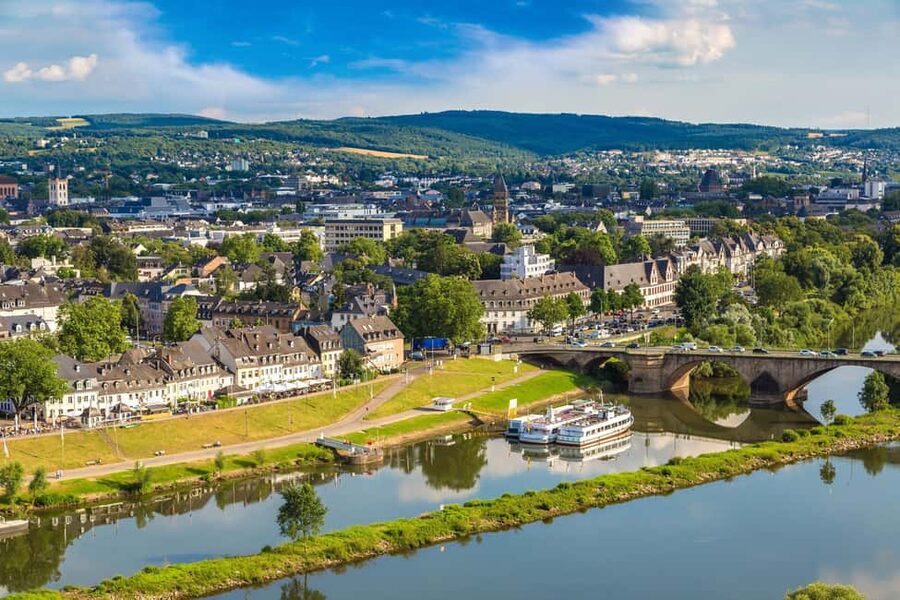
The tour begins at the Kaiser Wilhelm Bridge, at the 1st yellow jetty. That matters, because Trier’s riverfront is where the town’s postcard angles come from—stone, steeples, and the Moselle’s slow curve. Once you’re aboard, you settle into an easy rhythm: watch the banks slide by and let the city’s shape become clearer than it is from streets.
The boat portion lasts about an hour. In a perfect world, you’d get lots of on-board storytelling. Here, that’s mixed. Some parts of the ride can feel like pure scenery, and if you’re hoping for a constant stream of sights and commentary, you might find the route more relaxed than you expected. Still, the Moselle from the water is one of the best ways to understand why Trier and this valley became so tied to wine.
A practical tip: treat the boat as your chance to get your bearings. Even if you don’t catch every detail, you’ll recognize landmarks later when you’re on land. It’s also a good reset—after that, the day shifts from drifting views to a more structured winery visit.
The switch from boat to vineyards on a vintage bus
After the cruise, you move toward the winery area by vintage bus. This is one of the tour’s clever bits: you don’t just go from Trier’s center straight into a tasting room. You travel the bridge between city and vineyard, so the day doesn’t feel like two unrelated activities stitched together.
Timing can be the only wrinkle here. There may be a break between the end of the boat ride and bus pickup, and in at least one case that wait didn’t come with much clear guidance on where to stand or what time the bus would arrive. If your schedule is tight, or if you hate uncertainty, do yourself a favor: confirm pickup details right at the end of the boat, and keep your tour contact information handy.
When the vintage bus starts rolling, that’s when the experience often shifts from sightseeing to story. You’ll hear explanations about Trier and the surrounding area while heading toward the vineyards. It’s not just “transport”—it’s part of how the tour helps you connect the town to the wine growing landscape.
Inside the Trier vineyards: what the winery stop is really for
The winemaker stop is where the tour stops being scenic and becomes educational. You’ll arrive at a winery in the Trier vineyards and then join a guided tour of the wine cellar. That cellar component is important because it turns tasting from a casual sip into an informed comparison.
During the cellar tour, you can expect the kind of practical details that make wine labels less mysterious. Even if you don’t catch every word (and the tour is mostly in German), you’ll get the structure: how wines are stored, what “cellar logic” means in real life, and how the producer thinks about quality control and aging. This part is especially valuable if you’ve ever felt wine tastings are just about taste descriptions without context.
One thing I like about tours like this: they’re designed to help you ask better questions once you’re in the tasting room. After seeing the cellar, you’re more likely to notice differences in how wines behave—dry vs. fruit-forward, lighter vs. more structured—because you’re matching what you’re tasting to what you saw.
Also, the setting is in the vineyards rather than a city showroom. That subtle difference changes the vibe. The goal isn’t to wow you with luxury; it’s to connect the day’s food and wine to where the grapes come from.
Four wines and a relaxed tasting that teaches your palate
The tasting includes four wines. That’s a sweet spot. Too few and you don’t learn your preferences; too many and you end up tasting to survive. Four gives you enough range to spot patterns—like whether you prefer lighter styles or want something with more body.
The tasting atmosphere tends to be more casual than formal. Some visitors found it lively and fun, not stiff. You’ll also likely get a mix of explanations and casual conversation, which is ideal if you’re the type who learns best by talking and asking rather than reading a pamphlet.
Language is the main variable to know. The experience is mostly in German, and some of the content may feel self-guided. If you’re an English speaker, don’t panic—one account noted that the winery owner was kind about including English speakers present. Still, plan for the possibility that you’ll understand more through what you see and taste than through every spoken detail.
My advice: go in with a simple goal. Instead of trying to memorize everything, focus on this: which wine feels balanced to you today, and which style you’d actually buy at home. Four wines should give you at least one clear winner—and a couple “maybes” that you can explore later.
Dinner: tarte flambée as the day’s payoff
At the end, you’ll enjoy tarte flambée for dinner. That matters for two reasons. First, it keeps the day from ending on an empty stomach after wine. Second, tarte flambée (often called flammekueche in parts of the region) is a great match for what you just tasted because it’s flavorful, salty, and typically pairs well with the lighter, crisp side of Mosel wines.
This isn’t a fancy multi-course ordeal. It’s a finish that feels like an invitation to slow down and enjoy the company and the moment. If you came for wine and scenery, this is the bridge between those interests: you taste, then you eat, then you head back.
Price and time: is $112 good value for 4.5 hours?
The price is listed at $112 per person for about 270 minutes (4.5 hours). That can sound like a lot until you map what’s included.
Here’s what you’re paying for, in practical terms:
- About 1 hour on the Moselle by boat
- Round-trip transport between the river area and the winery by vintage bus
- A guided tour of the wine cellar
- A wine tasting of four wines
- Tarte flambée as dinner
If you were to try to DIY the same day—book a boat ride, arrange winery transport, pay for a cellar tour, then schedule a tasting and dinner separately—you’d likely spend more in time and money. The value here is less about the wine tasting being cheap, and more about the bundle being efficient and structured.
The only caution: because parts of the day can feel light on commentary (especially during the boat), your value-per-minute depends on what you want. If you want constant guide storytelling from start to finish, the tour might feel uneven. If you’re happy to treat the boat as scenery and let the winery be the learning anchor, you’ll probably feel the price is fair.
Who should book this Mosel Trier wine + boat combo
This tour fits best if you:
- Want a short, focused Moselle experience without committing to a full day trip
- Like learning through a mix of scenery + hands-on tasting
- Prefer guided winery time over self-guided wandering
- Enjoy a regional dinner like tarte flambée to round out the day
It’s not a great match if you:
- Need full wheelchair accessibility (it’s not suitable)
- Are traveling with kids under 18 (age limit)
- Expect a continuous, sights-and-stops style guided lecture during the boat ride
- Need everything in English (the experience is mostly German, though English speakers may be included by the host)
If you’re visiting Trier and you want your Moselle time to be more than a photo stop, this is one of the more efficient ways to do it in a single block.
Should you book it?
I’d book it if you’re pairing Trier with the Moselle and you want a day that actually balances: boat time for perspective, then a real winery visit for taste and context, finished with dinner. The strongest reason to choose it is the bundle—boat ride plus cellar tour plus four-wine tasting plus tarte flambée—without you needing to coordinate multiple pieces.
I would pause and do a little homework before booking if you’re the type who gets frustrated by waiting and unclear handoffs. One of the biggest issues mentioned is the gap between boat end and bus pickup, plus not much information about where and when. If that kind of uncertainty would bug you, confirm pickup details early and be ready with a bit of patience.
If you like wine, want a structured taste session, and you’re okay with some of the experience running in German, this tour is an easy yes for a satisfying 4.5-hour Mosel day.
FAQ
Where does the tour meet?
You meet at the Kaiser Wilhelm Bridge, 1st yellow jetty.
How long is the wine tour?
The total duration is about 270 minutes (4.5 hours).
What transportation is included?
You’ll take a boat ride on the Moselle and a vintage bus for the transfers to and from the winemaker.
What is included with the winery visit?
You’ll get a guided tour of the wine cellar and a wine tasting of four wines.
What dinner is included?
Dinner is tarte flambée.
How much wine is tasted?
The tasting includes four wines.
Are children allowed?
No. It is not suitable for children under 18.
Is it wheelchair accessible?
No. It is not suitable for wheelchair users.
What language should I expect?
The experience content is mostly in German. English speakers may be included by the winery host.
Can I get a refund if my plans change?
Yes. You can cancel up to 24 hours in advance for a full refund.