REVIEW · LAGOA
Dolphins & Benagil Caves with Biologist guide
Book on Viator →Operated by Capitão Nemo Algarve · Bookable on Viator
If your Algarve plan has dolphins on one side and Benagil on the other, this tour hits both. I like the small-group feel and I like the fact you’re not just sightseeing rocks—you’re learning about the sea life as you look for dolphins, often with names like Pedro, Daniele, and a biologist on board. The only real catch is that nature runs the show, so dolphin sightings and the option to stop for a swim depend on weather and sea conditions.
What makes this different is the mix of wildlife and geology in one 3-hour ride, leaving from Restaurante Vista Rio in Parchal and returning there. You’ll cruise past iconic Algarve landmarks from Parchal and Lagoa toward Benagil, then into a route of famous coastal formations and beaches along the way, with a team that stays upbeat and family-friendly. This is offered in English, with a max of 16 travelers, so the captain and biologist can actually answer questions instead of shouting over a crowd.
In This Review
- Why this tour gets such high marks
- Key Highlights You’ll Feel On the Water
- Start at Restaurante Vista Rio: Quick Logistics, Easy Day
- Small Group Dolphin Watching: What the Biologist Adds
- When Dolphins Show Up: How the Captain Works the Search
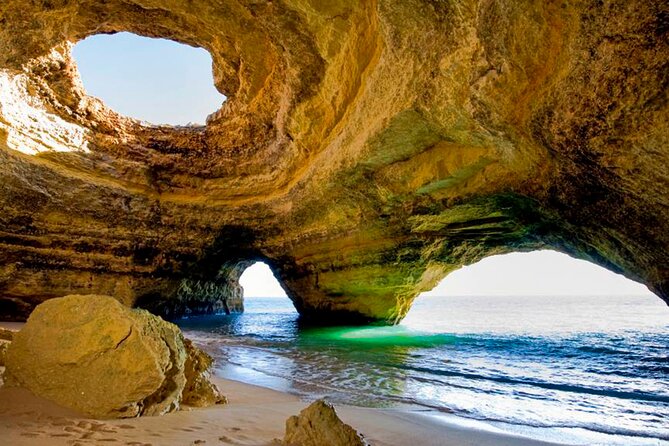
- Algar de Benagil: The Cave Stop That Lives Up to the Photos
- Algar Seco and A Boneca: Rock Formations Beyond the One Icon
- Carvoeiro, Ferragudo, and Carvalho Beach: Beaches and Views with Actual Context
- The Optional Swim in a Calm Bay: Worth It When Conditions Allow
- What You Pay (and Why It’s Fair for What You Get)
- The Cast of Characters: Captain Nemo and Guide Names You Might Hear
- Who Should Book This Tour (and Who Might Not)
- Quick Tips for a Smoother 3 Hours
- Should You Book This Dolphin and Benagil Caves Tour?
- FAQ
- Is this tour only about Benagil Cave, or do you also look for dolphins?
- How long is the tour, and what’s the group size?
- What species are you likely to see?
- Do you stop for a swim?
- What language is the tour offered in?
- What happens if weather is bad?
Why this tour gets such high marks
You’re paying for two “main events,” but the real value is how long you spend on the water looking for dolphins and how much context you get about what you’re seeing. Based on what the guides share and how the boat operates, you should expect a friendly, practical tour where the captain respects the animals and the team works hard to find the right area. If you’re going in peak summer, book early—this one is commonly reserved about 19 days in advance.
Key Highlights You’ll Feel On the Water
- A biologist guide while you watch dolphins, not just a boat ride with vague commentary.
- Benagil Cave plus multiple coastal stops, so you get more than one photo stop.
- Small group size (max 16), which helps you hear facts and see what’s happening.
- ICNF-accredited operations working together, improving your odds when dolphins move.
- Optional swim in calm bays during good weather and sea conditions.
- Crew-provided snacks and water reported by riders, for a more relaxed outing.
Start at Restaurante Vista Rio: Quick Logistics, Easy Day
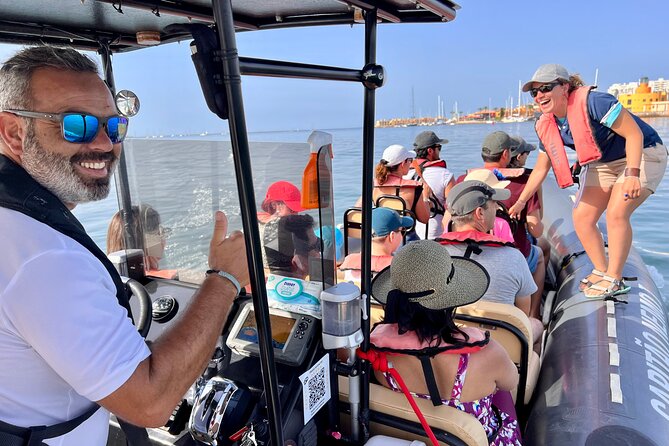
The meeting point is clear and simple: you start at Restaurante Vista Rio (Hotel Riverside) in Parchal, and you end back at the same place. That matters because a 3-hour tour is short—less time spent transferring, more time on the boat.
The tour uses a mobile ticket, and it’s marked as near public transportation. Practically, that’s good if you’re staying in the Lagoa/Carvoeiro/Ferragudo area and want to avoid a complicated local commute.
Also, this isn’t a huge party boat. With a maximum of 16 travelers, it’s easier to notice what the biologist points out and easier for the captain to adjust the route when dolphins appear.
Small Group Dolphin Watching: What the Biologist Adds
This experience blends dolphin watching with Benagil Cave and nearby rock formations. The dolphin part is the heart of the trip, and the biologist helps you read the sea like an outsider turned into a student.
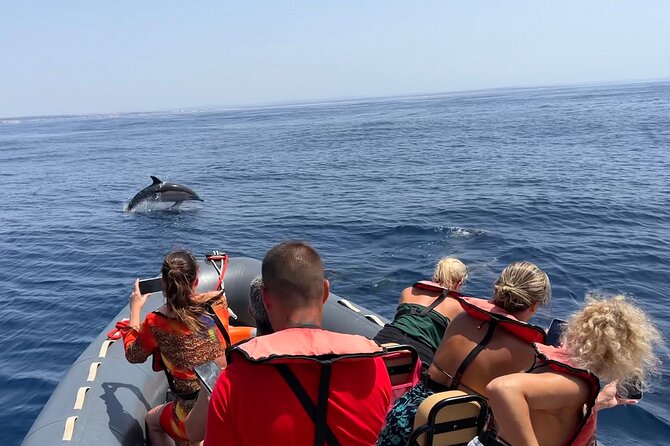
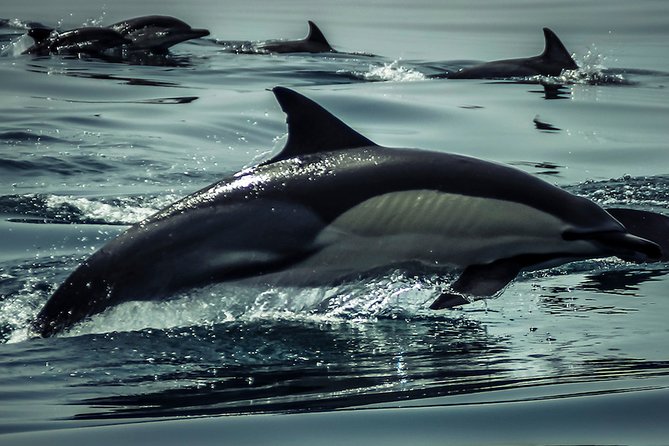
The most commonly seen species are the common dolphin (Delphinus delphis) and the bottlenose dolphin (Tursiops truncatus). That’s helpful because it gives you something concrete to look for—if you spot similar shapes but can’t name them, the guide can connect the dots right away.
From the overall vibe of the crew—good-humored, patient, and very focused on marine habits—you’ll likely get more than a checklist. The biologist approach helps you understand things like why dolphins show up where they do (food, currents, movement patterns) and how they behave around boats. And yes, the team’s effort is backed by coordination with other operations accredited by the ICNF, which improves your odds when dolphins are elsewhere than expected.
A nice extra: you may also spot seabirds such as gannets (Morus bassanus) and great cormorants (Phalacrocorax aristotelis). Even if dolphins take a moment to appear, birds can keep the trip feeling alive.
When Dolphins Show Up: How the Captain Works the Search
Dolphins are never guaranteed on any coast. But what you can control is how your day is managed when the sea goes quiet.
This tour is designed to treat dolphin spotting like a real hunt, not a quick pass. More than one description notes that the captain stays out longer than some other boats when dolphins are around, and the team keeps scanning patiently. That patience is a big part of the high rating—people feel the effort, not just the itinerary.
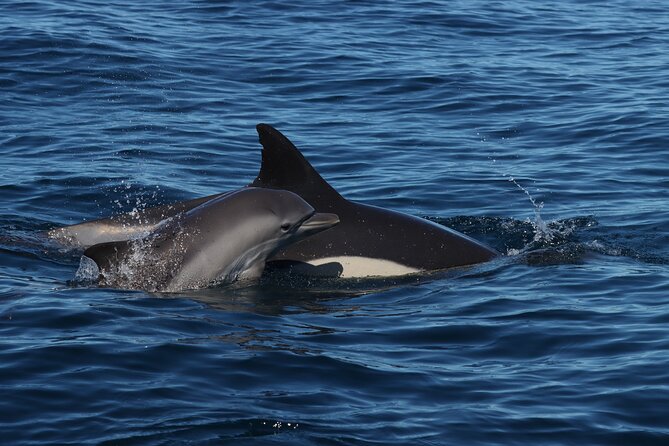
You’ll usually spend enough time watching that, when dolphins do appear, it’s not a one-second flash. Some reports include dolphin families with adults and calves, which is a special kind of sight because the animals don’t just pass by—they interact with the space around the boat.
A practical note: bring a light layer even in warm months. Coastal wind can feel cool on the water, and you’ll be there long enough for a breeze to matter.
Algar de Benagil: The Cave Stop That Lives Up to the Photos
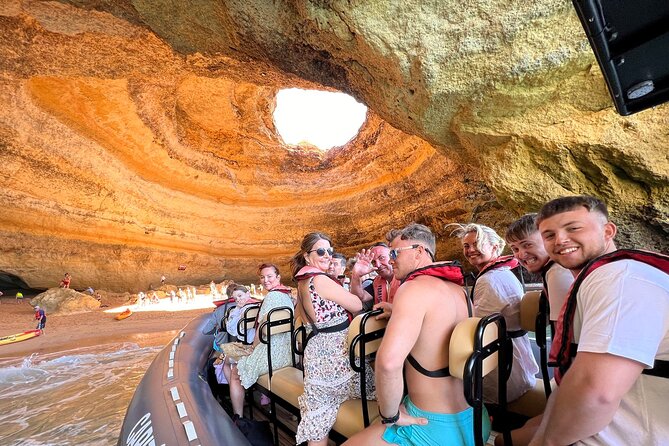
Benagil is the stop most people talk about first, and it earns the attention. The tour brings you to Algar de Benagil, the famous sea cave system that turns the Algarve into a rock-and-light show.
What makes Benagil memorable isn’t only the size of the opening. It’s the way the cave interior changes with angle and daylight, creating that classic bright look people associate with the region. The crew typically times the area so you can actually view it, not just pass by at speed.
That said, there’s a tradeoff with any Benagil-focused trip: Benagil is popular. If you’re the type who wants silence and space, you may find it a bit crowded around the caves. Still, the combination here helps. You’re not wasting the entire tour in one spot—you’re getting the cave experience plus additional coastline.
When the route works well, Benagil feels like the first act of the day. You see something world-famous, then you keep going while the coast tells you more.
Algar Seco and A Boneca: Rock Formations Beyond the One Icon
After Benagil, the tour continues along the rock formations that make the Algarve coast so distinct. Stops include Algar Seco and A Boneca, both known for dramatic coastal geology and cave-like structures along the cliffs.
These areas tend to be rewarding for two kinds of travelers:
- If you love visuals, this is where the coastline looks like a carved sculpture.
- If you like learning, the guide can connect the shapes you see to how sea erosion and rock layers shape the coast over time.
The practical benefit of multiple stops is that you’re not stuck with one outcome. If dolphin sightings take time, you still have scenery that justifies the tour. If dolphins are fast, you can enjoy the caves without the day feeling rushed.
Carvoeiro, Ferragudo, and Carvalho Beach: Beaches and Views with Actual Context
The itinerary includes Praia do Carvoeiro, Castelo de Ferragudo, and Carvalho Beach. Those names matter because they represent different flavors of the same coastline: cliffs, beach coves, and town-and-rock views.
Here’s how to think about these stops:
- Carvoeiro is your classic Algarve beach-and-cliff scenery moment.
- Ferragudo adds a “castle town” vibe and a sense of where the landscape meets local life.
- Carvalho Beach rounds it out with another coastal viewpoint, which helps you understand the scale of the area you’re sailing through.
Even if you don’t get off the boat much at every point, the captain’s route is part of the experience. You’ll get angles that you simply can’t get from land, and the guide can point out features worth noticing even after the boat leaves.
The Optional Swim in a Calm Bay: Worth It When Conditions Allow
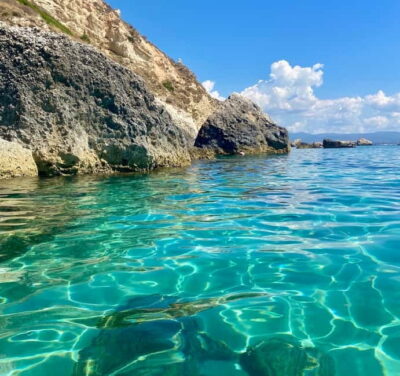
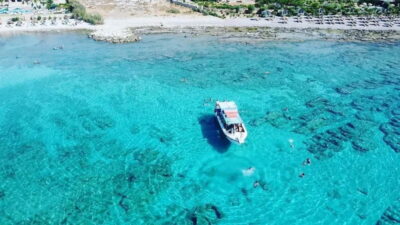
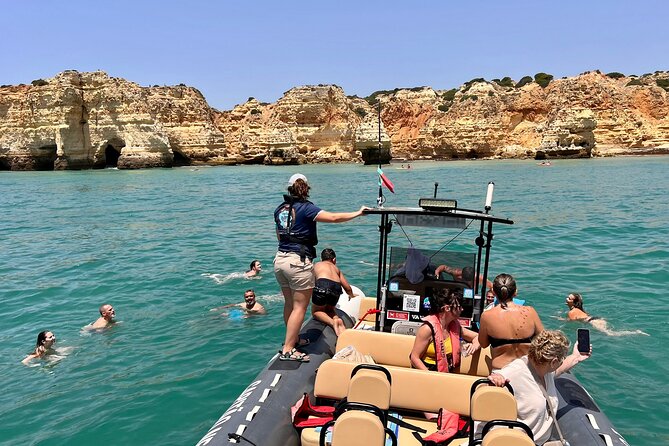
One of the most memorable extras is the chance to stop in a calm bay during summer when the sea and weather are favorable. If that stop happens, you’ll swim in calm, clear water, which is exactly the kind of relief that turns a sightseeing boat day into a real break.
A quick reality check: you can’t demand this part. It depends on the sea state. If the weather isn’t cooperative, you may get less time in the water, but you still keep the core sights and the dolphin search.
Bring swim shoes if you have them. Even on calm-water stops, coastal entries can be a little rocky, and you’ll be happier if your feet are ready.
What You Pay (and Why It’s Fair for What You Get)
The price is listed at $84.66 per person for about 3 hours. For the Algarve, that’s not a bargain-basement cost, but it also isn’t priced like an exclusive private charter.
Here’s why it can still feel like good value:
- You’re paying for two headline experiences: dolphins plus Benagil.
- The biologist guidance changes the quality of the time you spend on the water.
- The tour runs with a small group of up to 16, which usually means more attention per person.
- Some crew members are reported to provide snacks like biscuits, grapes, and even melon, and in at least some cases water bottles were available. That small touch makes a short outing feel more complete.
If you’re the type who wants the dolphin part to last and the cave part to feel more than a quick photo, this pricing tends to make sense. If you only want the Benagil photo and could care less about dolphins, there are cheaper ways to reach the cave area. But if dolphins are a priority, you’ll likely feel this was money well spent.
The Cast of Characters: Captain Nemo and Guide Names You Might Hear
This is a team effort, and the names show up in the way people describe the day. The provider is Capitão Nemo Algarve, and many accounts connect the trip with a captain nicknamed Captain Nemo.
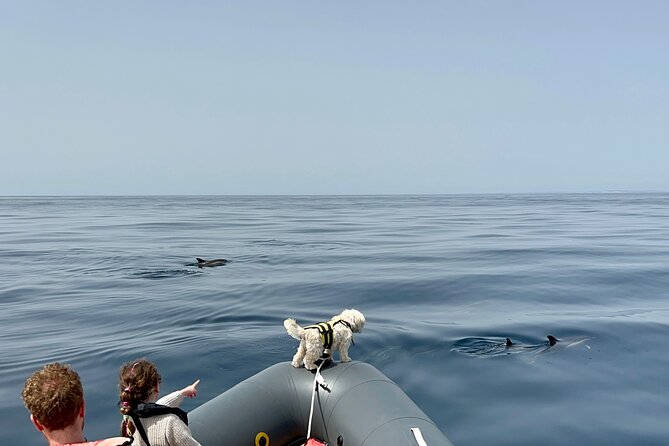
For the guide, you may hear names like Pedro, Ana, and Daniele/Daniella alongside a biologist. In one description, the crew included a small puppy (a sweet little onboard companion), which sounds silly on paper but adds to the friendly, relaxed tone.
The theme is consistent: you’re not treated like you’re sitting in silence waiting for the next stop. The crew keeps things moving while still making time for questions and for watching dolphins when they appear.
Who Should Book This Tour (and Who Might Not)
This tour is marked as family-friendly and suitable for most travelers, with one clear limit: it’s not recommended for children under 2.
It also allows service animals, and it’s described as near public transportation, which helps if you’re not renting a car.
Who it fits best:
- You want dolphins as the main event, and you like learning while you look.
- You want Benagil, but you also want the rest of the Algarve coast, not only one icon.
- You prefer a small group over a loud crowd.
Who might think twice:
- If you hate waiting on nature, remember that dolphin sightings depend on conditions.
- If you’re extremely sensitive to wind and spray, plan to dress for it, since you’re on the water for the duration.
Quick Tips for a Smoother 3 Hours
- Dress for sea wind. A light layer helps.
- Bring sunscreen and sunglasses. Reflections off water can be intense.
- If you’re hoping for a swim, bring a towel if you have one and wear swim-ready clothes.
- Keep your expectations flexible. The best dolphin moments are rarely scheduled on a timetable.
Should You Book This Dolphin and Benagil Caves Tour?
If you want a short Algarve outing that mixes wildlife, real coastal scenery, and a world-famous cave, I’d say yes, book it—especially if dolphins are part of your travel dream.
This is a good choice when you care about more than a checklist. The biologist guidance, the patient search for dolphins, and the way the day continues after Benagil make it feel like a rounded experience rather than a single stop with extra steps.
If your main goal is only Benagil photos and you’re not excited about the chance of dolphins (or the possibility of no swim), then you might prefer a more direct cave-focused option. But if dolphins are on your bucket list, this is the kind of tour where you feel the team’s effort, and that’s what you want when you’re spending time on the water.
FAQ
Is this tour only about Benagil Cave, or do you also look for dolphins?
It’s built around both. You spend time on a dolphin search guided by a biologist, and you also see Algar de Benagil plus other Algar/rock stops along the Algarve coast.
How long is the tour, and what’s the group size?
The tour is about 3 hours. It has a maximum group size of 16 travelers, which helps with a more personal experience.
What species are you likely to see?
The most commonly sighted dolphins listed are the common dolphin and the bottlenose dolphin. You may also see seabirds such as gannets and great cormorants.
Do you stop for a swim?
You may stop in a calm bay for a swim during summer if the sea and weather conditions are favorable. It depends on conditions.
What language is the tour offered in?
The tour is offered in English.
What happens if weather is bad?
This experience requires good weather. If it’s canceled due to poor weather, you’ll be offered a different date or a full refund. You can also cancel up to 24 hours in advance for a full refund.