REVIEW · GHENT
Ghent: 50-Minute Medieval Center Guided Boat Trip
Book on GetYourGuide →Operated by Boat in Gent bv · Bookable on GetYourGuide
One short ride and Ghent feels instantly readable. This 50-minute medieval center boat trip shows the city’s key towers, churches, and castles from the water, with live stories in multiple languages. I especially like how the route keeps you moving past the most photogenic spots without turning your day into a walking contest.
Two things I like a lot: you get big-name landmarks like St Bavo’s Cathedral and the Belfry area, and you hear the why behind them, not just the what. There are also illustrated translations available on board, which makes it feel welcoming even if your language skills are rusty.
One possible drawback: the ride is short, so you will only get a taste. If you want to go inside buildings in addition to seeing them from the quay, plan a follow-up walk after your cruise.
In This Review
- Key things to know before you board
- Medieval Ghent in 50 minutes: why this boat format works
- From Graslei to the Belfry: the skyline you’ll remember
- St Bavo’s Cathedral and the church cluster: more than postcard views
- Guildhalls and market streets: seeing the economy from quay walls
- Gravensteen and the counts/princes power sites
- The Ancient Port feeling: quay walls and merchant houses
- Guides, languages, and the humor that keeps it from dragging
- Weather reality: umbrellas, blankets, and choosing covered vs open air
- Timing and how often you can slot this into your day
- Price and value: why $12 feels fair for what you get
- Quick meet-up and what to do when you arrive
- Should you book this Ghent medieval center boat trip
- FAQ
- How long is the Ghent medieval center boat trip?
- What languages are offered on the tour?
- Does the tour run in the rain?
- Are pets allowed on the boat?
- Where do we meet for the tour?
- How often do boats depart?
Key things to know before you board
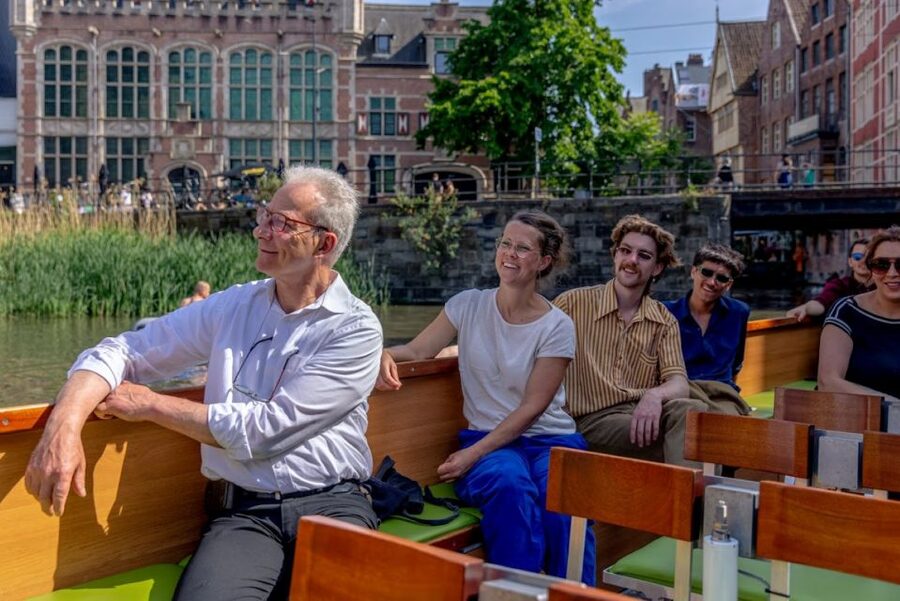
- A tight 50-minute loop that hits major medieval highlights fast
- Three towers and famous churches seen from a photographer-friendly angle
- Guildhall and market-area views that explain how Ghent made its money
- Gravensteen and the counts’/princes’ power sites from close range on the water
- Rain or shine comfort, with umbrellas on board and winter blankets
- Live commentary in Dutch, English, and French, plus illustrated translations in many other languages
Medieval Ghent in 50 minutes: why this boat format works
Ghent can feel like it was built for wandering. The medieval center is dense. The streets are pretty. And if you try to see everything on foot, you end up sprinting between buildings and missing the connections.
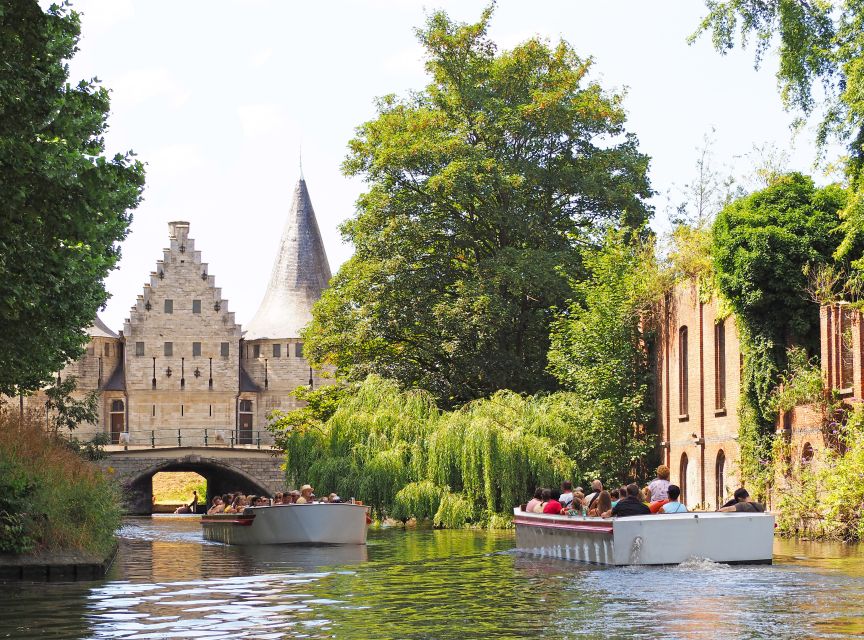
This boat trip solves that. You cruise along the historic core at a slow, steady pace, so your brain can actually absorb what you’re seeing. Instead of memorizing addresses, you start recognizing patterns: where power sat, where trade happened, and which churches dominated the skyline.
The value is also clear. At about $12 per person, you’re buying a short guided ride that bundles landmark views with explanation. In other words, you pay for time savings and context at the same price as a lot of standalone admissions in Belgium.
You can also read our reviews of more tours and experiences in Ghent.
From Graslei to the Belfry: the skyline you’ll remember
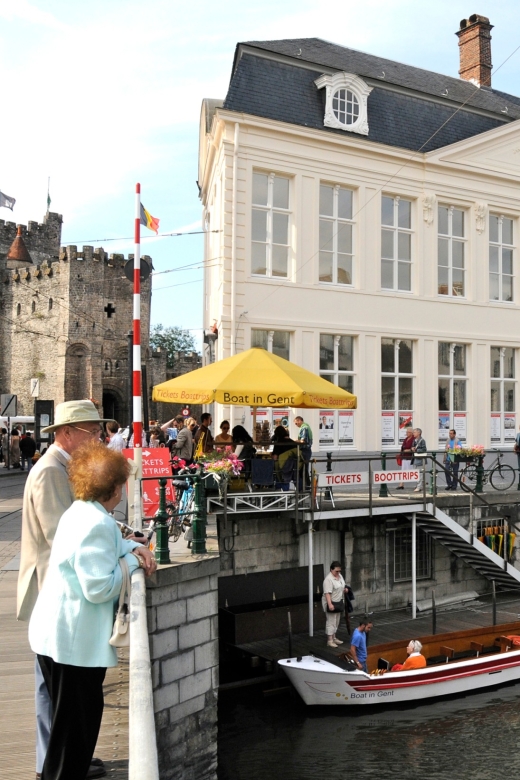
A big reason people book Ghent is the city’s vertical drama. On this cruise, you don’t just glance at it—you pass key viewpoints where the towers frame the riverbanks.
You’ll glide by spots such as Graslei and landmarks tied to the city’s famous church-and-tower cluster, including St Nicholas’ Church and the Belfry of Ghent area. The guide keeps the story moving, so when you see the architecture line up, you understand what each monument represented in medieval life.
If you’ve ever felt lost staring at an old city skyline, this is how to fix that. The boat perspective also helps you spot details you’d miss at street level—like how the waterfront buildings relate to the religious and civic monuments behind them.
And yes, it’s scenic enough that you’ll want photos. But the real payoff is that you’ll come away with mental bookmarks. Later, when you walk those streets, the buildings will feel less like random stops and more like pieces in a plan.
St Bavo’s Cathedral and the church cluster: more than postcard views
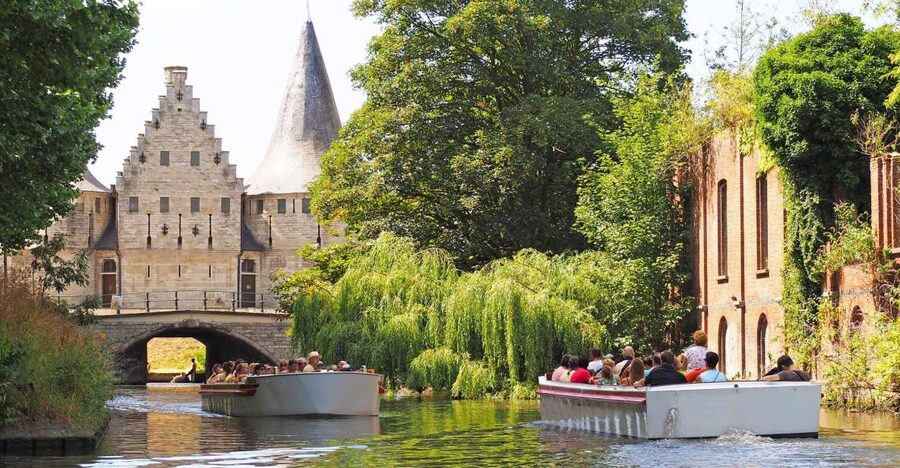
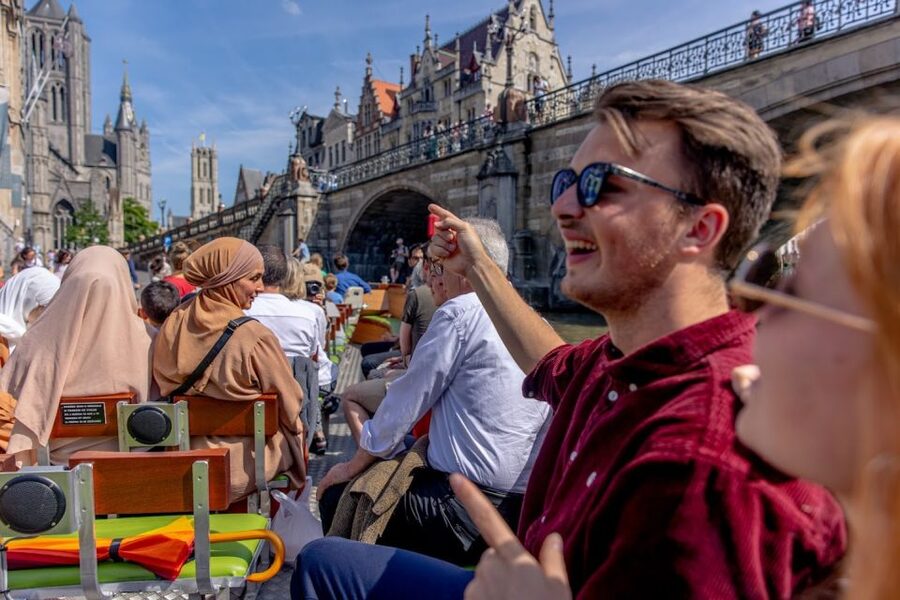
Ghent’s church architecture is a major character in the story of the city. The cruise route takes you past St Bavo’s Cathedral, along with other notable church sites that show how spiritual life, wealth, and art were linked.
What makes this effective is the live narration pace. The boat moves slowly enough that you can look up while still keeping your eyes on the waterfront. That matters, because medieval Ghent wasn’t designed for modern “quick glance” travel. It rewards attention.
Also, the guide format is built for mixed-language groups. Live narration runs in English, Dutch, and French, and you can use illustrated translations on board for other languages. That’s not just a convenience. It often means the guide’s timing and emphasis stay understandable across the group, so you don’t feel like you’re missing half the points.
Guildhalls and market streets: seeing the economy from quay walls
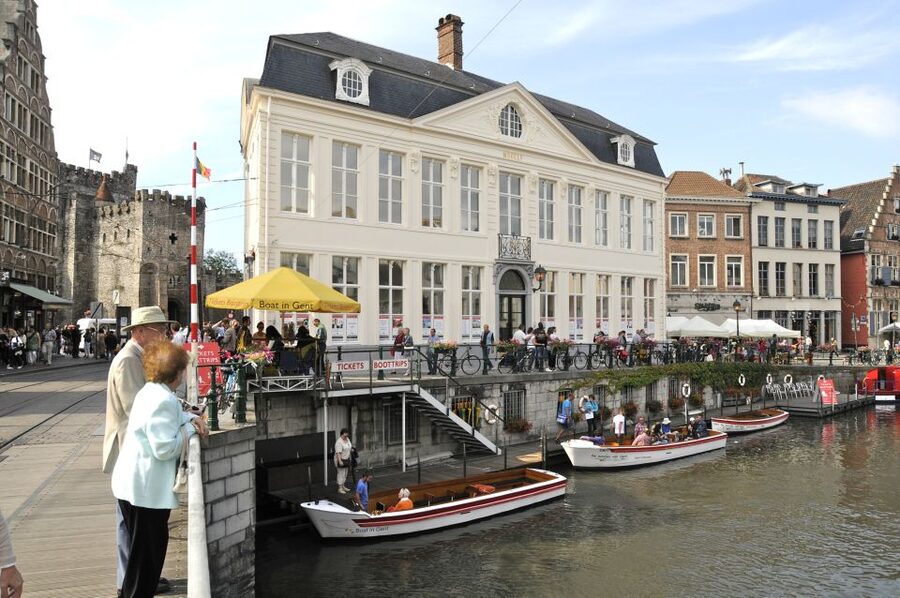
Medieval Ghent wasn’t only about churches and nobility. It was about trade. It was about the guild system. It was about people organizing work and power into buildings that still exist today.
On the boat, you pass by areas such as the Old Fish Market and the Great Butcher’s Hall. These aren’t abstract names. From the water, they sit in a practical setting: quay walls, merchant-facing buildings, and the river routes that helped goods move.
This is where the tour’s commentary is especially useful. The narration connects the architecture to the jobs that built the city’s wealth. You start to see why certain facades faced the water and why the waterfront mattered so much.
You’ll also spot older guildhall areas associated with Ghent’s labor and merchant world. If your interest is history you can actually picture, this is the section that turns the clock back.
Gravensteen and the counts/princes power sites
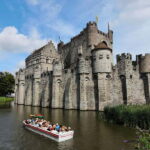
Now for the dramatic part. The medieval center includes real muscle: fortifications and seats of power. The route brings you past Gravensteen, the famous castle area, plus sights tied to the Counts and the Prince’s Court.
From the boat, castles can look larger than you expect. That’s not just because of the angle. It’s because you’re seeing the defensive style from the same waterways that once supported travel and control. The guide helps you connect what you see to who held authority here and why.
This is also where the “short and guided” format pays off again. On foot, a castle stop can feel like one big object in your day. On the water, Gravensteen becomes a scene inside a bigger medieval sequence—churches, markets, civic buildings, and then the fortress.

The Ancient Port feeling: quay walls and merchant houses
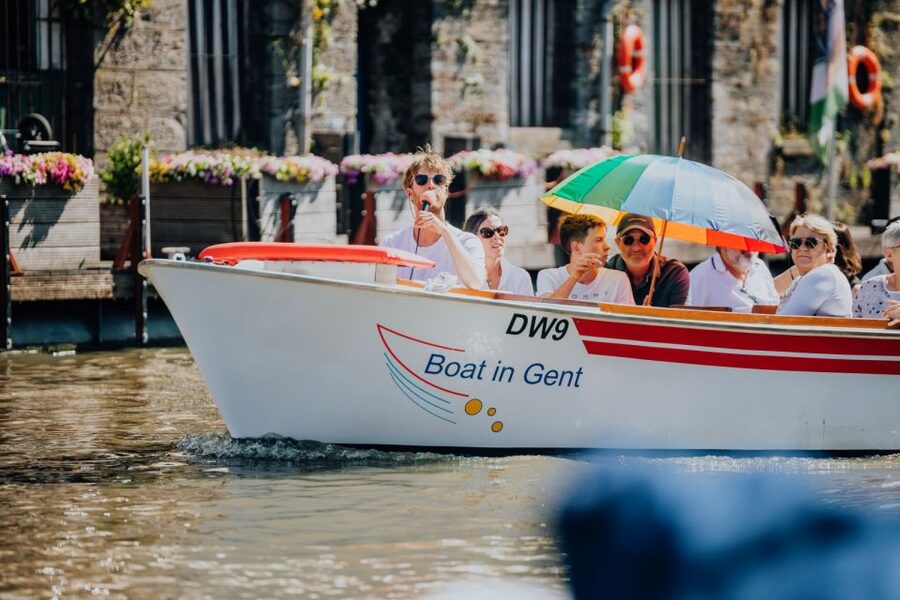
One of the standout parts of this tour is the sense of place around the medieval waterways. You cruise through the Ancient Port of Ghent, passing the quay walls and merchant-facing houses tied to trade routes.
This is the part that makes Ghent feel like more than a museum. It reads like a working city, even today, because you’re literally following the corridors that once mattered for shipping and commerce.
If you’re the type who likes to understand cities by how they functioned, you’ll appreciate this. You can almost see how people moved goods along the river, then walked from the quays to meet in guild halls, churches, and council spaces.
And because the route is structured, you don’t have to guess what matters. The narration gives you the labels while you’re watching the real setting.
Guides, languages, and the humor that keeps it from dragging
A short tour can fail in one of two ways: either it feels like a lecture, or it feels like a sightseeing bus with no substance. Here, the balance is good because the guide doesn’t just point. They explain.
Multiple guides have been described as funny and easy to follow. Names that show up in recent experiences include Kobe, Kristi, Tom, and guide Anna. Captain Brent is also mentioned, including a memorable on-board song moment during the ride.
Why does that matter? Because medieval Ghent has a lot of names. A good guide makes those names stick by tying them to stories, conflicts, and everyday life. Humor also helps when you’re traveling in cold weather or rain, because it keeps attention from drifting.
As for languages: the live guide runs in Dutch, English, and French, and illustrated translations are available for German, Spanish, Italian, Russian, and Japanese. That’s a rare setup for a tour this length, and it makes it easier for groups to stay together while still feeling included.
Weather reality: umbrellas, blankets, and choosing covered vs open air
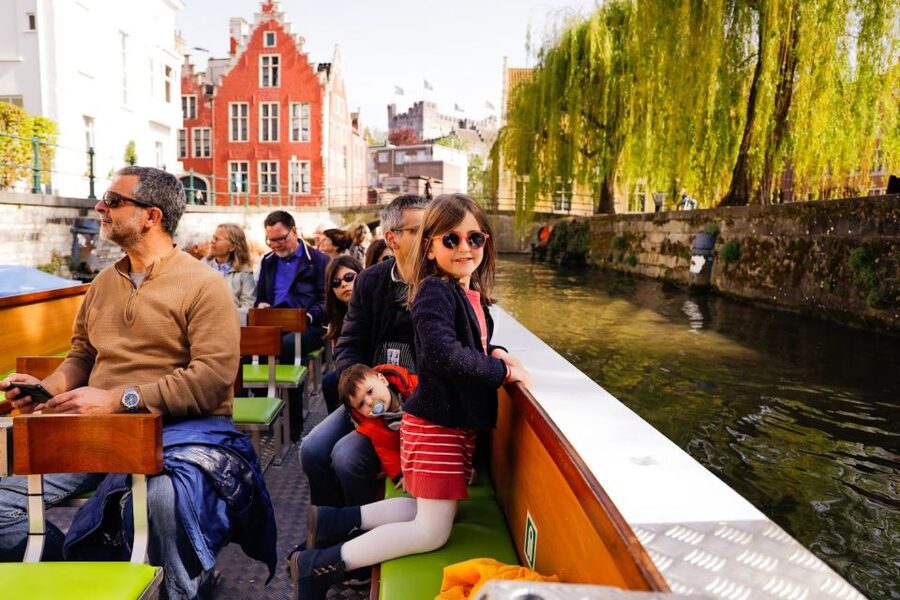
Ghent weather loves to switch moods. The tour runs rain or shine, and if it rains, umbrellas are on board. That removes a lot of stress.
In winter, you may get blankets, which can turn a chilly canal cruise into something you’ll actually enjoy. One helpful detail from experiences shared is that some departures can be more open-air while others are more covered. If you’re booking in cooler months, dress in layers and expect that your comfort will depend on how much cover your particular departure provides.
There’s also a smart practical tip tied to the boat design. On some open-air setups, you may get a slightly different route that includes passing under a low tunnel that covered boats might not be able to reach. If you care about squeezing out every last bit of variety, you might like that added route flexibility.
So: bring warm layers. Use the umbrella if you need it. And take advantage of the blankets when they’re offered.
Timing and how often you can slot this into your day
The cruise gives you options depending on the season.
- From April 1 to October 31, departures run daily from 10:00 AM to 6:00 PM, about every 20 minutes.
- From November 1 to March 31, departures run every 30 minutes from 10:45 AM to 4:15 PM.
That frequency matters more than you might think. It means you can plan a flexible itinerary. If your morning runs long, you’re not stuck. You can usually find a departure that fits.
Also, tickets are for one trip, taken at the time you choose (based on availability). So pick a slot that matches your energy level. For many people, this works great as an early-day orientation. You come back to the sites later knowing where to focus.
Price and value: why $12 feels fair for what you get
Let’s talk about money without the fluff.
At $12 per person, you’re paying for:
- a guided boat ride through the medieval center
- live narration in multiple languages
- historic “see it in context” commentary for major landmarks
- umbrellas if weather turns, and winter blankets on cold departures
The value is strongest if you’re doing Ghent for the first time and want an efficient overview. This is the kind of activity that can prevent wasted time later because it helps you prioritize on foot.
It’s also a solid option if you want something gentler than a full-day walking route. The ride is short enough to stay fun, but long enough to connect several key stops.
Would I pick it if you hate boats or canal riding? No. But if you’re open to a calm, scenic pace, the price-to-experience ratio feels realistic.
Quick meet-up and what to do when you arrive
Your meeting point can vary by the option you book, but it’s centered around Boat in Gent, with an identified starting area linked to De Bootjes Van Gent (Rederij Dewaele). The main thing is to confirm your specific pier before you show up, since Ghent has multiple viewpoints along the waterfront.
When you arrive, look for the posted boat pickup information for your departure window. If you’re in a mixed-language group, the tour format makes it easy to get settled because the live guide language coverage is clearly built in.
One more practical note: this is a boat ride. Wear shoes you’re comfortable standing in for a while, especially if it’s wet.
Should you book this Ghent medieval center boat trip
I’d book it if you want an efficient, guided way to understand Ghent’s medieval core. It’s perfect for:
- first-timers who want the big sights without overplanning
- couples and friends who want a relaxed activity with real context
- anyone who likes architecture, but also wants the stories behind it
I’d pass or add a different plan if you need lots of time at a museum level or want to go inside major attractions the day of the boat ride. This trip is about seeing, connecting, and orienting—then turning that into smarter walking after.
FAQ
How long is the Ghent medieval center boat trip?
The guided boat trip lasts about 50 minutes.
What languages are offered on the tour?
The live guide provides narration in Dutch, English, and French. Illustrated translations are also available on board in German, Spanish, Italian, Russian, and Japanese.
Does the tour run in the rain?
Yes. The tour goes rain or shine, and umbrellas are provided on board if it rains. In winter, blankets are available on the tour.
Are pets allowed on the boat?
Pets are not allowed. Assistance dogs are allowed.
Where do we meet for the tour?
The meeting point may vary depending on the option booked, but it’s tied to Boat in Gent and the De Bootjes Van Gent location at Rederij Dewaele.
How often do boats depart?
From April 1 to October 31, departures run daily from 10:00 AM to 6:00 PM every 20 minutes. From November 1 to March 31, departures run every 30 minutes from 10:45 AM to 4:15 PM.