REVIEW · MOAB
Moab: 3-Hour Jet Boat Tour to Dead Horse Point State Park
Book on GetYourGuide →Operated by Canyonlands By Night & Day · Bookable on GetYourGuide
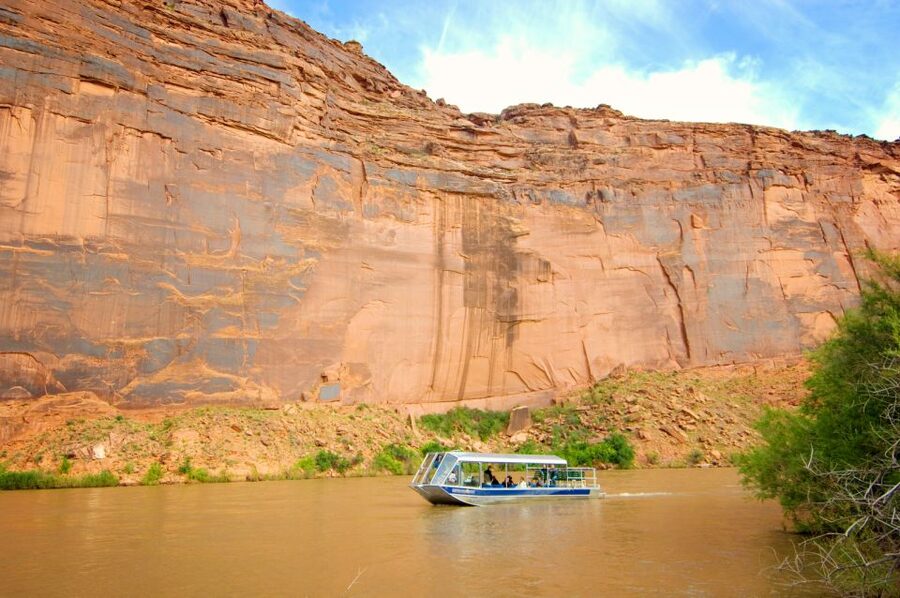
Dead Horse Point looks huge from the road, but from the Colorado River it feels close. This 3-hour jet boat tour is a fast, fun way to see Moab’s red-rock drama from the only angle most people miss: down on the water. Two things I love are the shaded ride on a covered boat and the guided stories that connect the river to what people have done here for generations. One consideration: the boat can be loud, and wind can make the experience a bit less comfy than the calmest afternoons.
Your route takes you past canyon walls that rise about 2,200 feet overhead and into the “wait, how is this real?” views near Thelma and Louise Point. You get a live guide with local culture and history, plus photo stops for arches, petroglyphs, and fossil-rich scenery. If you’re sensitive to stairs, note there are 5–30 steps to reach the dock before you even get on the boat.
In This Review
- Key highlights you’ll actually feel during the ride
- Why this jet boat tour beats the usual Moab drive
- Getting to 1861 N Hwy 191: simple start, some stairs
- The first minutes: safety, then a glide into canyon country
- The itinerary in plain English: what each stop is for
- Little Arch and the “look up” moments
- Roadside Petroglyphs: quick, focused, and close enough to notice
- Jug Handle Arch: a classic Moab shape from river level
- Intrepid Potash and river-era industry views
- Base Camp Adventure Lodge: a calm pause before the big finale
- Dead Horse Point State Park and Thelma and Louise Point
- Guides and onboard vibe: Rory, Richard, and the art of good timing
- Comfort, heat, and wind: how to dress for a jet boat day
- Price and value: why $150 can make sense here
- Who should book this (and who might skip)
- Should you book the Moab jet boat to Dead Horse Point?
- FAQ
- How long is the jet boat tour?
- Where do I meet for the tour?
- What will we see near Dead Horse Point State Park?
- Does the boat have shade?
- Are there photo stops during the tour?
- What’s included with the ticket price?
- Is the dock difficult to access?
Key highlights you’ll actually feel during the ride
- Dead Horse Point from the bottom: You go through the base of the state park, not just near it.
- Thelma and Louise Point moment: The iconic cliff scene location is part of the trip.
- Shaded, covered seating: Less heat stress than you’d expect for a water tour.
- Frequent photo stops: Short pauses at spots like Little Arch, Jug Handle Arch, and petroglyph areas.
- Live narration with real characters: Guides like Rory and Richard bring the river’s past and present to life.
- Big canyon scale: You’re cruising under walls roughly 2,200 feet tall.
Why this jet boat tour beats the usual Moab drive
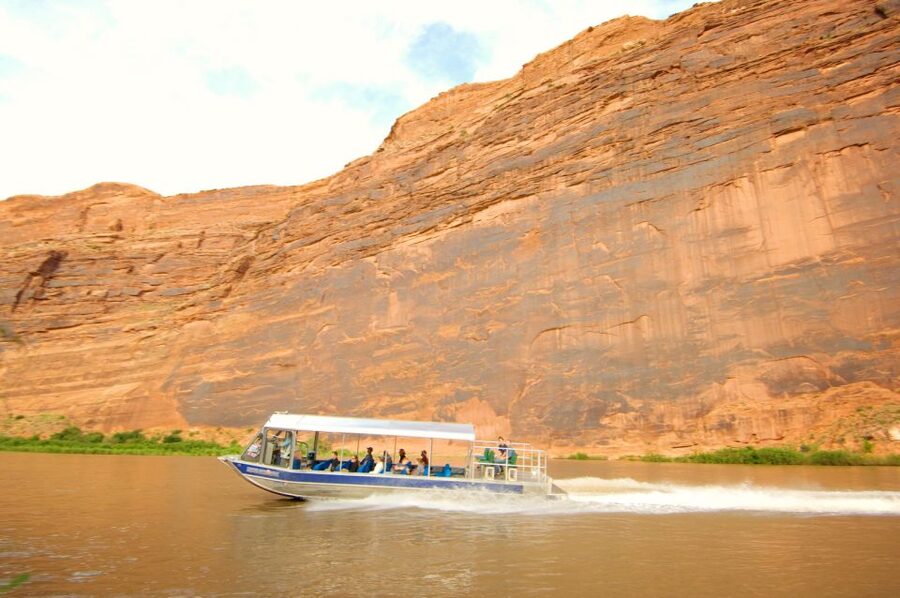
Moab is built for road views—pull off, park, take the photo, move on. This tour flips the perspective and puts you under the scenery instead of staring at it from above. That alone changes how you read the canyon walls, the river cuts, and even how far the rock formations stretch.
I especially like that the boat gives you a calm-water feel for much of the ride, instead of turning the whole thing into white-knuckle rafting. You still get the thrill of a jet boat experience, but with enough control that your attention can stay on the views and the guide’s commentary.
The best part is the “in-between” geography. You’re not only seeing famous overlooks. You’re passing a fossilized sea-bed setting, looking at petroglyph areas, and catching glimpses of river-era features that you can’t spot from trailheads.
You can also read our reviews of more tours and experiences in Moab.
Getting to 1861 N Hwy 191: simple start, some stairs
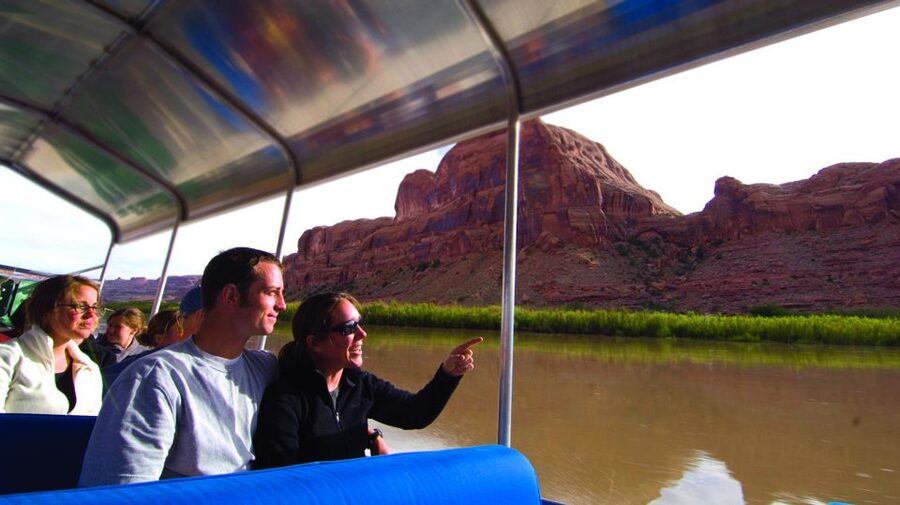
The meeting point is 1861 N Hwy 191 in Moab, about 2 miles north of town on the north side of the Colorado River bridge. Turn left after the bridge to reach the parking lot next to the Fairfield Inn and Suites by Marriott.
Plan for getting to the dock: there are 5–30 steps depending on your exact route. If you know stairs wear you out, go in rested and consider wearing shoes with good grip. Also, arrive a little early so you’re not rushing through check-in and getting your bearings before boarding.
Once you’re on board, the covered setup is a real comfort win. You don’t have to “protect yourself against sun” as much as you would on open-deck adventures.
The first minutes: safety, then a glide into canyon country
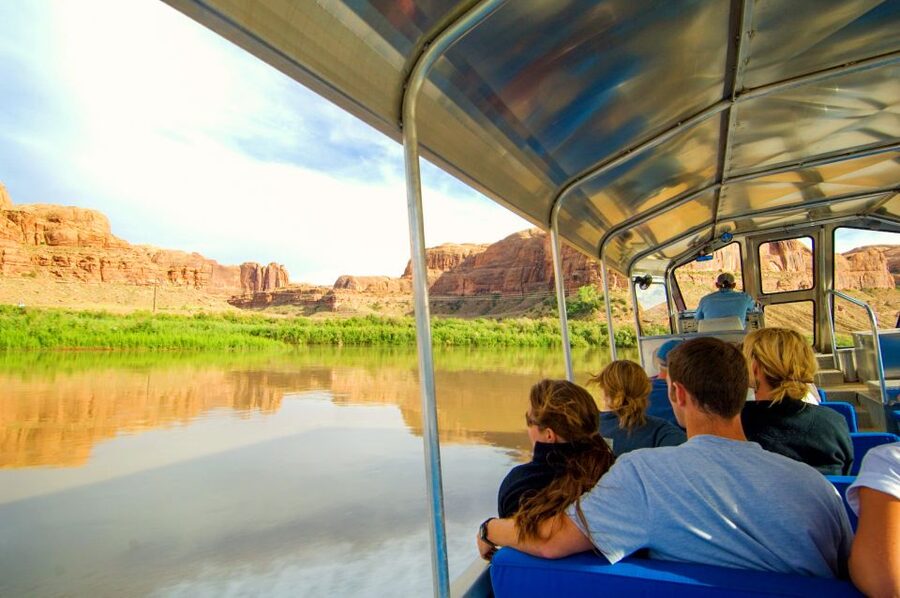
The tour starts with a safety orientation, then you launch into the scenic section of the Colorado River. Right away, the ride feels different from driving: you’re moving along the canyon while the walls loom overhead.
You also get into the rhythm of the trip quickly. The guide points out what you’re seeing as you go, and you’ll get short cruising segments followed by brief stops. That keeps the pace upbeat without feeling frantic.
If you’re worried about wildlife, don’t expect a guaranteed animal parade. Still, the river environment makes it possible to spot birds and other signs of life along the way.
The itinerary in plain English: what each stop is for
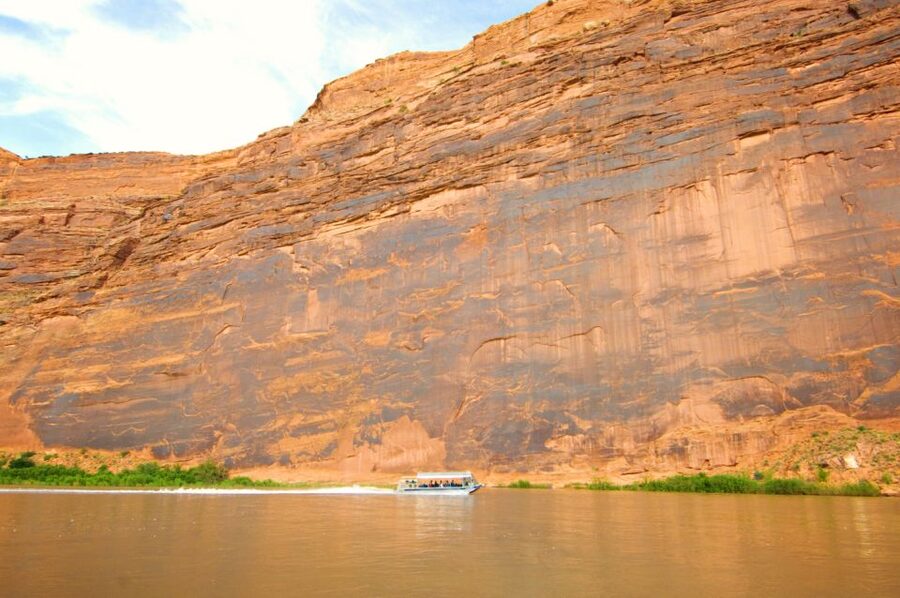
This tour is built around a mix of cruising time and quick photo moments. The pacing matters here because the scenery is layered—arches and petroglyphs are cool, but the river context is what makes the trip make sense.
Here’s how the stops fit together:
Little Arch and the “look up” moments
Early on, you get a photo stop at Little Arch. This is one of those sights where being on the water helps you judge scale. From the river level, arches can look both delicate and massive at the same time.
A short cruise connects each viewpoint. During those stretches, the guide keeps your attention on the bigger picture: river history, canyon formation, and where humans have left marks over time.
Roadside Petroglyphs: quick, focused, and close enough to notice
Next comes a photo stop at roadside petroglyphs. This works better than a long hike because you’re not rushing through a trail while squinting at small carvings. You still need to pay attention, though—this isn’t the kind of stop where everything is instantly obvious from the first glance.
If you like history that’s “in the landscape,” this part is a strong match to your interests, especially alongside the river-based narration.
Jug Handle Arch: a classic Moab shape from river level
You’ll also stop for photos at Jug Handle Arch. The arch is visually distinctive, but the river angle changes how you read it. You get a chance to frame it with canyon walls and river surroundings instead of just seeing it as a stand-alone photo subject.
One practical tip: keep your camera ready during photo stops, but take in the view with your own eyes first. It’s easier than you think to end up looking through the lens the whole time.
Intrepid Potash and river-era industry views
Another photo stop is at Intrepid Potash. This gives you a reality check that the river isn’t only scenic—it’s also tied to industry and local use. If you’re into how places function, not just how they look, this stop adds context.
After that, you get back on the boat with a longer cruising stretch. It’s a nice break between photo moments.
Base Camp Adventure Lodge: a calm pause before the big finale
A stop at Base Camp Adventure Lodge rounds out the middle of the tour with another quick photo chance. Then you get a longer river segment that leads you toward the state park area.
This structure is helpful. You’re building from smaller, specific features into the grand, iconic viewpoints near Dead Horse Point.
Dead Horse Point State Park and Thelma and Louise Point
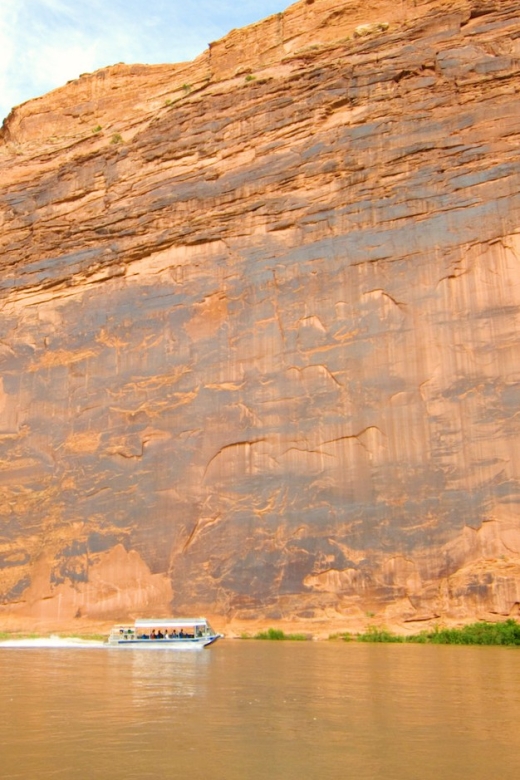
This is the section that pulls people in. You travel downriver and pass through the bottom of Dead Horse Point State Park, where the famous Thelma and Louise Point is part of the scenery. It’s the kind of location that clicks immediately because the story is famous and the cliff setting is unmistakable.
What makes this more than a movie reference is the way the river route frames the cliff and the drop. You’re not just seeing the viewpoint. You’re experiencing the same “from the waterline” geography that gives the moment its drama.
You also go through a natural amphitheater area. That helps explain why this region works so well for watching the interplay of light, walls, and the river’s movement. If you’re into photography, this is when your shots start looking different from your typical Moab photos.
Then your captain turns back at the entrance of Canyonlands National Park after traveling about 32 miles downriver. That turnaround point keeps the tour focused and efficient—no wandering for hours, just a planned run that delivers the big highlights.
Guides and onboard vibe: Rory, Richard, and the art of good timing
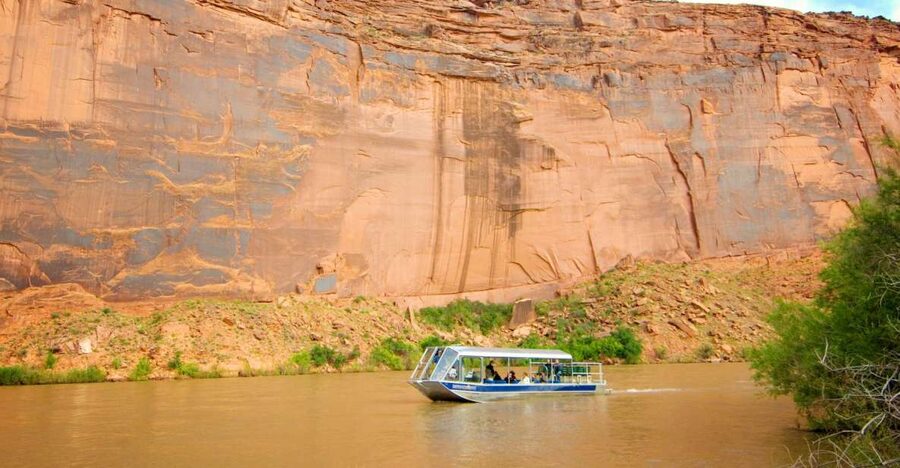
Good narration can make a scenic trip feel like a story you can walk around inside. Many of the tour experiences here center on the guide’s humor, pacing, and ability to connect rocks, river life, and human history.
I like seeing guides called out by name—Rory comes up repeatedly for being lively and story-driven, and Richard is noted for pairing river knowledge with humor. You might also hear Roy credited for a fantastic tour. When the narration is working, it feels like you’re learning while you’re still enjoying yourself.
The ride can also feel louder than you expect. One practical note from the experience: if you’re seated farther back, the jet boat noise may be more noticeable. If you’re sensitive to sound, you’ll want to plan for it—bring ear protection if that’s your thing.
Comfort, heat, and wind: how to dress for a jet boat day
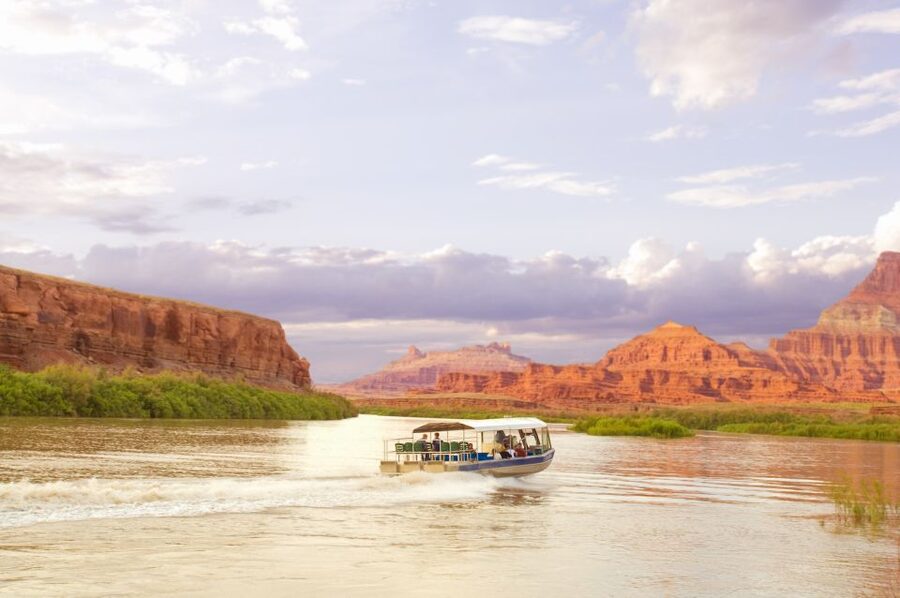
This tour is designed with the desert in mind. The boat is covered, and shaded seats help you beat the heat on both morning and afternoon departures. That matters in Moab, where sun and dry air can make “just standing outside” feel like work.
Still, conditions can shift. Wind is a real factor on the Colorado River, especially in canyon areas. If it’s breezy, bring a layer you can adjust quickly—something light that protects you when you’re in motion.
Because it’s a jet boat, expect some noise and vibration. It’s not a quiet nature cruise. The upside is that you’re getting a “thrill ride” feel with real scenic payoff.
Price and value: why $150 can make sense here
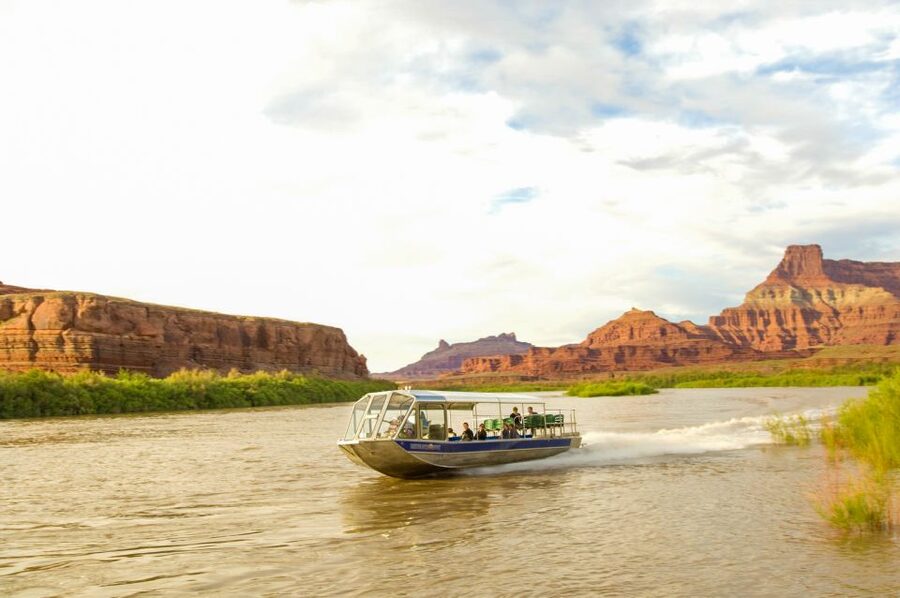
At about $150 per person, this isn’t a bargain bucket activity. The value comes from the combo: time, rarity of viewpoint, and the guided interpretation.
You’re paying for:
- A water-level perspective that you simply can’t replicate from the road or from most short hikes.
- A full 3 hours of cruising plus built-in stops.
- Local live guide commentary that connects geology and culture.
- Snacks and water, which keeps you from scrambling mid-tour.
If you’re deciding between a “nice view” and something more memorable, this hits the second category. It’s not just about seeing Dead Horse Point. It’s about seeing it from the river, with the tour pacing designed to keep you engaged.
Who should book this (and who might skip)
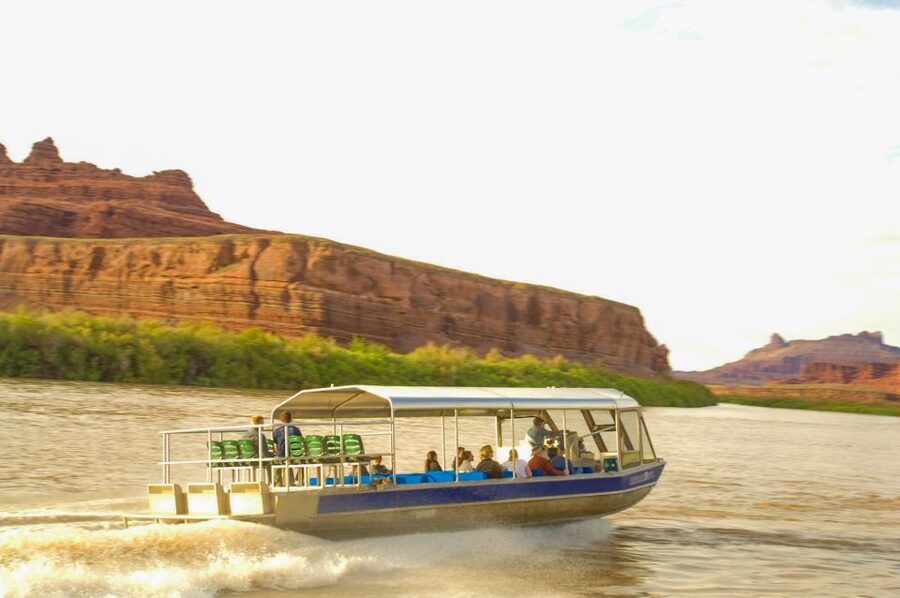
This tour is a great match if you:
- Want big Moab views without committing to rafting or a long hike.
- Like guided stories that connect places to people and history.
- Prefer a shorter adventure that still feels like an experience, not a quick stop.
You might skip this if:
- You hate loud environments. The jet boat sound shows up more than you might imagine.
- Stairs are a dealbreaker for you. There are 5–30 steps to reach the dock.
For families, couples, and solo travelers, it’s also a nice “done in one go” outing. You can plug it into a day with Arches or Canyonlands planning without needing a whole logistics puzzle.
Should you book the Moab jet boat to Dead Horse Point?
If you want Moab from the water and you’re comfortable with a louder, more energetic ride, I’d book it. The route through Dead Horse Point State Park plus Thelma and Louise Point gives you both spectacle and story, and the covered seating helps you enjoy it without cooking in the sun.
If you’re on the fence, think about your goal for the day. If your dream is a quiet, wind-free nature stroll, this may feel like too much. But if you want one of the most distinctive viewpoints Moab offers—down low, under the cliffs—this is a strong choice.
FAQ
How long is the jet boat tour?
The tour lasts about 3 hours.
Where do I meet for the tour?
You meet at 1861 N Hwy 191, Moab, UT 84532. It’s about 2 miles north of Moab on the north side of the Colorado River Bridge.
What will we see near Dead Horse Point State Park?
The route passes through the bottom of Dead Horse Point State Park and includes the iconic Thelma and Louise Point area.
Does the boat have shade?
Yes. The boat is covered and has shaded seats.
Are there photo stops during the tour?
Yes. The trip includes several short photo stops, including Little Arch, roadside petroglyphs, Jug Handle Arch, and Dead Horse Point State Park.
What’s included with the ticket price?
The tour includes the jet boat ride, a live English-speaking guide, and snacks and water.
Is the dock difficult to access?
The tour notes there are 5–30 steps to get to the dock.