REVIEW · PORTO
Port : Douro Cruise, 6 Bridges & 4 Port Wines (Max 7)
Book on Viator →Operated by Alma Douro · Bookable on Viator
A small-boat Douro trip is a different kind of Porto. I love the up-close small group setup and the way hosts Nadia and Paulo bring the river to life with stories as you move between famous sights. The second thing I really like is the 4-Port wine tasting paired with food, so it feels like an experience, not a lecture. One drawback to plan for: it’s not ideal for reduced mobility, and it depends on decent weather for the best ride.
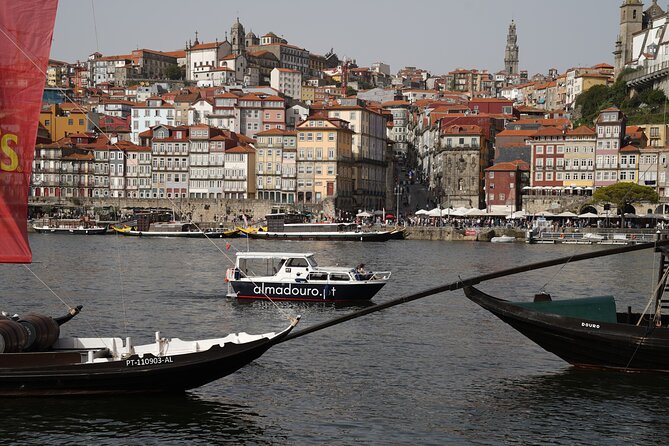
You’ll start at Marina da Afurada in Vila Nova de Gaia, then work your way through Porto and Gaia’s biggest “this is why people come” stops. Expect bridge views that feel cinematic, plus a finish out by the Atlantic at the mouth of the Douro. If you pick a later sailing, you’ll also understand why the hosts keep cozy blankets on hand.
In This Review
- Key things that make this Douro cruise worth your time
- Start at Afurada: where the Douro feels local
- Tower views and a quick climb to understand Porto
- Dom Luís I Bridge: the double-deck steel icon
- Ribeira and Serra do Pilar: Porto’s postcard meets UNESCO
- D. Maria Pia Bridge: Eiffel’s engineering flex
- Douro Estuary reserve: birds, salt marsh, and the real river edge
- Port wine tasting: 4 wines, smart pairings, and no fluff
- The cruise portion: 6 bridges from water level
- Ending at the Douro mouth: where the river meets Atlantic air
- Price and value: why $72.41 feels fair here
- Who should book this Douro cruise with 6 bridges
- Should you book Alma Douro’s 6 bridges and Port wines?
- FAQ
- How long is the Douro cruise?
- How many people are on the tour?
- Where do I meet for the tour?
- What language is the tour offered in?
- Is there a mobile ticket?
- Does the experience include Port wine tasting?
- Is the Dom Luís I Bridge stop free of charge?
- Is the tour recommended for reduced mobility?
- What happens if weather is bad?
- Can I cancel and get a full refund?
Key things that make this Douro cruise worth your time
- Max 7 people means you actually hear the explanations without shouting over the crowd
- 4 Port wines with food pairings that make each pour make sense
- Hosts Nadia and Paulo share short, human stories as you pass landmarks from the water
- Bridge highlights include Dom Luís I and D. Maria Pia, both with serious engineering bragging rights
- Douro Estuary bird habitat shows you Porto’s river nature, not just buildings
- Small-boat comfort like blankets when the breeze kicks up
Start at Afurada: where the Douro feels local
Most Porto sightseeing happens on land, close to the tourist core. This experience starts right in Vila Nova de Gaia at Marina da Afurada, a quieter, more traditional spot that makes the day feel grounded. Afurada is close to the fishing world, and that matters because the Douro here is not just a backdrop.
You’re also already positioned well for the big river moment. As you move toward the bridges and open water, you get that sense of scale: Porto is steep and dramatic from shore, but the river shows how the whole city grid was built around crossings.
If you’re relying on public transport, the meeting point is described as being near it, which helps on a day where timing matters. And if you like your plans simple, you’ll appreciate the mobile ticket format.
You can also read our reviews of more tours and experiences in Porto.
Tower views and a quick climb to understand Porto
One of the stops includes Torre dos Clérigos, the tall landmark designed by Italian architect Nicolau Nasoni. It was completed in 1763 and originally served as a bell tower. Over time, it also became a landmark for vessels and a strategic point during military conflicts.
The practical part: the visit includes a 225-step journey to the top. You’ll want comfortable shoes and the mindset that it’s a climb, not a stroll. The reward is the panoramic view over Porto and Gaia, which helps you connect what you’ll see later from the river.
This is the kind of stop that’s useful even if you’re not a big museum person. Climbing gives you orientation fast. After that, the bridges and river bends don’t feel random; they snap into place.
Dom Luís I Bridge: the double-deck steel icon
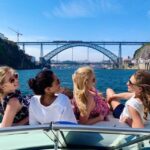
The tour’s bridge focus isn’t generic. Dom Luís I Bridge is a metal bridge with two decks, built between 1881 and 1886, connecting Porto and Vila Nova de Gaia across the Douro River. This is one of those structures you’ve probably seen in photos, but from the water the scale hits differently.
The listing notes admission ticket free for this stop, which is helpful if you’re trying to keep the day straightforward. Even without paying for anything extra, you get a strong set of angles that show why this crossing is such a symbol of Porto.
If you’re traveling with someone who wants both photos and context, this bridge is a great middle ground. It’s recognizable, and it’s easy to understand why it mattered once steel bridges changed what was possible.
Ribeira and Serra do Pilar: Porto’s postcard meets UNESCO
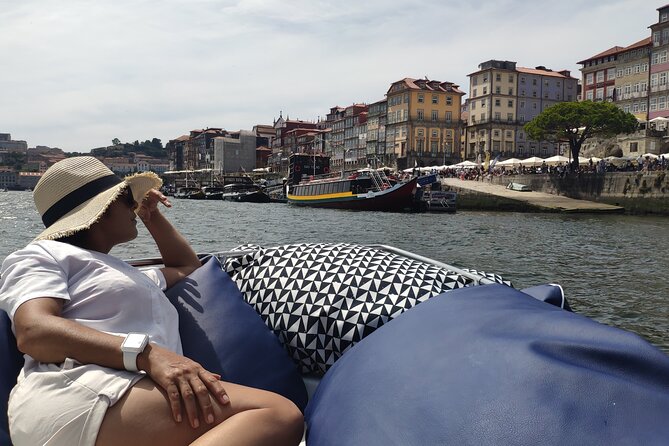
After Dom Luís I, the itinerary makes sure you don’t miss Ribeira—often called the best postcard of the city. This is the colorful riverside zone where the river life is right in your face: past and present in the same frame. It’s also the area where you’ll naturally pick up the mood of Porto—compact streets, constant motion, and that old-meets-new vibe.
Then you head to Serra do Pilar Monastery, an austere 17th-century church classified by UNESCO (World Heritage Site since 1996). The building details are what make it interesting: the church has a circular plan and an imposing hemispherical vault, surrounded by a balcony and topped by a lantern.
Inside, you’ll notice gilded and white carved work. The cloister is also a standout: a circular plan with a vault supported by 36 Ionic columns.
Here’s why this stop is more than pretty architecture. The monastery’s location mattered during major conflicts, including 1809 (Napoleonic invasions) and 1832–33 (liberal struggles). At different times, it served as a military base and later became fortress/barracks. That’s the kind of detail that makes the place feel alive rather than just historical.
D. Maria Pia Bridge: Eiffel’s engineering flex
Next is D. Maria Pia Bridge, a railway infrastructure that carried Portugal’s Northern Line across the Douro between Porto and Gaia. It was inaugurated on November 4, 1877 and closed on June 24, 1991, replaced by Ponte de São João.
This is one of the most engineering-nerd friendly bridges in the region. It’s considered, along with the Garabit Viaduct, as one of the great masterpieces by engineer Gustave Eiffel. At inauguration time, it was described as the bridge with the largest iron arch in the world—and it’s been classified as a National Monument since 1982.
Even if you don’t care about iron arches, you’ll still enjoy the experience because the bridge is visually striking from the river. From water level, you see the structure as a system, not just a photo subject.
Douro Estuary reserve: birds, salt marsh, and the real river edge
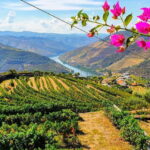
Not every part of a Porto day should be buildings. The itinerary includes the Douro Estuary Local Nature Reserve, about 66.35 hectares, on the south bank near Afurada. It covers Cabedelo and São Paio bay, including a salt marsh area.
The biggest value here is birdlife. The reserve protects species that live here or pass through on the East Atlantic migratory corridor. It’s described as easy to observe because of the location and geography.
If you’re the type who thinks the Douro is all castles and wine, this stop nudges your perspective. It’s a reminder that the river is an ecosystem, too.
Practically, this is also a nice breathing moment. After towers, monasteries, and bridges, you get a calmer pace and a different kind of view—space, water edges, and sky.
Port wine tasting: 4 wines, smart pairings, and no fluff

The name of the experience matters for a reason: you’re getting a Port wine tasting with 4 different wines. And this is where the experience gets personal.
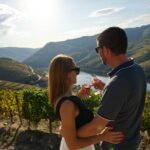
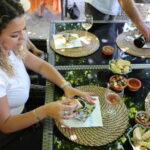
I like the way hosts Nadia and Paulo structure the tasting. Instead of long, formal explanations, they pair the ports with food in a way that makes the flavors feel connected. One review specifically calls out thoughtful pairings that enhance each port, and the vibe is that you’re tasting with context, not sitting through a scripted talk.
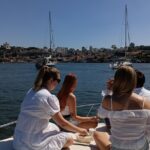
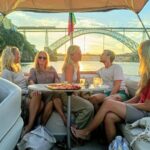
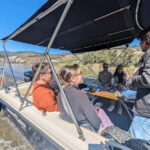
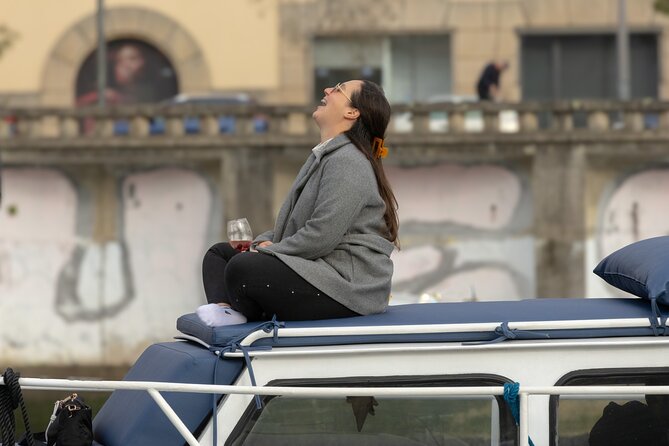
You should also expect that the tasting is part of a wider food-and-drinks rhythm. Reviews mention things like a cheese board, snack platters, tapas-style bites, and even sangria during the sailing. Blankets show up when the breeze gets chilly, especially if you choose a later cruise.
If you’re worried about wasting time on something that feels touristy, this is a solid reason to book. The goal isn’t just to pour wine. It’s to help you taste Porto the way locals do: with small bites, timing, and stories that make the river landmarks feel relevant.
The cruise portion: 6 bridges from water level
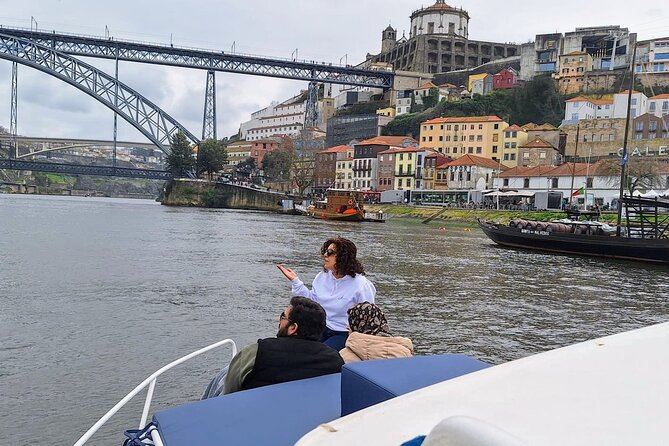
The core experience centers on a Douro river cruise that highlights 6 bridges. The itinerary descriptions don’t list every bridge by name, but they do make clear you’ll hit the biggest “don’t miss” icons—like Dom Luís I and D. Maria Pia—and then continue the route toward the river mouth.
From the water, Porto and Gaia take on a different geometry. Streets look less like walls and more like plans. Terraces read like steps. Even rainy or cloudy conditions tend to feel less depressing from the river, because you’re moving through the light rather than standing under it.
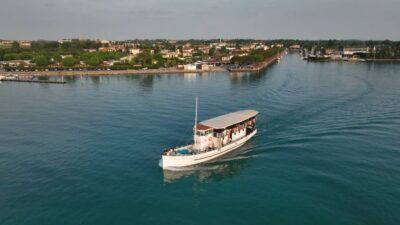
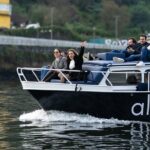
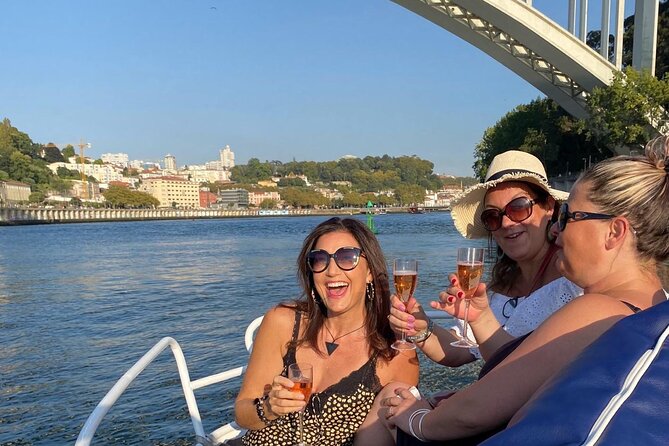
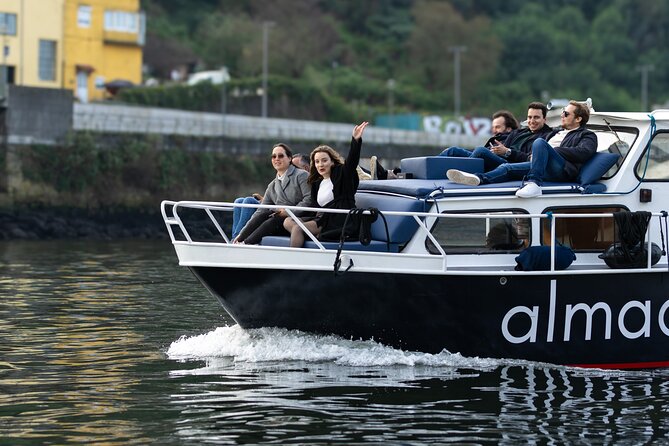
This is also where the small group size becomes a real advantage. A boat that’s designed for up to 7 people feels relaxed. You’re not fighting for attention or space near the railing. You can actually look, listen, and sip.
Ending at the Douro mouth: where the river meets Atlantic air
The trip ends right at the mouth of the Douro, next to the Atlantic Ocean. That last stretch is a good way to close the loop. Earlier you’ve dealt with the city’s architecture and the river’s power through bridges. Now you see the river widen and transition to open water.
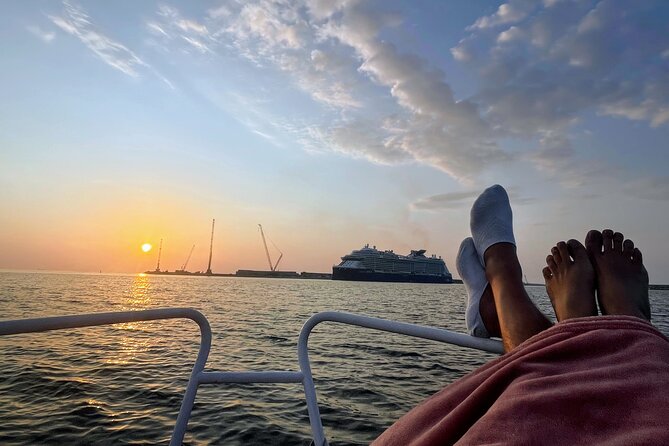
If you’re booking for a later start, this is often the stage where the sky changes and the whole ride slows down. Reviews mention sunset vibes specifically, along with comfort touches like blankets to stay warm when the air cools.
Even without perfect skies, ending by the ocean tends to leave people satisfied. It feels like you actually went somewhere, not just circled a harbor.
Price and value: why $72.41 feels fair here
At $72.41 per person for about 2 hours, this isn’t a budget-only option. But it also isn’t in the category where you’re paying for a giant ship and a crowded experience.
The best value angle is the pairing of: small group size (max 7), meaningful landmark narration, and the included Port wine tasting (4 wines) with food. Reviews also mention that the hosts focus on comfort and atmosphere—like blankets when it turns windy or cool—and that personal attention can even make a small-group booking feel private when the boat isn’t full.
It helps to compare with bigger boat options. One review flat-out notes you can do 6-bridge cruises on larger boats for less money, but the difference in comfort and attention is the point. If you want Porto from the river without the noise and crush, the price starts to make sense.
Who should book this Douro cruise with 6 bridges
I’d point you toward this experience if you want:
- Port tasting that includes context, not just pouring
- A small-group river ride where you can hear your guide
- A mix of city icons and river nature (bridges plus the estuary reserve)
- A comfortable sailing style, with blankets mentioned in the reviews when weather turns
It’s not the best match if you have mobility limitations, since it’s explicitly not recommended for reduced mobility. If that’s you, I’d look for an option with step-free access and fewer stairs in the itinerary.
Language is English, and it’s a good pick if you want explanations but don’t want your day hijacked by long, formal tours.
Should you book Alma Douro’s 6 bridges and Port wines?
I think you should book if your idea of a great Porto day is: a small boat, real hosts, and an evening (or afternoon) where the river tells the story. The combination of 6 bridges cruising, 4 Port wines, and stops like Clérigos Tower and Serra do Pilar is a tight way to see both the city’s glamour and the Douro’s edge.
Skip it if you hate wine tastings, want a hands-off photo-only tour, or you need a very accessible itinerary. Also, keep weather in mind. This experience is described as requiring good weather, and if conditions are poor, you’ll be offered another date or a full refund.
FAQ
How long is the Douro cruise?
It lasts about 2 hours.
How many people are on the tour?
The experience has a maximum of 7 travelers.
Where do I meet for the tour?
You meet at Marina da Afurada, R. da Praia 430, 4400-554 Vila Nova de Gaia, Portugal.
What language is the tour offered in?
The tour is offered in English.
Is there a mobile ticket?
Yes, the experience includes a mobile ticket.
Does the experience include Port wine tasting?
Yes. It includes 4 Port wines.
Is the Dom Luís I Bridge stop free of charge?
The Dom Luís I Bridge stop lists admission ticket free.
Is the tour recommended for reduced mobility?
No. It is not recommended for reduced mobility.
What happens if weather is bad?
The experience requires good weather. If it’s canceled due to poor weather, you’ll be offered a different date or a full refund.
Can I cancel and get a full refund?
Yes. You can cancel up to 24 hours in advance for a full refund.