REVIEW · RIO DE JANEIRO
Rio: Boat Tour of Guanabara Bay
Book on GetYourGuide →Operated by C2RIO TOURS & TRAVEL · Bookable on GetYourGuide
Rio looks different when you’re on the water. This guided catamaran ride from Marina da Glória gives you an organized way to see Rio’s waterfront and Niterói’s icons across Guanabara Bay. You also get a few timed photo moments—especially around Sugarloaf—without the hassle of switching transport.
What I like most is the big-sights-in-one-shot feeling. In a short window, you pass the Museum of Tomorrow, ride the view corridor near the Rio–Niterói Bridge and Acoustic Shell, then swing back by Flamengo Beach and Urca. Second, the tour is built for photos: you’re set up with a great sea-level perspective and brief windows to capture key angles.
The one drawback to plan around is sound. The narration is audio-based, and on breezy days engine noise and crowd chatter can make it hard to hear every word at times, so don’t expect a whisper-quiet lecture.
In This Review
- Key highlights at a glance
- Setting Out From Marina da Glória: Your Quick Path to Guanabara Bay Views
- Catamaran Ride Reality: Comfort, Sightlines, and Audio You Might Struggle to Catch
- First Leg: From Museum of Tomorrow to Niterói’s Bridge Corridor
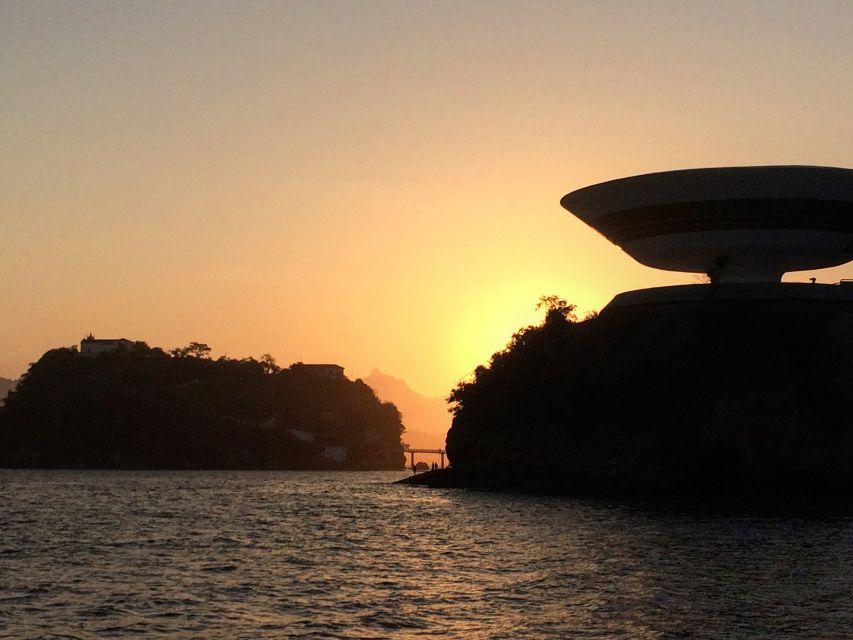
- The Niemeyer Moment: MAC’s Disc Shape From the Water
- Shoreline Highlights: Beaches and Fortresses Along Guanabara’s Edge
- Sugarloaf From Sea Level: The Photo Window That Matters
- Morning vs Sunset: Picking the Best Departure for Light and Mood
- Who Should Book This Catamaran Tour (and Who Might Skip It)
- Should You Book This Rio: Boat Tour of Guanabara Bay?
- FAQ
- How long is the Guanabara Bay catamaran tour?
- Where does the tour start?
- Is there a stop for disembarking or diving?
- Is the tour wheelchair accessible?
- What languages is the audio guide available in?
- What should I bring?
- Are children allowed?
- Can I buy drinks or snacks onboard?
Key highlights at a glance
- Marina da Glória start point in the middle of Rio’s action
- Photo time at Sugarloaf from the water, plus views over Flamengo Beach
- Pass by Niterói’s Niemeyer MAC and other shoreline fortresses without getting off the boat
- Morning or sunset departures, depending on the day’s schedule
- Audio guide in Portuguese, English, and Spanish
- Modern, well-equipped catamaran with open viewing space and a smoother ride than smaller boats
Setting Out From Marina da Glória: Your Quick Path to Guanabara Bay Views
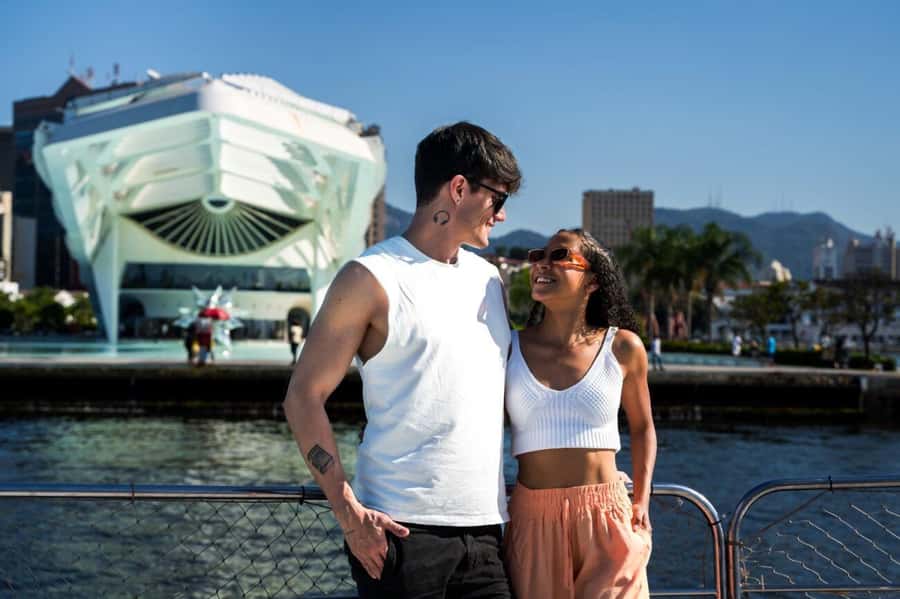
This is a straightforward, “show me Rio fast” kind of tour. Your boarding point is Marina da Glória, which makes the experience feel anchored and easy to find once you’re there. If you choose the option with breakfast, you’ll eat at Marina da Glória first, then step straight onto the catamaran. One practical detail: there’s a coffee shop right in front of the embarkation area, so you can grab a warm drink before you line up.
Timing matters here because the route is timed to the light. You can go in the morning or in the afternoon around sunset, and both choices come with different rewards. Morning tends to feel clearer and more energetic, while sunset brings a softer palette for water and skyline photos.
One logistics note from real-world experience on this kind of area: on Sundays and holidays, vehicle access to the Aterro do Flamengo lanes isn’t allowed. That can shift how you get there. Plan your arrival with extra buffer so you don’t end up sprinting across the last stretch.
Most departures run about 1.5 hours, and some rides may stretch closer to two hours depending on the day. Either way, you’ll be on the water long enough to see real variety—port, bridge, beaches, fortresses, and the Sugarloaf angle.
You can also read our reviews of more tours and experiences in Rio De Janeiro.


Catamaran Ride Reality: Comfort, Sightlines, and Audio You Might Struggle to Catch
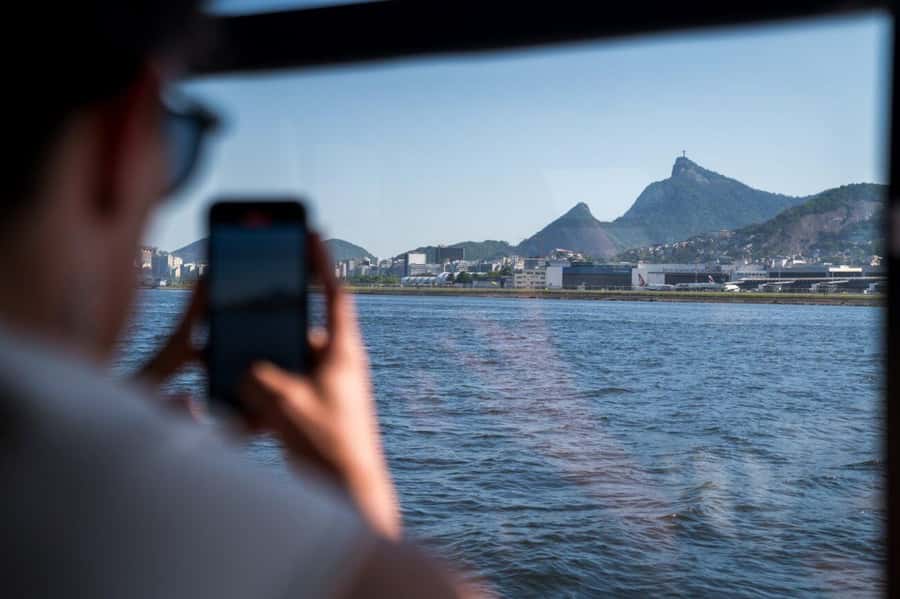
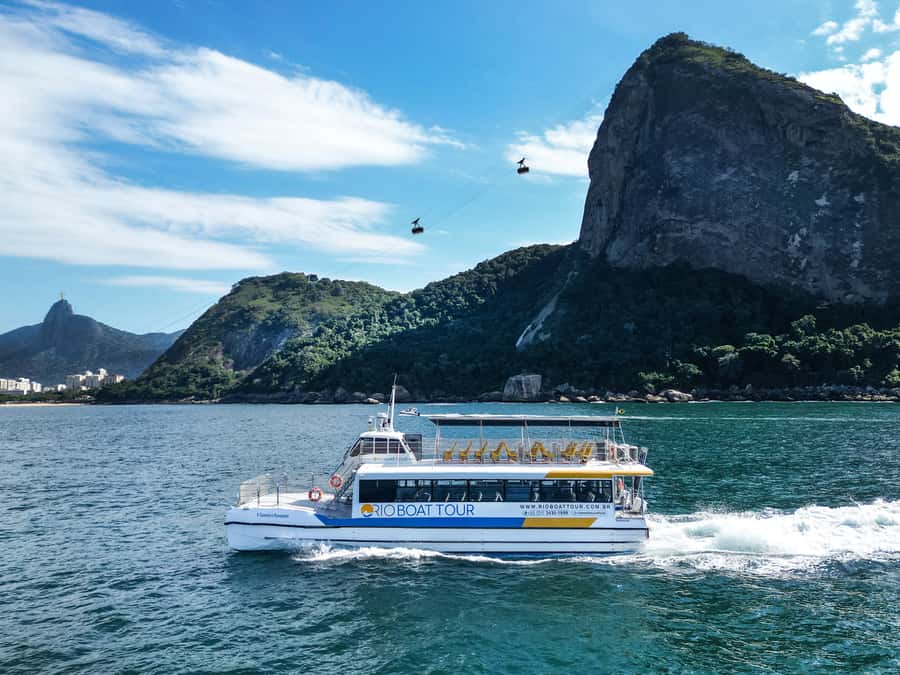
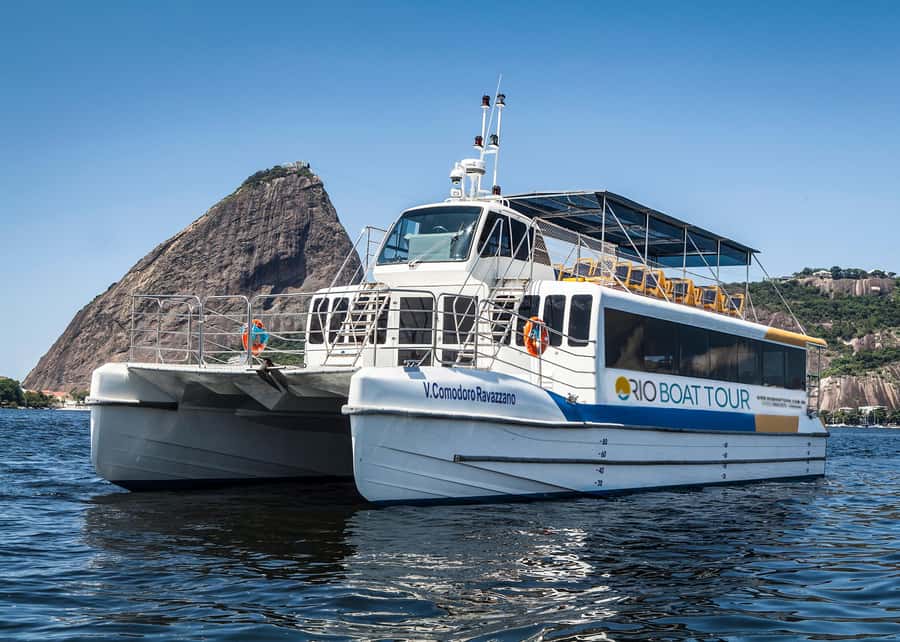
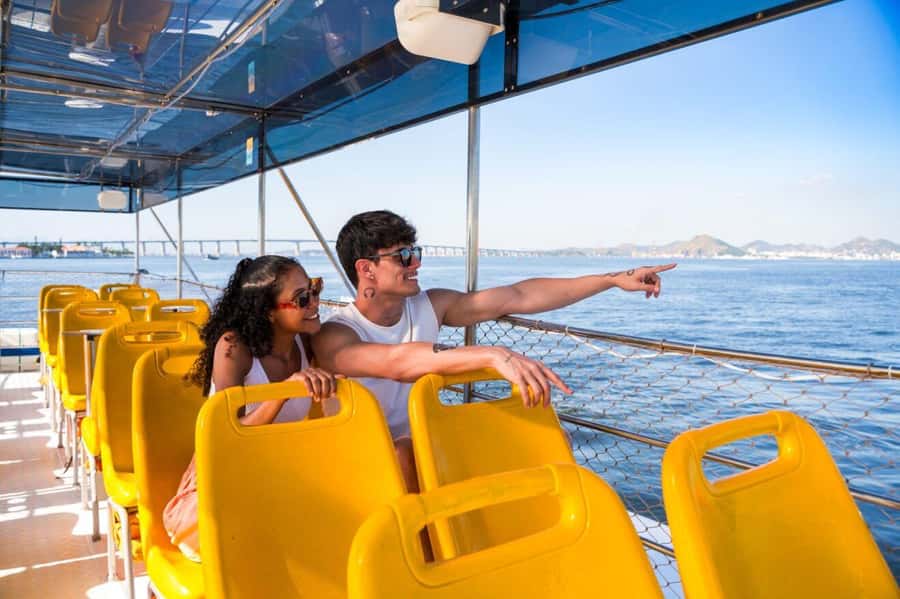
The catamaran setup is part of the appeal. It’s described as modern and well-equipped, which usually means stable ride quality and comfortable seating for a full loop. You’ll also feel the bay’s wind while moving—great for that outdoorsy Rio feel, but it’s also the main reason the narration can get tough to follow.
You get an audio guide in Portuguese, English, and Spanish. In theory, that’s perfect for mixed-language groups. In practice, a few recent experiences flagged the same issue: when the breeze picks up—or when there’s engine noise and general talk—the speaker can be hard to hear word-for-word.
So here’s how I’d treat the audio guide: use it as a background layer, not a must-catch script. If you catch a few key details, great. If you don’t, you’re still paying for the viewpoints—boats, shoreline architecture, bridge angles, and that sea-level skyline look.
If you want the best chance to hear the announcements and also grab strong photo angles, try seating on the left side of the boat toward the back. That’s a tip that shows up repeatedly, and it makes sense: you’re positioned to see more of the route’s highlights while staying closer to the audio direction.
Onboard, you can also buy drinks and snacks (a common perk on these tours). It doesn’t turn the ride into a food outing, but it does make it feel more like a relaxed outing than a strict sightseeing bus.
First Leg: From Museum of Tomorrow to Niterói’s Bridge Corridor
After boarding at Marina da Glória, the tour heads toward the Museum of Tomorrow, which is one of the Porto Maravilha region’s architectural icons. Seeing it from the bay gives it a sharper shape than you get from street level, and it helps you understand how Rio’s modern waterfront sits right next to the working port vibe.
As you move along, you pass a string of landmarks that are easy to miss if you only view Rio from land. You’ll get views of Villegagnon Island, plus Santos Dumont Airport, Fiscal Island, and the Arsenal of the Navy. From the water, these places feel more connected to daily life—boats working, planes crossing overhead, and the shoreline acting like a boundary between city and sea.
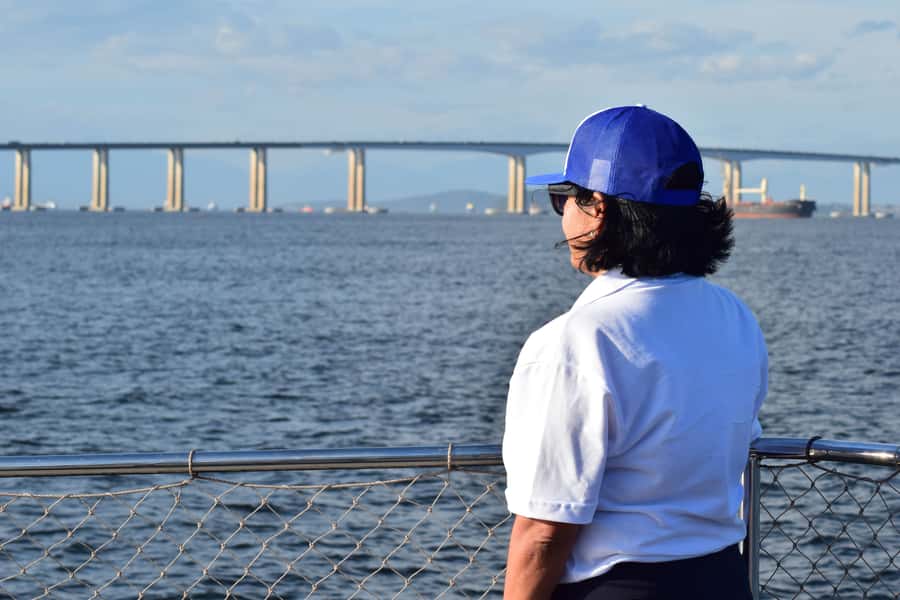
Then the route shifts toward Niterói. A highlight here is the Rio–Niterói Bridge and the Concha Acústica (Acoustic Shell). The Acoustic Shell is a recognizable shape on land, but on the water you see its relationship to the waterfront and the bay’s sweep. It gives you that “oh, that’s where it fits” moment.
This first leg is also where you’ll feel the tour rhythm settle in. There aren’t long delays or complicated transfers. It’s built as a moving panorama, so the best strategy is to stay present—look up when planes pass, look forward when the shoreline changes, and use your camera before you feel rushed.
The Niemeyer Moment: MAC’s Disc Shape From the Water
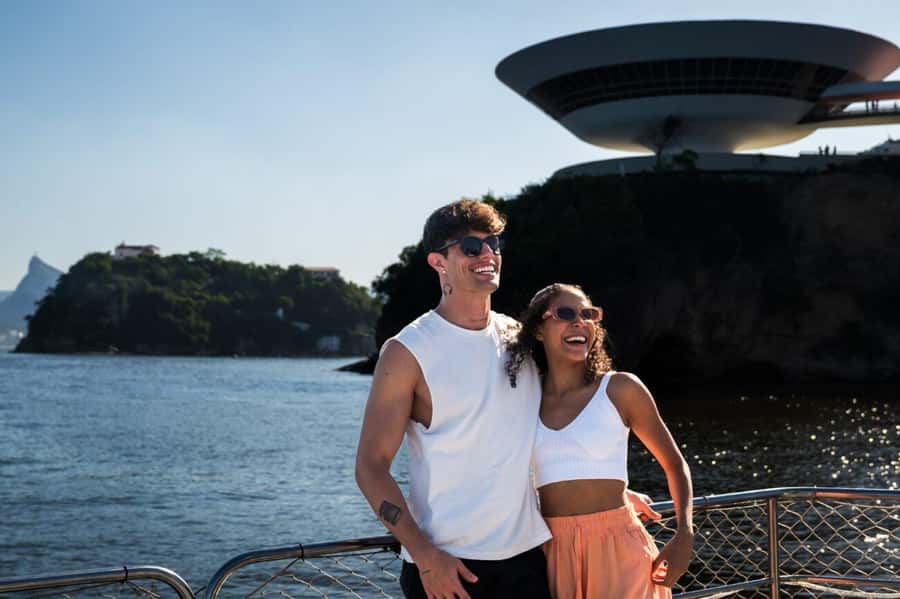
Once you reach Niterói, the tour turns attention to a major icon: MAC (Museum of Contemporary Art), designed by Oscar Niemeyer. The building is often described as having a unique disc shape, and the water angle is exactly what makes it memorable.
From the bay, it doesn’t just look like “a museum.” It looks like a piece of sculpture placed into the coastline. That’s a huge part of why this stop lands for people: you get architecture plus setting in one view. And because the boat doesn’t require you to disembark, you keep your timing tight while still collecting a strong photo.
You’ll also see how the cityscape transitions into shoreline features around Niterói. Even without stepping out, the passing views help you understand why this side of the bay feels different from central Rio.
One more practical point: if you’re photographing buildings like this, bring your camera ready before the boat swings into position. These moments are timed for viewing and photo windows, not for extended lingering.
Shoreline Highlights: Beaches and Fortresses Along Guanabara’s Edge
The heart of Guanabara Bay sightseeing is the shoreline variety. You’ll pass Adão and Eva Beaches, then head toward fortresses that remind you Rio wasn’t always a postcard city.
Key sights include Santa Cruz Fortress, Lage Fortress, São José Fortress, and São João Fortress. Seeing fortresses from the water changes how you understand them. On land, they can feel like isolated landmarks. From the bay, you see their role as coastline guards—built for visibility, control, and defense.
These sections are also some of the most visually rewarding for photos. You get wide angles that combine water texture, shoreline lines, and city structures in one frame. It’s the kind of photo you can’t recreate from most viewpoints because you need the perspective of moving by the coast.
A big heads-up: there are no disembarkations and no special “get out here” stops. This tour keeps you on the boat the whole time, and that’s the tradeoff. The upside is efficiency and comfort; the downside is you don’t get to walk around the fortresses or beaches.
Also, there’s no diving or water entry. If you came hoping for swimming, this isn’t that kind of tour.
Sugarloaf From Sea Level: The Photo Window That Matters
One of the clearest payoff moments comes near Sugarloaf Mountain. You’ll pass by the mountain and get a few minutes to take pictures from the catamaran. Sea-level angles make Sugarloaf look bigger and more three-dimensional, and the bay water gives you reflections and a sense of scale.
This is where I’d prioritize your camera time. Don’t spend those minutes fiddling with settings. Get stable footing, frame early, then shoot a few variations—wide for the skyline context, tighter for mountain details.
The route also brings you past Flamengo Beach and the old Urca Casino as you head back toward Marina da Glória. Urca’s historic feel reads differently from the water: it’s less about the building itself and more about the neighborhood texture, the coastline shape, and the way the city presses up to the bay.
On a good day, this return segment feels like a second reveal. You already saw the modern icons and Niterói architecture; now you get the Rio you recognize from movies and postcards—only with the tide and shoreline movement acting like a living frame.
Morning vs Sunset: Picking the Best Departure for Light and Mood
Choosing between a morning and sunset departure is really about what kind of photos you want and how you handle wind.
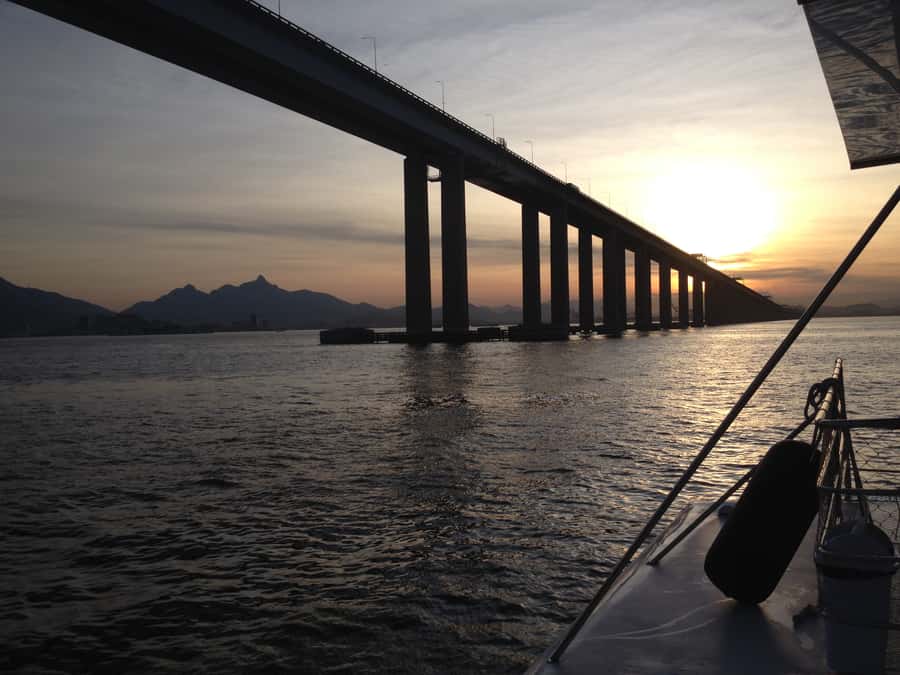
On sunset trips, you’re aiming for softer light and dramatic sky colors reflected in the bay. Many people rate these trips highly when the timing lands well with clear weather, and the atmosphere can feel extra relaxed as the city warms up in the distance.
But sunset isn’t guaranteed. Strong wind can shut the trip down, and if the weather doesn’t cooperate you may end up with less color than you hoped for. There are also cases where a “sunset” labeled departure can finish earlier than you expect depending on schedule and conditions. That’s not a reason to avoid it, but it is a reason to keep expectations flexible.
If you’re going for pure photo clarity, a morning departure can be steadier for visibility. If you’re going for emotion and color, sunset is the move—just come ready for wind.
Either way, the bay is open water, and the breeze is part of the experience. Bring sunscreen, water, and a light layer if you tend to get cold.
Who Should Book This Catamaran Tour (and Who Might Skip It)
This tour fits best when you want a smart hit of sights without a full day of logistics. It’s ideal for first-timers who only have limited time in Rio and want to see both sides of the bay—Rio and Niterói—in about 90 minutes.
It’s also a good choice if you like structure. You get a guided flow of landmarks, and even if the narration is hard to hear at moments, the route itself is clear. Plus, the catamaran format is comfortable for many people and has wheelchair accessibility.
It’s less ideal if you want hands-on time. Since there are no stops for disembarkation and no swimming or diving, you’re not walking the fortresses or beaches. You’re collecting views and photos from the deck.
It’s also not the best fit for people who get frustrated by audio issues. If you need every spoken detail, plan on occasionally missing words because wind and engine noise can overpower the speaker system.
For families: children 4 and younger are complimentary if they don’t occupy a seat. Unaccompanied minors aren’t allowed, so you’ll want to travel with a responsible adult.
Should You Book This Rio: Boat Tour of Guanabara Bay?
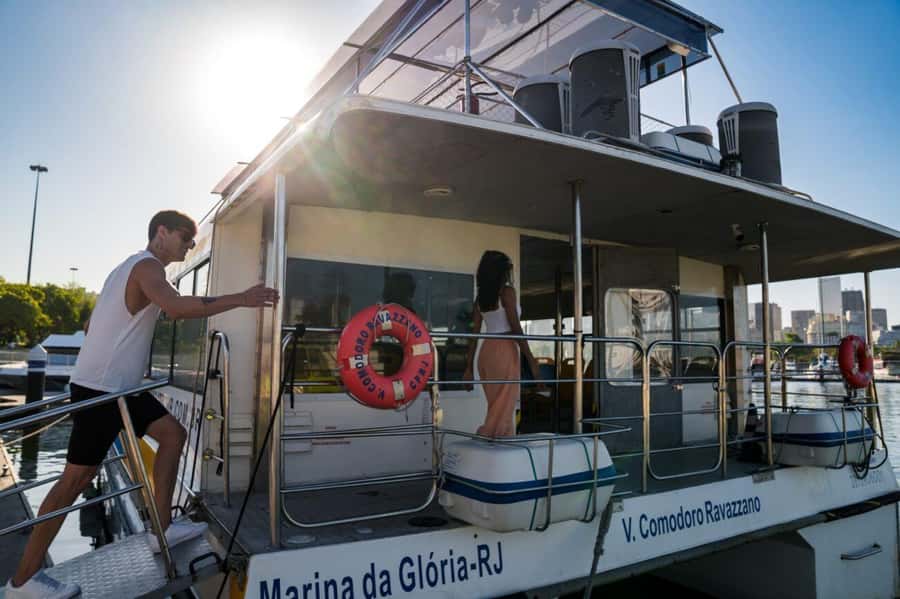
I’d book it if your goal is maximum Rio-bay scenery in minimal time. The route packs together iconic spots—Museum of Tomorrow, bridge and Acoustic Shell, Oscar Niemeyer’s MAC, a fortress shoreline sweep, and Sugarloaf from sea level. You get that “big picture” feeling quickly, and you don’t spend your day stuck in traffic.
I’d hesitate if you care more about narration accuracy than about views. Sound can be inconsistent, and on breezy days you might catch only pieces of the guidance. I’d also skip if you want longer stopovers or walking time, because this is strictly a boat stay—no disembarking and no diving.
For the right traveler, this is a solid value choice: it’s short, efficient, and set up for photography without needing complicated planning. If you’re in Rio for a few days and want one outing that delivers across both cities, this catamaran loop is a strong pick.
FAQ
How long is the Guanabara Bay catamaran tour?
The duration is about 1.5 hours.
Where does the tour start?
You board at Marina da Glória in Rio de Janeiro.
Is there a stop for disembarking or diving?
No. There are no stops for diving or disembarkations on this tour.
Is the tour wheelchair accessible?
Yes, the tour is wheelchair accessible.
What languages is the audio guide available in?
The audio guide is included in Portuguese, English, and Spanish.
What should I bring?
Bring your passport or ID card, a camera, sunscreen, and water.
Are children allowed?
Children 4 and younger are complimentary as long as they do not occupy a seat. Unaccompanied minors aren’t allowed.
Can I buy drinks or snacks onboard?
Yes. You can purchase beverages and snacks on the boat.